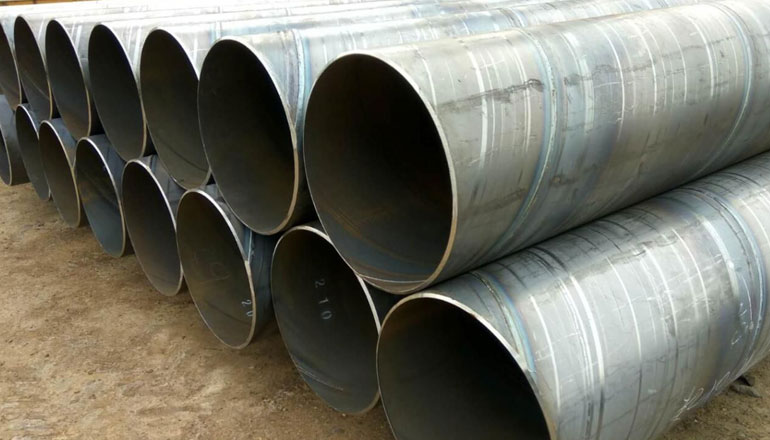
Spiral Welding Steel Round Pipe has become a widely used method for producing large-diameter, high-strength pipes suitable for oil, gas, water, and industrial fluid transport. This process combines the mechanical strength of steel with the efficiency of spiral welding, creating durable and reliable pipes for long-distance applications. Understanding the spiral welding process helps engineers, contractors, and project planners ensure high-quality fabrication and long-term pipeline performance.
Overview of Spiral Welding
Spiral welding involves forming a steel strip into a cylindrical shape and welding it along a continuous helical seam. Unlike longitudinal welding, the spiral seam allows for large-diameter pipes to be manufactured with uniform wall thickness and extended lengths. Many suppliers, including Spiral Welding Steel Round Pipe, provide a range of pipe diameters, wall thicknesses, and steel grades to meet specific project needs, ensuring both strength and reliability in demanding applications.
Material Selection and Preparation
The process begins with selecting high-quality steel strips that meet industry standards for chemical composition, tensile strength, and ductility. Proper material selection ensures the fabricated pipe can withstand high internal pressures, environmental stresses, and corrosive elements. Before welding, steel strips are cleaned, flattened, and beveled to prepare edges for full-penetration welding. This step is critical, as surface contaminants or uneven edges can compromise weld quality and structural integrity.
Forming the Pipe
Once the steel strips are prepared, they are gradually formed into a cylindrical shape using precision rollers. The strip is wound at a controlled angle to create the spiral configuration. The spiral angle and pitch are calculated based on the desired pipe diameter and wall thickness, ensuring uniform stress distribution along the weld seam. This forming technique allows for large-diameter pipes with long continuous lengths, minimizing the number of joints required in a pipeline and reducing potential leak points.
Welding the Spiral Seam
The key to the strength of spiral welded pipes is the continuous helical seam. Submerged arc welding (SAW) is the most common method, where an electric arc melts the edges of the steel strip while flux protects the molten weld from contamination. This technique produces a high-quality weld with deep penetration and excellent mechanical properties. The welding process is closely monitored to maintain consistent heat input, voltage, and travel speed, which are essential for preventing defects such as porosity, cracks, or incomplete fusion.
Heat Treatment and Stress Relief
After welding, spiral pipes may undergo heat treatment to relieve internal stresses caused by the welding process. Stress relief improves the pipe’s mechanical properties, reducing the risk of deformation or failure under high-pressure operating conditions. This step is particularly important for large-diameter or high-pressure pipes used in oil, gas, or industrial applications. Heat-treated pipes exhibit enhanced toughness, reliability, and long-term durability.
Coating and Corrosion Protection
To enhance service life, spiral welded steel pipes are often coated or lined with protective materials such as epoxy, zinc, or other corrosion-resistant layers. Coatings prevent degradation from moisture, soil, chemicals, or seawater in offshore installations. Proper surface preparation and application of coatings are essential for long-term protection, reducing maintenance costs and ensuring pipeline reliability in harsh environments.
Quality Control and Testing
Rigorous quality control is integral to spiral pipe fabrication. Each pipe undergoes inspections and tests to verify dimensions, mechanical properties, weld integrity, and coating effectiveness. Non-destructive testing methods, such as ultrasonic and radiographic inspections, help detect any defects in the spiral seam. Hydrostatic pressure testing is often performed to ensure the pipe can withstand operating pressures. These measures guarantee that spiral welded steel round pipes meet industry standards and project specifications.
Applications of Spiral Welded Pipes
Spiral welded steel round pipes are extensively used in oil and gas transmission, water supply and distribution, sewage systems, chemical plants, and structural projects. Their strength, durability, and ability to handle high pressures make them ideal for long-distance pipelines and industrial installations. The combination of spiral welding, high-quality materials, and protective coatings ensures reliable performance in challenging environments.
Conclusion
Understanding the Spiral Welding Steel Round Pipe fabrication process is essential for producing durable, high-quality pipes capable of handling demanding industrial and infrastructure applications. From material selection and forming to welding, heat treatment, coating, and quality control, each step plays a crucial role in ensuring the pipe’s strength, corrosion resistance, and long-term reliability. By implementing precise manufacturing techniques, engineers and project managers can achieve safe, efficient, and long-lasting pipeline systems for a wide range of critical applications.