

How Advanced Anesthesia Machines Improve Patient Safety During Surgery?
Anesthesia machines are an essential medical equipment used by surgeons and anesthetists to navigate complex surgical procedures. The advancement in medical technology has steered breakthroughs in the functionalities and types of anesthesia machines currently in use in hospitals.
The escalating cost of anesthesia drugs and high dependence on the clinicians’ monitoring have catalyzed the evolution of automated and cost-effective pneumatic devices to remodel clinical workflows and revamp safe patient care. From customizing anesthesia flow to integrating seamlessly into any surgical setup, these cutting-edge machines meet the specific needs of clinicians and healthcare facilities.
Anesthesia Machine – An Overview
Administering anesthesia forms one of the crucial procedures of surgery, both during the perioperative and operative periods. Anesthesia machines are clinical apparatuses that release a measured blend of oxygen and anesthetic agents to the patients’ respiratory system during and after surgery. Its main function is to sedate the patient throughout the operative procedure while supporting their breathing through an external device. An interconnected network of ventilators, breathing circuits, and scavenging systems ensures a steady supply of oxygen and anesthetic gas to keep patients safe and stable during surgery.
Basic Functionalities
- Deliver constant and accurate ventilation to patients to maintain their usual respiratory rates and ensure safe and persistent breathing during surgery.
- Remove the harmful exhaled gases (carbon dioxide) from the system to inhibit rebreathing by patients.
- Infuse accurate and controlled measures of anesthetic agents into the gas flow pipes to regulate patient breathing.
- Gather and expel anesthetic gases from the operating room to eliminate their harmful impacts on patients, surgeons, and clinical support staff.
- Raise alarms for abnormal readings or deviations to instigate quick remedial actions by clinicians.
New-Age Anesthesia Machines – Patient Safety First
Automated Flow
Ultra-modern anesthesia machines now come with smart adjustment features for patient safety. It allows anesthesiologists and surgeons to fix the quantity of anesthetic agent to be administered to the patient and regulate the dosage flow to maintain the right oxygen levels. As the surgery progresses, the automated system monitors patients’ conditions and adjusts the flow and agent volumes. The self-regulating, mechanized setup reduces the workload of clinicians and lowers the risks of manual mishandling or oversights, thus further enhancing patient care and safety.
Prolonged Oxygenation
The ingenious high-flow nasal cannula safely allows increasing oxygen flow and extending oxygenation duration for patients with acute respiratory distress. Maintaining oxygen saturation levels improves patient comfort and makes intubation easy for clinicians.
Extensive Layout
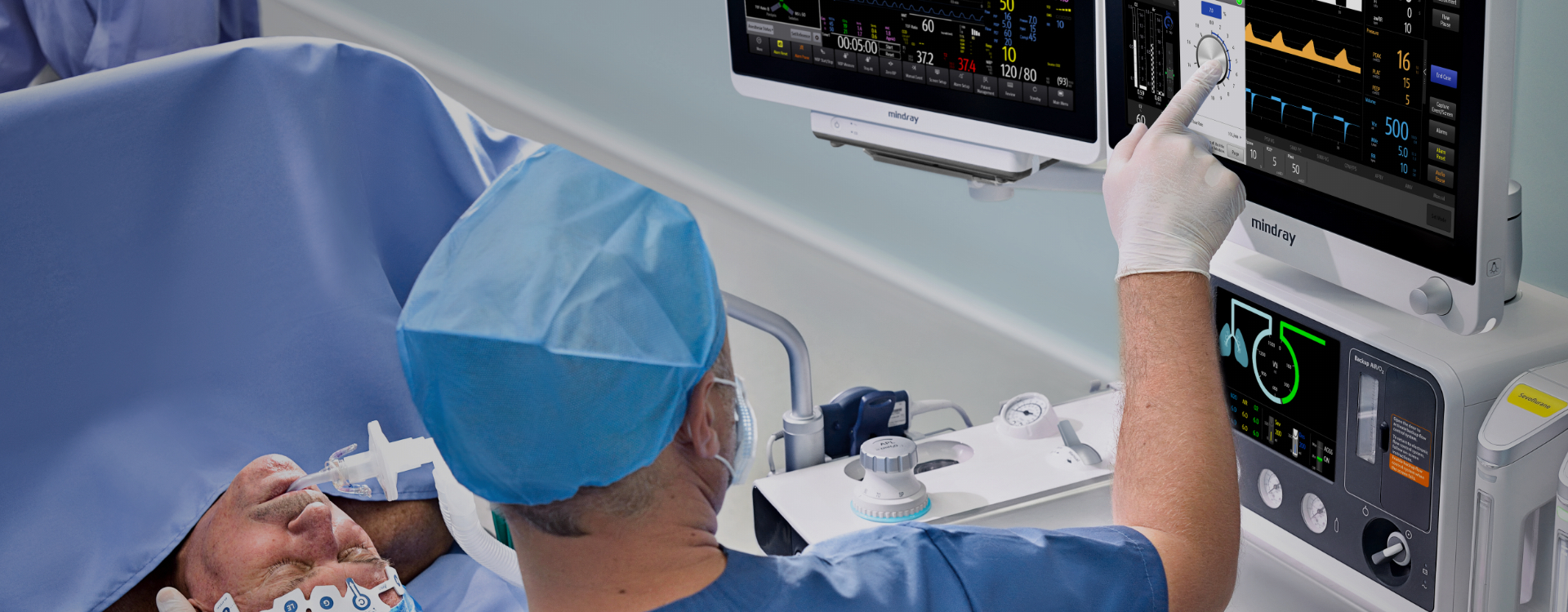
The modern anesthesia machines are designed with a safety-engineered structure to provide secure and reliable patient care. Mindray A9 anesthesia system comprises an integrated breathing circuit, a large rotatable touchscreen with a high-resolution graphic display, electronic vaporizers with programmed controls, a multi-functional electronic flowmeter, and a system administrator screen, all working as a single unit during surgery. The adaptive designs and enhanced functionalities serve the requirements of a wide range of patient types and healthcare facilities.
Customized Ventilation
The high-tech anesthesia machines have an innovative breathing system tailored specifically for ICU-level ventilation. Mindray WATO EX-65 machines have features like precise anesthesia, comprehensive ventilation modes, and tidal volume as per the patients’ breathing status, thus ensuring precise and reliable air flow and enhancing patient safety throughout surgery.
Real-Time Warning Systems
The advanced machines keep a real-time track of the anesthetic agent consumption during and after surgery to ensure optimal flow. It has system status indicators that activate alarms on detecting abnormalities, thus preventing patients from entering a critical state.
Streamlined Workflows
The quick and automated system checking streamlines troubleshooting and saves considerable perioperative preparation time. The advanced anesthesia machines have a user-friendly layout with plug-and-play functionality that allows easy configuration and usability. The clear and digitized data display facilitates smart patient monitoring, thus optimizing the precision, efficiency, and experience of clinical experts and empowering them to make informed and reliable decisions. The overall mechanized connectivity streamlines clinical workflows and fosters a calm environment in the otherwise distressed surgery units, thus improving operative results and augmenting patient safety.
Conclusion
The state-of-the-art anesthesia machines developed and used in today’s progressive times are taking healthcare technology to the next level. Patients and healthcare facilities now have access to modern setups designed with smart ventilator technology and equipped with improved monitoring efficiency. The advancement in medical technology is playing a crucial role in meeting the complex clinical demands and improving patient safety during surgery.
Many leading medical solutions providers, such as Mindray, are equipping healthcare facilities in India with different types of anesthesia machines. These are smartly designed and meticulously tested to provide innovative and customizable patient safety solutions.
Their wide range of anesthesia solutions are an efficient mechanism to administer safe, steady, and accurate anesthesia to patients. Engineered with intuitive technology, these new-age pneumatic devices set the Indian healthcare industry on the path of progressive and safe patient care.