


Know CIBIL Score Free – A Simple Way to Stay Loan-Ready and Financially Confident
 Know CIBIL Score Free – A Simple Way to Stay Loan-Ready and Financially Confident
Most people only think about their credit score when they need a loan urgently. But in reality, your credit score is not just a “loan-time” requirement—it is a financial indicator that quietly affects your eligibility, interest rates, and approval timelines. That is why many people now prefer to know their CIBIL score for free before they apply for a home loan, personal loan, or even a credit card.
Imagine if you are planning something important—like buying a house or upgrading your car—and you are already confident about your score. It instantly removes uncertainty from the process. You know what lenders will see, you know where you stand, and you can plan your next step accordingly (which is always better than rushing later).
The good part is… You do not need to visit a bank branch or wait for a lender to tell you your score. Today, it is possible to check your CIBIL score online through authorised platforms in just a few minutes. Once you understand the score and the range it falls into, you can make smarter decisions—and even take steps to improve it over time.
What is a CIBIL Score and Why Should You Track It?
A CIBIL score is a three-digit number, typically between 300 and 900, that reflects your credit history and repayment behaviour. It is calculated based on your past credit usage—things like loan repayments, credit card payments, outstanding balances, and credit enquiries.
Think of it this way… your CIBIL score is like your financial report card. It does not judge your income or lifestyle. It simply reflects how consistently you have handled borrowed money.
A healthy score can make it easier to access credit when needed, especially for long-term loans such as home loans.
How to Know CIBIL Score Free (Without Complicated Steps)
If you want to know your CIBIL score for free, you can do so through credit bureau portals or partner platforms that provide access to your score. The process is generally straightforward and digital.
Usually, you need to:
- enter your full name and mobile number
- verify with an OTP
- provide PAN details
- confirm basic identity information
- view your score instantly
Once verified, you can see your score along with a basic credit summary.
(And yes, checking your score does not harm it—this is a common myth.)
How to Check CIBIL Score and Read the Report Properly
When you check your CIBIL score, the number is only one part of the story. The report also shows the history behind it, which is often more helpful than the score itself.
Your report may include:
- details of active and closed loan accounts
- credit card repayment history
- overdue payments (if any)
- credit utilisation patterns
- enquiry history (when lenders checked your profile)
Sometimes, a small missed payment from months ago can show up and affect your score. Other times, the report might contain an error (and that is why reviewing it carefully matters).
The answer is simple—if you understand the report, you can fix what is holding your score back.
Understanding the CIBIL Score Range in a Clear Way
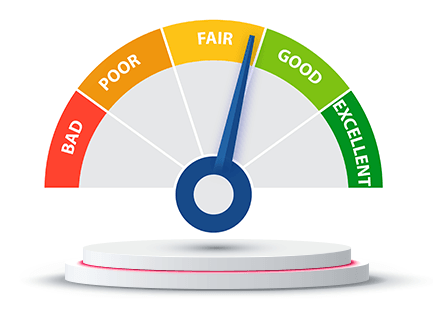
Your score falls into a category that indicates how lenders may view your credit profile. Knowing the CIBIL score range helps you interpret whether your score is strong, average, or needs improvement.
Here is a general breakdown:
| CIBIL Score Range | What It Usually Means |
|---|---|
| 300–549 | Needs attention |
| 550–649 | Fair and improving |
| 650–749 | Good credit standing |
| 750–900 | Strong credit profile |
These ranges are widely used as benchmarks, although lender policies may differ slightly.
Imagine if your score is 760… that is typically viewed as strong, which may help you negotiate better loan terms. If it is 610, it is not the end of the world—but it is a signal that improvement will help.
What Affects Your CIBIL Score the Most?
A CIBIL score is influenced by patterns, not one-time events. It is shaped by how consistently you manage credit over time.
The major factors include:
- repayment history (late payments impact your score quickly)
- credit utilisation ratio (how much of your credit limit you use)
- length of credit history (older accounts help build trust)
- mix of secured/unsecured loans
- frequency of new credit applications
Credit usage discipline/repayment regularity—these two together play the biggest role.
How to Increase CIBIL Score Naturally Over Time
If you are actively trying to increase your CIBIL score, the best approach is not shortcuts, but steady improvements. Credit scoring systems respond well to consistent financial behaviour.
Here are some effective ways to improve your score:
- pay credit card bills and EMIs on time
- keep credit card utilisation low (ideally below 30%)
- avoid multiple loan applications at the same time
- maintain older accounts instead of closing them quickly
- check your credit report for errors and raise disputes if needed
- pay more than the minimum due on credit cards whenever possible
Think about it like this… lenders trust stability. The more stable your repayment behaviour looks, the more confident they feel about approving credit.
Common Habits That Can Reduce Your Score Without You Realising
Sometimes, people assume their score is low because of something major. But often, it is small patterns that create a long-term impact.
For example:
- paying only the minimum due every month
- maxing out credit cards frequently
- skipping small payments unintentionally
- taking too many short-term loans
- having too many credit enquiries in a short span
It is not about being perfect—it is about being consistent (and consistency is completely manageable with simple habits).
How Often Should You Check Your CIBIL Score?
Checking too frequently is not necessary, but checking occasionally is a smart habit.
A good approach is:
- once every 2–3 months (if you are planning a loan soon)
- once every 6 months (for general tracking)
This helps you stay updated and detect any issues early.
Summary – Know CIBIL Score Free and Take Control of Your Financial Profile
Choosing to know your CIBIL score for free is one of the simplest and most useful steps you can take for financial planning. It helps you check your CIBIL score before applying for a loan, understand where you fall within the CIBIL score range, and take timely action to strengthen your credit profile.If your score needs improvement, do not worry—small changes like timely payments, lower credit utilisation, and fewer unnecessary enquiries can steadily increase your CIBIL score over time. In the end, the goal is not just a higher number… it is a stronger financial profile that makes future borrowing smoother and more predictable.