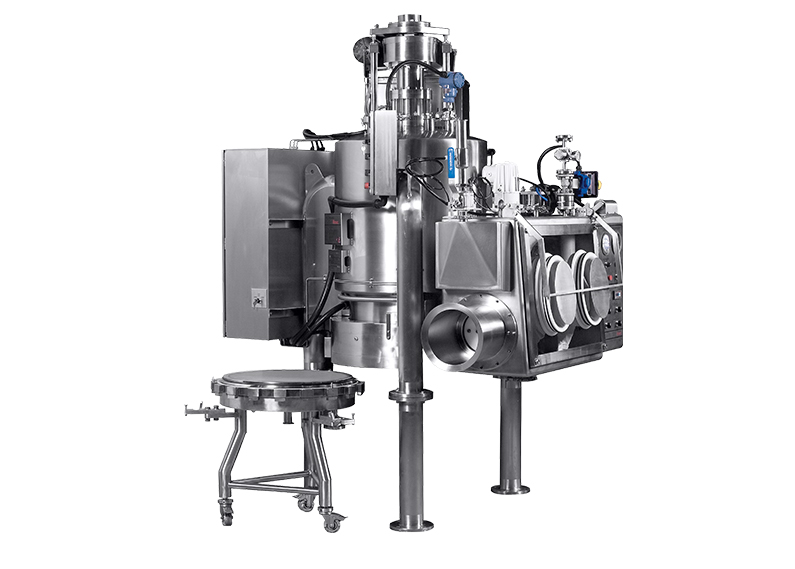
Agitated Nutsche Filters (ANFs) have long been a cornerstone in chemical, pharmaceutical, and fine chemical manufacturing. Their ability to combine filtration, washing, and drying in a single enclosed vessel has improved process efficiency, safety, and product quality. As industries evolve and demand higher efficiency, sustainability, and precision, the design of ANFs is also undergoing significant innovations. Understanding future trends in Agitated Nutsche Filter design helps manufacturers anticipate technological improvements and adopt systems that enhance productivity and operational reliability.
An Agitated Nutsche Filter typically consists of a vessel, filter plate, mechanical agitator, heating and vacuum systems, and discharge mechanisms. Each component plays a critical role in process efficiency and product quality. For industrial-grade applications and advanced specifications, you can explore this Agitated Nutsche Filter, widely used for its versatility, durability, and integration capabilities in modern chemical and pharmaceutical production.
Enhanced Automation and Process Control
One of the most significant trends in ANF design is the integration of advanced automation and process control. Traditional ANFs rely on manual monitoring and operator intervention to maintain optimal process conditions. The next generation of ANFs is expected to incorporate sophisticated sensors, real-time monitoring, and automated control systems.
Sensors can measure parameters such as temperature, vacuum pressure, agitator speed, and moisture content continuously. Automated controls can adjust agitation, heating, and vacuum levels to optimize filtration, washing, and drying cycles in real-time. This reduces human error, improves product consistency, and enhances operational efficiency. Integration with plant-wide manufacturing execution systems (MES) and data analytics platforms allows predictive maintenance and process optimization, minimizing downtime and increasing throughput.
Improved Material Selection and Corrosion Resistance
Future ANF designs are also focusing on advanced materials that improve durability and chemical compatibility. While stainless steel remains the standard, manufacturers are exploring high-performance alloys, coatings, and composite materials that resist corrosion, abrasion, and chemical attack.
These materials not only extend the lifespan of critical components such as the vessel, filter plate, and agitator but also enable the processing of increasingly aggressive chemicals without compromising safety or efficiency. Enhanced material choices support higher process temperatures, aggressive solvents, and reactive substances, expanding the range of applications for ANFs.
Energy Efficiency and Sustainable Design
Energy efficiency is a growing concern in industrial operations, and future ANF designs are incorporating features to reduce energy consumption. Vacuum-assisted drying systems are being optimized to lower energy requirements by enabling drying at reduced temperatures. Heat recovery systems are being integrated to reuse thermal energy from previous cycles, and more efficient insulation materials are being used to minimize heat loss.
Sustainable design also extends to water and solvent usage. Modern ANFs incorporate more efficient washing systems that reduce solvent consumption while maintaining thorough impurity removal. These improvements contribute to lower operational costs and reduced environmental impact, aligning with sustainability goals across chemical and pharmaceutical industries.
Enhanced Cleaning and Maintenance Features
Ease of cleaning and maintenance is another trend shaping future ANF designs. Sanitary design principles, such as fully polished surfaces, smooth welds, and minimized dead zones, make cleaning more efficient and reduce the risk of contamination. Many new models include advanced Clean-in-Place (CIP) systems that allow automated cleaning without disassembling the vessel.
Additionally, modular designs are becoming more prevalent, allowing easy replacement of worn components such as seals, filter media, and agitator parts. These features minimize downtime, reduce labor requirements, and support compliance with stringent cGMP and FDA standards in pharmaceutical manufacturing.
Flexibility and Versatility in Batch Processing
Agitated Nutsche Filters are increasingly designed to handle a wider range of materials and batch sizes. Future designs feature adjustable agitators, interchangeable filter media, and flexible vessel configurations that accommodate different solids, particle sizes, and viscosities. This flexibility allows manufacturers to switch between multiple products with minimal reconfiguration, improving asset utilization and production efficiency.
Moreover, advances in modeling and simulation software allow engineers to predict process behavior for new formulations and optimize ANF design before installation. This reduces trial-and-error in scale-up and ensures consistent quality across batches.
Safety Enhancements
As process safety regulations become more stringent, future ANF designs emphasize improved safety features. Explosion-proof motors, inert gas purging systems, automated interlocks, and advanced pressure relief mechanisms are increasingly integrated into new models. These features reduce operator exposure to hazardous chemicals, minimize the risk of accidents, and ensure compliance with evolving regulatory standards.
Conclusion
The future of Agitated Nutsche Filter design is focused on automation, energy efficiency, material innovation, safety, and flexibility. Advances in sensors, control systems, and data integration allow real-time process optimization, while high-performance materials extend durability and chemical compatibility. Sustainable design reduces energy and solvent use, and modular, CIP-compatible systems improve cleaning, maintenance, and regulatory compliance.
These trends make ANFs even more versatile and reliable for pharmaceutical, chemical, and fine chemical manufacturing. By adopting these innovations, manufacturers can improve process efficiency, ensure consistent product quality, and meet modern safety and sustainability standards, securing the future of batch processing with Agitated Nutsche Filters.