
Fine particle dispersion is a critical requirement in modern manufacturing industries such as paints, coatings, pharmaceuticals, inks, chemicals, and advanced materials. The quality, stability, and performance of many products depend on how uniformly particles are broken down and distributed within a liquid medium.
Achieving consistent dispersion is not just about reducing particle size—it is about ensuring uniformity, stability, and optimal interaction between materials. This is where advanced milling technology plays a crucial role in industrial processing.
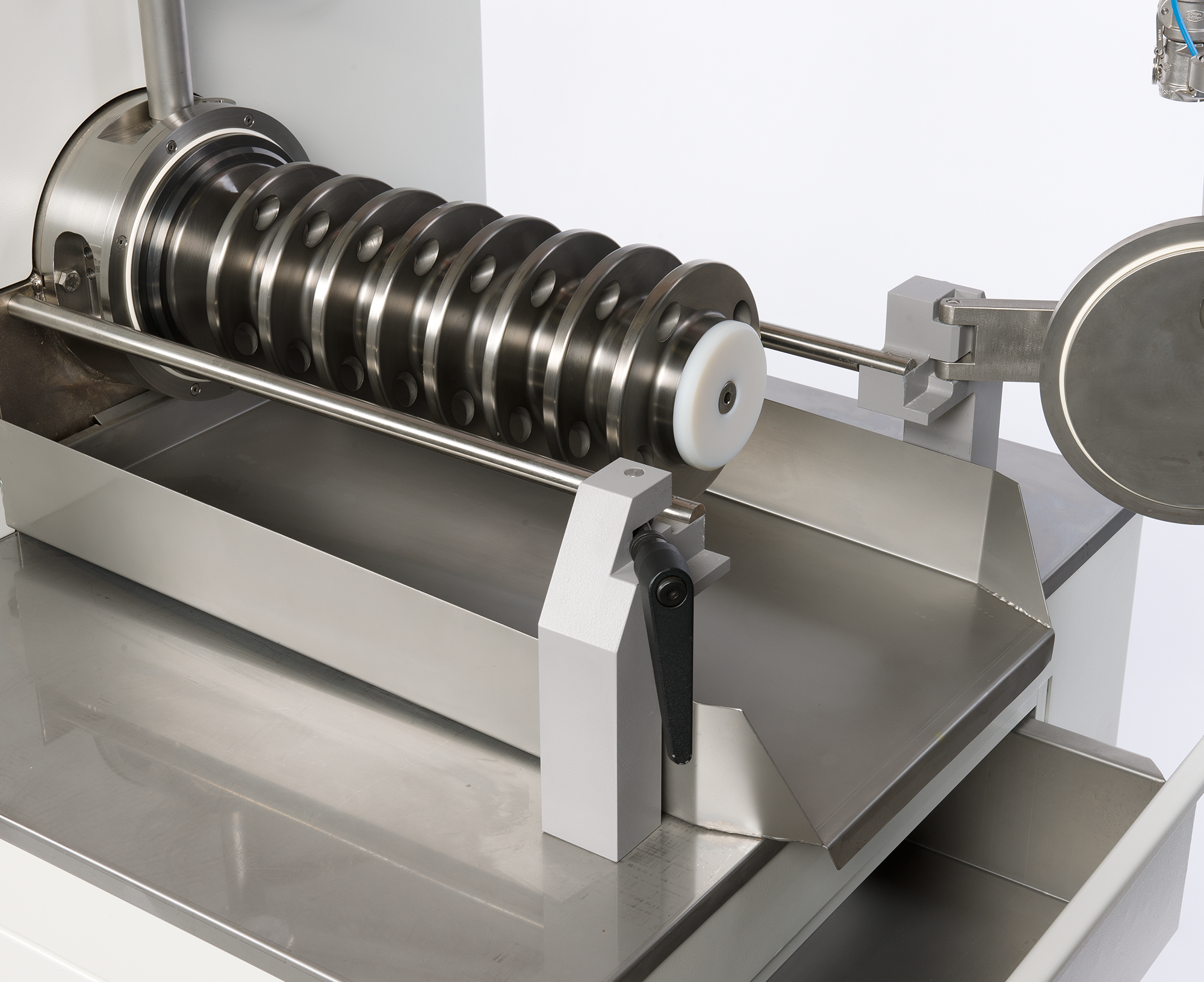
In modern production systems, a bead mill is widely used to achieve efficient particle size reduction and high-quality dispersion through controlled mechanical energy and grinding media interaction.
Understanding Fine Particle Dispersion
Fine particle dispersion refers to the process of breaking down agglomerated particles and evenly distributing them throughout a liquid or semi-liquid medium. This process improves product stability, appearance, and performance.
Poor dispersion can lead to:
- Sedimentation of particles
- Uneven color or texture
- Reduced product stability
- Inconsistent performance
Therefore, achieving fine and uniform dispersion is essential in industrial manufacturing.
Working Principle of Bead Milling for Dispersion
A bead mill operates using a grinding chamber filled with small beads that act as the grinding media. As the rotor rotates at high speed, these beads move rapidly and create intense shear and impact forces.
The process involves:
- Continuous collision between beads and particles
- High-energy shear forces breaking particle agglomerates
- Repeated grinding cycles for uniform reduction
- Controlled circulation of material through the chamber
This combination of mechanical forces ensures effective breakdown of particles and consistent dispersion throughout the medium.
Role of Bead Mill in Particle Size Reduction
The efficiency of a bead mill lies in its ability to generate high energy density within a confined space. This allows particles to be broken down quickly and uniformly.
The continuous motion of grinding media ensures:
- Efficient breakdown of particle clusters
- Narrow particle size distribution
- Improved surface area exposure
- Enhanced material reactivity and stability
These effects are essential for achieving high-quality industrial formulations.
Key Factors That Influence Dispersion Quality
Several operational parameters determine the effectiveness of dispersion in a bead milling process.
Grinding Media Selection
The size and material of the beads significantly influence grinding efficiency. Smaller beads provide finer dispersion, while material composition affects durability and energy transfer.
Rotor Speed
Rotor speed controls the intensity of mechanical forces inside the chamber. Proper speed adjustment ensures effective grinding without overheating or damaging sensitive materials.
Material Viscosity
Viscosity affects how easily the material flows through the grinding chamber. Balanced viscosity ensures efficient interaction between particles and grinding media.
Residence Time
The time material spends inside the mill determines the level of dispersion. Longer residence time generally leads to finer and more uniform particle distribution.
Advantages of Bead Milling for Dispersion
Bead milling offers several advantages over traditional grinding and mixing methods, especially in achieving fine dispersion.
Key benefits include:
- High efficiency in particle size reduction
- Uniform distribution of particles
- Improved product stability and performance
- Faster processing times
- Suitable for micro and nano-scale applications
These advantages make bead milling a preferred choice in advanced manufacturing industries.
Applications in Industrial Manufacturing
Fine particle dispersion achieved through bead milling is used in a wide range of industries where product quality is highly dependent on uniform particle distribution.
Common applications include:
- Paints and coatings for smooth and consistent finishes
- Printing inks for color accuracy and stability
- Pharmaceuticals for uniform suspensions
- Chemicals for reactive and stable formulations
- Battery materials for improved energy efficiency
- Advanced materials for high-performance applications
Each application benefits from improved dispersion quality and consistency.
Importance of Process Control
Maintaining consistent dispersion quality requires precise control over milling parameters. Modern systems allow operators to adjust key variables to achieve optimal results.
Important control factors include:
- Temperature regulation during operation
- Consistent feed rate management
- Controlled rotor speed adjustments
- Monitoring of particle size output
Proper process control ensures stable and repeatable production results.
Conclusion
Fine particle dispersion is a fundamental requirement in many industrial manufacturing processes. Achieving it efficiently requires advanced grinding technology capable of delivering consistent, high-quality results.
A bead mill provides an effective solution by combining high-energy grinding, controlled process parameters, and continuous circulation to ensure uniform particle size reduction and dispersion. Its ability to produce stable and finely dispersed materials makes it an essential tool in modern industrial production.