
Modern engineering systems increasingly rely on compact, high-speed, and highly precise motion technologies. As industries evolve toward automation and miniaturization, the demand for fast and accurate positioning solutions has become more critical than ever. This is especially true in fields such as imaging, robotics, and healthcare, where performance depends on fine control at very small scales.
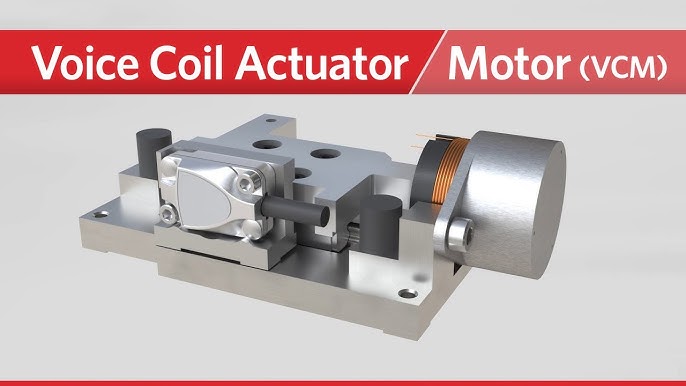
A voice coil motor is a direct-drive electromagnetic device that produces linear or rotary motion through the interaction of a magnetic field and a current-carrying coil. Because it eliminates mechanical transmission components such as gears or screws, it delivers smooth, rapid, and highly accurate motion. Understanding the capabilities of a voice coil linear actuator helps explain why this technology is widely used in precision-driven industries.
Why Voice Coil Motors Are Ideal for Precision Applications
Voice coil motors are favored in advanced systems because they offer a unique combination of speed, simplicity, and accuracy. Unlike traditional actuators, they do not rely on mechanical contact for motion generation.
Key advantages include:
- Direct-drive operation with no backlash
- Extremely fast response times
- Smooth and vibration-free motion
- High positioning accuracy
- Compact and lightweight design
These characteristics make them especially suitable for systems where space, speed, and precision are all critical constraints.
Applications in Camera and Imaging Systems
One of the most common uses of voice coil motors is in camera and imaging technology. Modern cameras, especially those used in smartphones and professional equipment, require fast and precise adjustments for focusing and stabilization.
Voice coil motors are used in:
- Autofocus mechanisms in smartphone cameras
- Optical image stabilization systems
- Lens positioning in DSLR and mirrorless cameras
- Zoom control in compact imaging devices
Their ability to move lenses quickly and accurately ensures sharp image quality even in dynamic conditions. The smooth motion also reduces blur caused by vibration or sudden movement.
Applications in Robotics Systems
Robotics is another major field where voice coil technology plays a critical role. As robots become more advanced, they require motion systems that can deliver both precision and responsiveness.
Common robotic applications include:
- High-speed pick-and-place systems
- Micro-positioning in assembly robots
- Force-controlled manipulation tools
- Feedback-driven motion systems for precision tasks
Because a voice coil motor responds almost instantly to control signals, it is ideal for robotic systems that require rapid adjustments and fine control. Its ability to provide smooth force output also improves handling of delicate objects.
Applications in Medical Systems
In the medical field, precision and reliability are essential. Devices must operate smoothly and accurately to ensure patient safety and diagnostic effectiveness. Voice coil motors are widely used in both diagnostic and treatment equipment.
Key medical applications include:
- Surgical positioning systems
- Medical imaging devices such as MRI and CT scanners
- Laboratory automation equipment
- Drug delivery and micro-dosing systems
Their non-contact operation reduces mechanical wear and improves reliability, while their smooth motion enhances patient comfort and imaging accuracy.
Advantages in High-Precision Environments
Across camera, robotics, and medical systems, voice coil motors offer several shared benefits that make them highly valuable:
- High-speed dynamic response for real-time adjustments
- Precise control of position and force
- Minimal mechanical wear for long-term reliability
- Compact design for integration into small devices
- Quiet and smooth operation suitable for sensitive environments
These advantages allow engineers to design systems that are both powerful and highly precise.
Design Considerations for Application Use
While voice coil motors offer many benefits, proper system design is essential to fully utilize their capabilities. Engineers must consider:
- Heat dissipation during continuous operation
- Control system tuning for stability and accuracy
- Load and stroke limitations based on application needs
- Feedback sensor integration for closed-loop control
Careful optimization ensures consistent performance and long operational life.
Conclusion
Voice coil motors have become essential components in modern camera systems, robotics, and medical devices due to their speed, precision, and compact design. Their direct-drive electromagnetic operation allows for smooth and accurate motion that meets the demands of advanced high-tech applications.
As technology continues to advance, the role of voice coil motors will expand further, supporting innovation in imaging, automation, and healthcare systems where precision and responsiveness are critical.