In the beauty industry, customers notice more than just a nail polish color. They notice how smoothly it applies, how the finished manicure looks, how long it lasts, and whether the packaging feels worthy of the price. For a beauty brand, every one of these details can influence whether a first-time buyer becomes a loyal customer.
That is why Custom Gel Polish has become an important option for brands that want greater control over their nail product range. Instead of simply choosing an off-the-shelf shade, brands can work around specific colors, finishes, packaging, and product requirements that match their market position.
But creating a successful gel polish line involves more than putting a logo on a bottle. Formula performance, color consistency, curing requirements, packaging, manufacturing standards, minimum order quantities, and customer expectations all need to be considered before production begins.
This guide explains the key factors beauty brands should evaluate when developing a custom gel polish collection.
What Is Custom Gel Polish?
Custom gel polish is a UV- or LED-curable nail coating developed or selected according to a brand’s specific requirements. Depending on the manufacturer and project, customization may involve the formula, colors, finishes, bottle design, labels, packaging, or overall product presentation.
For beauty businesses, this approach can provide more control over the final product compared with selling generic nail products under a standard label.
A brand might want a particular nude shade that reflects its identity, a collection of seasonal colors, a signature finish, or packaging designed specifically for its target audience.
The level of customization depends on the manufacturer. Some suppliers primarily offer private-label services using existing formulas, while others may provide broader product-development options.
Why Beauty Brands Choose Custom Gel Polish
The nail-care market is crowded. Customers have countless options, so having a recognizable product identity can make a meaningful difference.
A customized gel polish range can help a brand establish that identity in several ways.
Stronger Brand Recognition
A signature shade or distinctive bottle can become closely associated with your business.
Think about a customer seeing a particular color on social media or inside a salon. If the shade has a memorable name, attractive packaging, and a consistent visual identity, it becomes easier for customers to associate the product with your brand.
Greater Product Differentiation
Selling the same products as numerous competitors can make price the main deciding factor.
A carefully planned custom collection gives you an opportunity to create something with a clearer point of difference. This could involve unusual colors, coordinated collections, special finishes, or packaging designed for a particular customer group.
Better Control Over the Customer Experience
Your product is part of the overall brand experience.
The bottle, brush, label, color, consistency, instructions, and outer packaging all contribute to how customers perceive your business.
When these elements are planned together, the final product can feel much more cohesive.
Start With Your Target Customer
Before selecting colors or discussing packaging with a gel polish manufacturer, define exactly who you are selling to.
A professional salon has different priorities from a direct-to-consumer beauty brand. Similarly, experienced nail technicians may evaluate a product differently from customers who perform their own manicures at home.
Consider questions such as:
- Who will use the product?
- What price range are they comfortable with?
- Are they beginners or professionals?
- What colors do they normally wear?
- Do they prefer classic or fashion-forward shades?
- How important is fast application?
- What type of packaging appeals to them?
For example, a salon-oriented range may focus on reliable application, strong pigmentation, curing performance, and professional presentation.
A younger online beauty brand might put greater emphasis on trend-led colors, glitter finishes, seasonal collections, and social-media-friendly packaging.
Knowing your audience first makes later product decisions much easier.
Choosing the Right Gel Polish Formula
The formula is at the heart of the product. Beautiful packaging cannot compensate for a gel polish that is difficult to apply or performs inconsistently.
When evaluating samples, pay attention to the viscosity. A formula that is excessively thick may be difficult to spread evenly, while one that is too fluid can move toward the skin or cuticle during application.
The ideal consistency depends on the intended application method and product design, but the polish should generally allow controlled, even application.
Important Formula Characteristics
When testing samples, evaluate:
- Application smoothness
- Pigmentation
- Coverage
- Viscosity
- Self-leveling behavior
- Curing performance
- Surface finish
- Adhesion
- Wear characteristics
- Compatibility with recommended lamps
Do not judge a formula after looking at it in the bottle alone. Apply it to nail tips or another appropriate testing surface and evaluate its behavior during the complete application process.
Test Curing Performance Carefully
Gel products require appropriate curing because they are designed to harden under specific light conditions.
A manufacturer should provide clear instructions regarding the recommended curing system, exposure time, and application conditions.
Do not assume that every gel polish will perform identically under every UV or LED lamp.
During product testing, follow the manufacturer’s instructions precisely. Applying layers that are too thick or using an unsuitable lamp can affect curing results.
For a commercial brand, clear application and curing instructions are also important because customers may use different equipment.
Color Selection Can Make or Break a Collection
One of the most exciting parts of creating a nail polish range is choosing the colors. It is also one of the easiest places to make an expensive mistake.
A color shown on a computer or smartphone screen may not look exactly the same in person. Lighting, screen calibration, photography, nail-tip color, and application thickness can all influence visual perception.
For this reason, physical samples should be part of the approval process.
Build a Balanced Color Palette
Rather than selecting random shades, create a collection with a clear structure.
You could include:
- Everyday nude shades
- Soft pinks
- Classic reds
- Neutral browns
- Elegant mauves
- Deep burgundy
- Black and white
- Pastel colors
- Seasonal shades
- Glitter or shimmer options
A signature color can then give the collection its own personality.
For example, a minimalist beauty brand might build its first collection around muted beige, rose, taupe, cream, and soft brown shades. A trend-focused brand could use brighter colors and experimental finishes.
The right approach depends on the audience rather than a universal list of “best” colors.
Explore Different Gel Polish Finishes
Color is only one part of the product’s appearance. Finish can dramatically change the way a shade feels.
Common options include:
Glossy
A high-shine finish is versatile and works well across classic and contemporary collections.
Matte
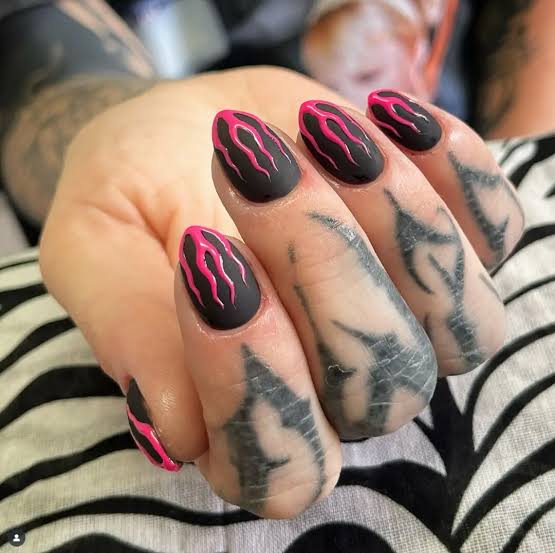
Matte products offer a softer appearance and can appeal to customers who want an alternative to traditional shine.
Glitter
Glitter gel polish can work especially well for seasonal launches, celebrations, and nail-art collections.
Shimmer
Fine shimmer can add dimension without creating the stronger visual effect associated with chunky glitter.
Metallic
Metallic shades can provide a more dramatic appearance and may work well as accent colors.
Cat-Eye Effects
Magnetic cat-eye formulas create distinctive visual patterns and can give a collection a more specialized character.
Not every brand needs all of these. A focused product range often looks more intentional than one containing every available finish.
Packaging Matters More Than Many Brands Expect
Imagine two gel polish bottles sitting next to each other on a retail shelf. Both contain quality formulas, but one has a polished label, recognizable branding, clear color identification, and an attractive bottle.
The other looks generic.
Packaging creates the first physical impression of the product.
For custom nail products, consider:
- Bottle shape
- Bottle capacity
- Cap design
- Brush quality
- Label material
- Logo placement
- Shade identification
- Product naming
- Outer box
- Ingredient information
- Barcode requirements
- Batch information
The packaging should also make practical sense. Customers should be able to identify the shade and understand essential product information without unnecessary confusion.
Pay Attention to the Brush
The brush is a small component, but it can have a major effect on usability.
A good brush should provide adequate control and help users apply the product evenly. Professional nail technicians may have very specific preferences because application speed and precision directly affect their workflow.
Ask for samples with the intended brush before approving large-scale production.
A formula that performs well with one brush design may feel completely different with another.
Understand Private Label and Custom Manufacturing
Beauty brands often use the terms “private label” and “custom” interchangeably, but they can describe different levels of product development.
Private-label production commonly involves selecting an existing formula and placing your brand identity, packaging, and product information on it.
More extensive custom manufacturing may involve changes to shades, finishes, formula characteristics, packaging, or other specifications.
When speaking with a manufacturer, ask exactly what can and cannot be customized.
This prevents misunderstandings later in the production process.
Evaluate the Manufacturer Before Placing an Order
Choosing a reliable gel polish supplier is just as important as selecting the product itself.
A manufacturer should be able to communicate clearly about specifications, samples, production schedules, packaging, minimum order quantities, and quality-control procedures.
Ask questions such as:
- What is the minimum order quantity?
- Can you provide samples before production?
- How are custom colors approved?
- What packaging options are available?
- What is the expected production timeline?
- How is batch consistency monitored?
- What documentation is available?
- Can the same shade be reproduced in future orders?
- What happens if products do not meet agreed specifications?
Clear communication is a strong indicator of how smoothly the relationship may work after the first order.
Consider Minimum Order Quantities
Minimum order quantity, or MOQ, deserves careful attention.
A manufacturer may offer a lower per-unit price for a large order, but that does not necessarily make the arrangement better for a new business.
Suppose you launch twelve shades and order thousands of units of every color. If only four shades sell strongly, you could have significant capital tied up in slow-moving inventory.
A smaller initial collection may reduce risk while giving you useful sales data.
Once you know which shades customers prefer, you can expand the collection with greater confidence.
Test Samples Before Approving Production
Never rely solely on product descriptions.
Create a practical sample-testing process and record your observations.
For each sample, assess:
| Category | What to Check |
|---|---|
| Application | Is the polish easy to control? |
| Coverage | How many coats are needed? |
| Color | Does it match the approved shade? |
| Consistency | Is the viscosity appropriate? |
| Curing | Does it cure according to instructions? |
| Finish | Does the final appearance match expectations? |
| Brush | Is application comfortable and precise? |
| Packaging | Does it represent the brand properly? |
| Wear | Does it perform as expected under normal use? |
This turns a subjective decision into a more organized product-development process.
Think About Regulatory and Product Information Requirements
Selling beauty products in different markets can involve specific requirements relating to ingredients, labeling, packaging, product safety, and documentation.
The exact obligations depend on where the product will be sold.
A manufacturer should be able to provide accurate product information and relevant documentation for the intended market.
Brands should also be cautious with marketing claims. Statements about being “chemical-free,” “non-toxic,” hypoallergenic, or completely safe should not be made casually without appropriate evidence and regulatory support.
Clear, accurate product information is better for both customer trust and long-term brand reputation.
Plan Your Product Line for Growth
A successful first collection may eventually become a much broader nail-care range.
Think about whether your manufacturing partner can support future products such as:
- Base coats
- Top coats
- Builder gels
- Nail art products
- Seasonal collections
- Limited-edition colors
- Professional salon ranges
- Matching manicure products
This forward planning can make expansion easier.
It is also worth thinking about consistency. If customers fall in love with a signature shade, they should be able to purchase it again without experiencing major differences between batches.
A Practical Example for a New Beauty Brand
Imagine a startup beauty company preparing its first gel polish collection.
Instead of ordering 30 colors immediately, the company selects eight core shades based on its target market. It requests physical samples, tests application and curing, evaluates the brush, checks packaging, and collects feedback from several nail technicians.
Two shades perform poorly during testing, so they are removed before production.
The company then invests more heavily in the six products that meet its standards.
This approach may seem slower at the beginning, but it can reduce unnecessary inventory and help the brand launch with a more reliable collection.
Common Mistakes to Avoid
Several mistakes can create unnecessary problems during custom gel polish development.
Choosing Based Only on Price
The lowest quotation does not automatically represent the best value.
Formula quality, packaging, consistency, documentation, production reliability, and customer service all contribute to the real cost of a product.
Ordering Too Many Colors
More colors do not always mean more sales.
A smaller, carefully selected range can be easier to market and manage.
Skipping Physical Samples
Digital images cannot fully represent the final product.
Always evaluate physical samples before approving production.
Ignoring Packaging
A good formula in poorly presented packaging can weaken the customer’s first impression.
Failing to Plan Reorders
If a particular color becomes popular, you need a manufacturing partner capable of producing it consistently.
Final Takeaway
Creating a successful custom gel polish collection requires a balance between creativity and practical product development.
Start by defining your customer and brand identity. Select formulas based on real application performance rather than promises. Test colors physically, evaluate curing requirements, pay attention to the brush and packaging, and carefully compare manufacturers before placing a large order.
Most importantly, treat your first collection as a product-development project rather than simply a packaging exercise.
A well-planned gel polish range can give a beauty brand a distinctive identity, a stronger customer experience, and a foundation for future product expansion. When the formula, color, packaging, and brand message all work together, the finished product feels intentional from the first glance to the final manicure.