Building a padel facility is an exciting opportunity, but ordering the court itself requires careful planning. From the size and layout of the site to materials, weather conditions, lighting, installation, and future maintenance, several decisions can affect the success of the project. Taking time to evaluate these factors before placing an order can help you avoid unnecessary expenses and create a court that works well for both players and operators.
Working with an experienced Padel Court Manufacturer can simplify this process because the manufacturer can provide technical specifications, construction guidance, component options, and recommendations based on the intended use of the court. Instead of choosing a court based only on appearance or price, buyers should look at how each component will perform over years of regular use.
Start With Your Site Requirements
The first step is understanding the location where the court will be installed. An indoor sports center and an outdoor recreational facility may require very different solutions.
Measure the available space carefully and consider access for construction equipment and delivery vehicles. The surrounding area should also provide enough room for players, spectators, maintenance staff, and safe movement around the court.
For outdoor installations, drainage and ground conditions deserve particular attention. A beautiful court can still become difficult to use if rainwater accumulates around or underneath the playing surface.
Before ordering, discuss your site conditions with the manufacturer and confirm the foundation and installation requirements.
Decide Between Indoor and Outdoor Installation
The environment in which a padel court operates affects material selection and maintenance.
Outdoor courts are exposed to sunlight, rain, wind, temperature changes, and potentially salty or humid air. Components therefore need appropriate protection against corrosion and weather-related deterioration.
Indoor courts are protected from many environmental factors, but the building itself creates other considerations. Ceiling height, ventilation, lighting, floor conditions, access points, and fire-safety requirements may all influence the installation.
A manufacturer should be able to explain which components are suitable for your particular environment rather than offering a generic solution for every project.
Examine the Steel Structure
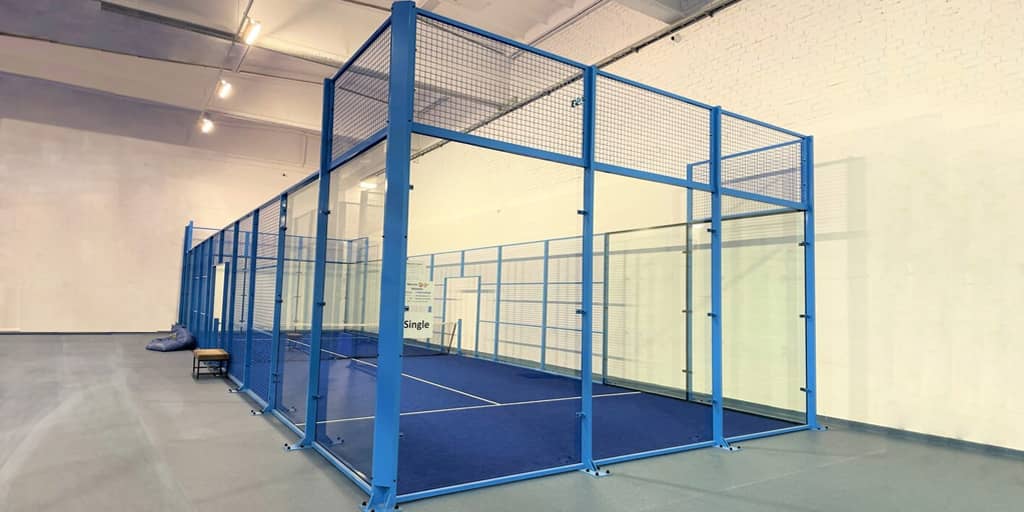
The structural frame forms the foundation of the court’s enclosure. It holds the glass panels, fencing, and other components in position, making structural quality particularly important.
When reviewing a manufacturer’s specifications, ask what type of steel is used and how the components are treated against corrosion. Welding quality, surface preparation, coating, and connection points can all affect long-term performance.
For outdoor courts, corrosion protection deserves additional attention. A suitable protective coating can help the structure withstand exposure to moisture and changing weather conditions.
It is also useful to ask whether the manufacturer has technical drawings available. These documents can help your contractor understand how the structure should be assembled and anchored.
Understand the Glass System
Glass is one of the most recognizable features of a padel court. Players use the walls as part of the game, so the panels need to be manufactured, processed, transported, and installed properly.
Ask the supplier about the glass type, thickness, treatment, dimensions, and safety specifications. You should also understand how the panels are secured within the frame.
Transportation is another important consideration. Glass requires careful packaging because damage during international shipping can create delays and additional costs.
A supplier that has established procedures for protecting glass during transportation can make the delivery process considerably easier.
Choose Turf for Actual Playing Conditions
The artificial turf is more than a visual feature. It influences ball behavior, player movement, traction, and the overall feel of the court.
Different turf systems can have different fiber structures, densities, colors, and drainage characteristics. The right option may depend on whether your court will be used indoors or outdoors and how frequently it is expected to operate.
For a busy commercial facility, durability and maintenance requirements should be considered carefully. For outdoor courts, drainage is especially important because heavy rainfall can affect the availability of the playing surface.
Ask the manufacturer for information about the expected service life and recommended maintenance routine of the turf.
Don’t Overlook Court Lighting
If your facility will operate after sunset, lighting should be considered during the planning stage rather than treated as an afterthought.
Poorly positioned lights can create glare or shadows that make it harder for players to follow the ball. A properly planned system should provide consistent illumination across the playing area.
LED lighting is commonly considered for sports facilities because of its energy efficiency and long operating life. However, the specific system should be selected according to the court design and local requirements.
Ask the manufacturer whether lighting is included in the standard package and whether the fixtures can be replaced individually if necessary.
Consider Branding and Visual Design
For commercial padel centers, appearance can be part of the customer experience. A professionally designed court can become a recognizable feature of the facility.
Depending on the manufacturer, buyers may be able to customize certain elements such as frame colors, branding, fencing, entrance areas, and other visual details.
Branding can be especially useful for clubs, hotels, resorts, gyms, and sports businesses that want their courts to match an existing identity.
However, visual customization should remain secondary to structural integrity and playing performance.
Compare Complete Packages
One common mistake when purchasing a padel court is comparing suppliers based only on the headline price.
Two manufacturers may offer apparently similar prices while including very different components. One quotation might include lighting, turf, installation assistance, and spare parts, while another may charge for these separately.
When comparing quotations, create a checklist covering:
- Court structure
- Tempered glass
- Artificial turf
- Mesh panels
- Access doors
- Lighting
- Fixings and hardware
- Packaging
- Shipping
- Installation support
- Warranty
- Replacement parts
This makes it easier to identify the actual value of each proposal.
Ask About Production Capacity
If you are developing several courts, production capacity becomes particularly important. A manufacturer may be able to supply one court efficiently but struggle with a larger order requiring several courts within a fixed schedule.
Ask about estimated production time, quality-control procedures, packaging schedules, and shipping arrangements.
For commercial projects, delays can affect construction schedules and planned opening dates. Having a clear production timeline before placing an order can help everyone involved coordinate their work.
Think About Spare Parts Before Installation
A padel facility will eventually need replacement components. Glass panels can become damaged, lights may require replacement, and certain hardware may need to be changed after extended use.
Ask the manufacturer which spare parts are readily available and how replacement orders are handled.
It is also worth considering whether frequently needed components can be purchased separately. Keeping a small selection of critical spare parts on-site may reduce downtime if something needs to be repaired unexpectedly.
Review the Warranty Carefully
A warranty provides useful information about what the manufacturer is prepared to stand behind, but buyers should read the actual terms rather than relying on a general warranty statement.
Check which components are covered, how long coverage lasts, what exclusions apply, and what procedure must be followed when making a claim.
Also ask whether warranty support is available internationally if your court is being installed outside the manufacturer’s home market.
Clear terms at the beginning can prevent misunderstandings later.
Evaluate Communication and Technical Support
Good communication can be just as valuable as good manufacturing.
During the purchasing process, pay attention to how clearly the supplier answers technical questions. Can they explain foundation requirements? Do they provide drawings? Are specifications easy to understand? Do they respond consistently when you need clarification?
These details become even more important during installation.
A manufacturer that provides technical support throughout the project can help contractors resolve questions without unnecessary delays.
Consider Future Maintenance
Before finalizing your purchase, think about what maintaining the court will look like one, three, or five years from now.
Ask about cleaning procedures, turf maintenance, glass cleaning, structural inspections, corrosion prevention, and lighting maintenance.
Outdoor courts may require more frequent inspection because weather conditions can affect metal structures, turf, and other exposed components.
A court that is easy to inspect and maintain can help facility owners control long-term operating costs.
Get Everything in Writing
Once you have selected a manufacturer, make sure the final agreement clearly records what has been discussed.
The purchase documentation should identify the court specifications, dimensions, materials, included accessories, customization, delivery arrangements, payment terms, warranty, and installation responsibilities.
Verbal agreements can easily become unclear when a project involves multiple people. Written specifications give both the buyer and manufacturer a clear reference throughout production and installation.
Final Thoughts
Ordering a padel court involves considerably more than selecting a design from a catalogue. Site conditions, structural materials, glass, turf, lighting, weather exposure, customization, logistics, warranty, and maintenance can all influence the long-term value of the investment.
The best approach is to define your requirements first and then compare manufacturers according to the complete package they can provide. Ask detailed questions, request technical documentation, and make sure every important component is included in the quotation.
A well-planned purchase can make installation smoother and help ensure that the finished court provides a reliable and enjoyable environment for players. Taking extra time during the selection process can ultimately save both money and frustration once the facility is operating.
Frequently Asked Questions
What should I ask before ordering a padel court?
Ask about structural materials, glass specifications, turf, lighting, customization, foundation requirements, production time, shipping, installation support, warranty coverage, and spare parts.
Is an outdoor padel court difficult to maintain?
Outdoor courts require regular maintenance because they are exposed to weather conditions. Routine inspection of the structure, glass, turf, fencing, drainage, and lighting can help identify problems early.
Can one manufacturer supply multiple courts?
Many manufacturers can handle multiple-court projects, but production capacity and lead times vary. For a larger project, confirm the manufacturer’s production schedule before placing the order.