Keeping swimming pool water clean and clear requires a combination of proper filtration, balanced water chemistry, and regular maintenance. Without the right tools and cleaning products, debris can accumulate, algae can develop, and water quality can deteriorate. Choosing suitable supplies helps homeowners maintain a healthier swimming environment while protecting the pool’s surfaces and equipment.
Whether you own a small backyard pool or a larger residential swimming pool, investing in appropriate swimming pool equipment and supplies can make routine care more manageable. Understanding which products serve essential functions helps you build an effective maintenance routine without spending money on unnecessary accessories.
1. Pool Water Testing Kits
Water testing kits are among the most important supplies for maintaining clean and clear pool water. Although water may look clean, its chemical balance can still be unsuitable for swimming or damaging to pool equipment.
A reliable testing kit helps monitor several important parameters, including:
- pH level: Indicates how acidic or alkaline the water is and affects sanitizer performance.
- Free chlorine or other sanitizer levels: Helps determine whether the water has adequate disinfection.
- Total alkalinity: Helps stabilize pH and reduce sudden fluctuations.
- Calcium hardness: Helps assess the risk of scaling or corrosion, depending on the pool’s materials and water chemistry.
- Stabilizer level: Helps evaluate chlorine protection against sunlight when a stabilized chlorine system is used.
Test strips are convenient for routine checks, while liquid reagent kits may provide more detailed measurements. Choose a testing method suited to your pool system and follow the manufacturer’s instructions carefully.
2. Pool Sanitizers and Water Balancing Chemicals
Sanitizers help control microorganisms in swimming pool water. Chlorine is widely used, although other approved sanitation systems are available depending on the pool’s design and treatment requirements.
Maintaining appropriate sanitizer levels is essential, but sanitation alone does not guarantee clear water. Water chemistry must also be balanced to support effective treatment and protect pool surfaces.
Common water treatment supplies include:
- Chlorine or another compatible sanitizer.
- pH increasers and reducers.
- Alkalinity adjustment products.
- Calcium hardness adjustment products when needed.
- Algaecides for appropriate preventive or corrective applications.
Use chemicals according to test results, product labels, and manufacturer recommendations. Never mix pool chemicals directly, and store them in their original containers in a secure, suitable location.
3. Pool Skimmers and Leaf Nets
Leaves, insects, grass, and other floating debris can quickly affect the appearance of pool water. Removing this material before it sinks helps reduce the workload on the filter and makes routine cleaning easier.
A handheld leaf net is useful for quick surface cleaning, while a skimmer attached to a telescopic pole provides additional reach. Homeowners with trees or gardens near the pool may need to skim more frequently, particularly after windy weather.
Some pools also use built-in skimmer systems that continuously collect surface debris as water circulates. Emptying skimmer baskets regularly helps maintain adequate water flow and prevents collected material from decomposing in the system.
4. Pool Brushes for Walls and Floors
Even when the water looks clear, dirt and algae can begin accumulating on pool walls, steps, corners, and floors. Brushing these areas helps loosen deposits so they can be removed through filtration or vacuuming.
The correct brush depends on the pool’s surface material. Softer brushes are generally suitable for delicate finishes, while specific durable brushes are designed for certain concrete or plaster surfaces.
Pay particular attention to corners, steps, waterline areas, and locations with limited circulation. Consistent brushing can help prevent buildup and improve the effectiveness of your overall cleaning routine.
Avoid using a brush that is too abrasive for the pool finish, as it may cause surface damage.
5. Pool Vacuum Cleaners
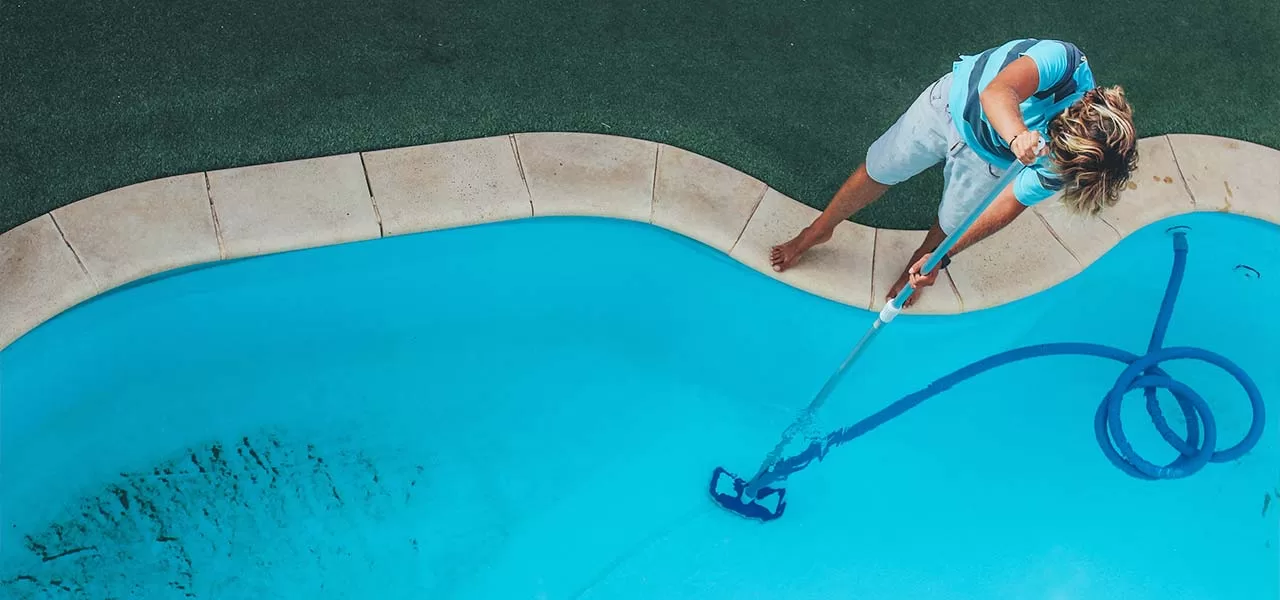
A pool vacuum removes dirt, sand, leaves, and other debris that settles on the bottom of the pool. Regular vacuuming supports water clarity and reduces the accumulation of material that could otherwise contribute to maintenance problems.
There are several types of pool vacuum cleaners to consider.
Manual Pool Vacuums
Manual vacuums typically connect to a telescopic pole and a suitable filtration or suction system. They are often affordable and allow homeowners to focus cleaning on specific areas.
However, they require more time and effort than automated options.
Suction-Side and Pressure-Side Cleaners
Suction-side cleaners use the pool’s circulation system to collect debris, while pressure-side models use water pressure to move and clean around the pool.
Their suitability depends on plumbing configuration, pump capacity, and the type of debris commonly found in the pool.
Robotic Pool Cleaners
Robotic cleaners operate independently of the pool’s main circulation system in many configurations. Depending on the model, they can clean pool floors, walls, and waterlines with less manual effort.
Before choosing a vacuum, consider pool size, shape, surface material, maintenance requirements, and the cost of replacement parts.
6. Pool Filters and Filter Cleaning Supplies
A filtration system captures particles that can make water appear dull or cloudy. Even when sanitizer levels are appropriate, inadequate filtration may prevent the pool from maintaining good water clarity.
Cartridge, sand, and diatomaceous earth filters each require specific maintenance procedures. Cartridge filters are generally rinsed and replaced when worn, sand filters are cleaned through appropriate backwashing procedures, and diatomaceous earth systems require careful servicing according to manufacturer instructions.
Keep the following supplies in mind:
- Compatible replacement filter cartridges or media.
- A garden hose for suitable filter cleaning tasks.
- Manufacturer-approved cleaning products when required.
- Replacement seals and O-rings for compatible equipment.
- A pressure gauge to monitor filter performance.
Check pressure readings regularly and clean the filter when indicated by the manufacturer’s guidance. Cleaning too infrequently can restrict flow, while unnecessary cleaning may waste water or reduce efficiency.
7. Pool Clarifiers and Specialized Water Treatment Products
Pool clarifiers may help address certain water clarity problems by encouraging very small suspended particles to combine into larger particles that filtration can capture more easily.
However, clarifiers are not a substitute for a functioning filter, proper circulation, balanced chemistry, or adequate sanitation. They should be used only when appropriate for the specific problem and compatible with the pool system.
Cloudy water can have several causes, including inadequate filtration, chemical imbalance, suspended debris, or the early stages of an algae problem. Testing the water and checking the equipment should come before adding additional treatment products.
Avoid combining multiple corrective chemicals without understanding their compatibility and intended uses. Follow label directions and allow the system to circulate and filter as recommended.
8. Pool Covers to Reduce Debris and Evaporation
A pool cover helps keep leaves, dust, insects, and other contaminants out of the water when the pool is not in use. By reducing the amount of debris entering the pool, it can also decrease the frequency of cleaning.
Some covers, including suitable solar covers, can reduce evaporation and help retain heat. These benefits may lower water replacement needs and heating expenses, depending on local conditions and pool usage.
Choose a cover that fits your pool and suits your intended purpose. An ordinary debris or solar cover should not be treated as a safety barrier unless it is specifically designed and rated for that function.
Remove accumulated water from covers as directed by the manufacturer, and inspect them regularly for damage.
9. Pool Circulation Equipment and Accessories
Clean water depends on more than chemicals and cleaning tools. Proper circulation helps distribute sanitizer, move water through the filter, and reduce stagnant areas where algae may develop.
The pool pump, return fittings, skimmer baskets, and associated plumbing all contribute to this process. Blocked baskets, dirty filters, or damaged connections can interfere with water movement and reduce overall cleaning effectiveness.
Inspect accessible equipment periodically for leaks, blockages, and unusual operating noises. Keep baskets clear, maintain the filter as recommended, and confirm that return fittings are functioning correctly.
If circulation remains poor despite basic maintenance, a qualified pool professional can help identify issues such as incorrect pump sizing, plumbing restrictions, or equipment faults.
10. Establish a Routine for Clear Pool Water
Even the best pool supplies deliver limited results without consistent use. A simple maintenance schedule helps prevent debris accumulation and allows problems to be identified before they become more difficult to correct.
Daily or Frequent Maintenance
- Remove floating leaves and visible debris.
- Observe the water for unusual cloudiness or discoloration.
- Check that circulation equipment appears to be operating normally.
- Test sanitizer levels as appropriate for pool use and conditions.
Weekly Maintenance
- Test and balance the water chemistry.
- Brush walls, steps, and other pool surfaces.
- Vacuum the pool floor when necessary.
- Empty skimmer and pump baskets.
- Inspect filter pressure and clean the filter when indicated.
Periodic Maintenance
- Inspect hoses, fittings, and accessible equipment connections.
- Check cleaning tools for wear or damage.
- Review the condition of the pool cover.
- Replenish essential treatment supplies and replace worn components.
- Arrange professional servicing when needed.
Adjust this schedule based on pool usage, weather, nearby vegetation, and the recommendations provided for your particular equipment.
How to Choose the Right Pool Cleaning Supplies
The most suitable products depend on the size of your pool, the type of filtration system, the pool’s surface, and the amount of maintenance required.
Before buying new supplies, identify the problem you want to solve. A pool with excessive leaves may benefit from better skimming tools and a suitable cover, while recurring cloudy water may require closer attention to filtration and chemistry rather than additional cleaning accessories.
Prioritize products that are compatible with your existing system, straightforward to maintain, and appropriate for your budget. Consider long-term operating costs, replacement parts, durability, and the manufacturer’s maintenance guidance.
Starting with essential testing, sanitation, filtration, and cleaning supplies provides a practical foundation. Optional products can be added later when they address a specific need.
Conclusion
Keeping swimming pool water clean and clear requires a balanced approach to sanitation, filtration, circulation, and physical cleaning. Water testing kits, appropriate chemicals, skimmers, brushes, vacuum cleaners, filter maintenance supplies, and pool covers all contribute to effective pool care.
By choosing suitable products and following a consistent maintenance schedule, homeowners can improve water clarity, protect equipment, and reduce unnecessary cleaning expenses. Regular testing and early attention to developing problems help maintain a comfortable swimming environment throughout the season.