



Chinese Medicine: A Holistic Pathway Toward Balanced Living
Discovering the Heart of an Ancient Healing Tradition
Chinese Medicine is one of the world’s most enduring health systems, rooted in centuries of observation, experience, and a deep respect for the natural world. Rather than focusing solely on the physical body, this tradition views wellness as a dynamic balance between mind, body, emotions, and environment. Its principles are designed to help individuals understand the causes behind their discomfort and support the body’s natural ability to heal and maintain harmony.
For many individuals today, exploring 中醫 has become a way to reconnect with traditional wisdom and adopt a more holistic approach to their health.
The Philosophy That Shapes Chinese Medicine
Chinese Medicine is built on foundational concepts that form a complete and interconnected healing philosophy. These include Qi, Yin and Yang, and the Five Elements. Rather than focusing on isolated symptoms, these ideas help explain how patterns of imbalance develop and how they can be corrected.
This system emphasizes the importance of internal balance. Health is seen as the natural condition of a body whose energy flows smoothly, whose organs function in harmony, and whose emotions are stable. Illness, therefore, is a sign that something within this balance has been disrupted.
Qi: The Energy That Sustains Life
Qi is often translated as “life energy,” and it flows through meridians that connect the organs and systems of the body. When Qi moves freely, the body feels strong, energetic, and calm. When it becomes stuck, weakened, or chaotic, various forms of discomfort may arise.
Physical tension, low energy, irritability, digestive troubles, or difficulty sleeping can all reflect disturbances in the movement of Qi. Many techniques in Chinese Medicine aim to regulate this flow to restore comfort and vitality.
Yin and Yang: Understanding Opposing Yet Complementary Forces
The concepts of Yin and Yang lie at the core of Chinese Medicine. Yin represents coolness, nourishment, rest, and introspection, while Yang symbolizes warmth, movement, activity, and outward expression. They are not opposites in conflict, but complementary forces that work together to create balance.
A disruption in their harmony can lead to a variety of bodily and emotional challenges. Excess Yang may show up as heat, irritability, or difficulty relaxing. Excess Yin may create feelings of coldness, tiredness, or lack of motivation. Treatment often focuses on restoring the balance between these two forces.
The Five Elements: A Framework for Understanding the Body
The Five Elements—Wood, Fire, Earth, Metal, and Water—offer another lens through which to understand patterns of health and imbalance. Each element corresponds to organs, emotions, seasons, and bodily processes:
- Wood: Liver, gallbladder, growth, spring
- Fire: Heart, small intestine, joy, summer
- Earth: Spleen, stomach, nourishment, late summer
- Metal: Lungs, large intestine, clarity, autumn
- Water: Kidneys, bladder, wisdom, winter
This system helps identify how external factors like weather, diet, emotional stress, or lifestyle choices may affect the body’s balance.
Traditional Techniques Used in Chinese Medicine
Acupuncture
Acupuncture uses ultra-thin needles placed at specific points along the meridians to influence the flow of Qi. Many people rely on acupuncture for stress relief, pain management, digestive support, or improved sleep. It is valued for encouraging deep relaxation and helping the body rebalance itself naturally.
Herbal Formulas
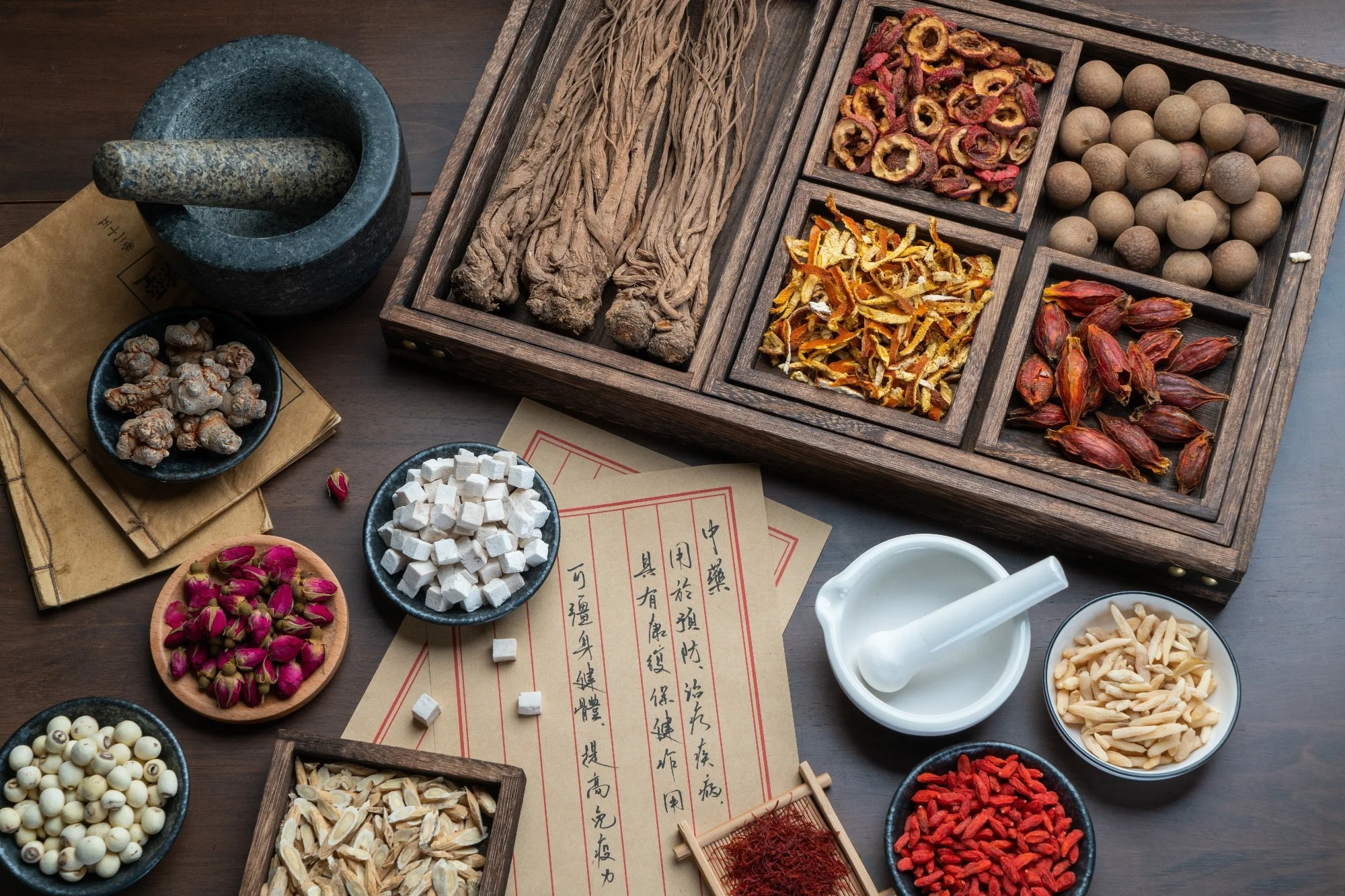
Herbal treatment is one of the most essential components of Chinese Medicine. Formulas are carefully designed mixtures of natural ingredients selected to meet the unique needs of an individual. These blends may help support digestion, improve energy, calm the mind, or enhance circulation, among other benefits.
Tui Na Massage
Tui Na is a therapeutic massage technique that focuses on encouraging proper movement of Qi and relieving blockages. It involves pressing, kneading, stretching, and rolling techniques that help loosen tight muscles, improve mobility, and support overall wellbeing.
Moxibustion and Cupping
Moxibustion involves applying warmth to certain areas of the body using dried mugwort (moxa). This technique is often used to strengthen Qi, improve circulation, or address cold-related imbalances. Cupping, on the other hand, uses suction to draw tension away from the muscles and stimulate the movement of Qi and blood.
Diet and Lifestyle Guidance
Another important aspect of Chinese Medicine is lifestyle balancing. Eating foods aligned with the seasons, getting sufficient rest, and practicing mindful movement exercises like Tai Chi or Qigong are highly valued. Rather than recommending short-term fixes, the focus is on sustainable habits that support long-term wellbeing.
Why Chinese Medicine Appeals to Modern Wellness Seekers
In an era where fast-paced routines, stress, and constant digital overload are common, many people are turning to Chinese Medicine as a grounding and restorative approach. Several aspects contribute to its increasing popularity:
- Holistic viewpoint: It considers emotional, physical, and environmental factors together.
- Personalized assessment: Each person’s pattern of imbalance is unique, leading to individualized treatment.
- Natural principles: It emphasizes natural healing, gentle techniques, and prevention.
- Mind-body connection: Emotional health is given equal importance as physical wellness.
- Long-term perspective: It promotes balance and vitality over time rather than short-term symptom relief.
These characteristics make Chinese Medicine an appealing option for those who want to understand their bodies more deeply and maintain health naturally.
Integrating Chinese Medicine Principles into Daily Life
You don’t need to fully adopt the traditional system to incorporate aspects of Chinese Medicine into your routine. Even small adjustments can have meaningful effects. These may include:
- Aligning your meals with seasonal changes
- Practicing slow, intentional movements
- Setting aside time for deep breathing or meditation
- Ensuring adequate rest to restore Yin energy
- Staying warm in colder months to support Qi flow
- Avoiding overly heavy or cold foods if your digestion is sensitive
These lifestyle practices reflect the broader goal of Chinese Medicine: living in harmony with both the body’s needs and natural cycles.
A Timeless Framework for Understanding Health
Chinese Medicine continues to stand out because of its profound, interconnected view of human health. It encourages individuals to look beyond temporary discomforts and explore the deeper patterns that influence their wellbeing. By examining the flow of Qi, the balance of Yin and Yang, and the influence of the Five Elements, this traditional system offers a holistic way of understanding how the body responds to life’s challenges.
Final Thoughts
Chinese Medicine is more than a method of treatment—it is a philosophy of life that reminds us of the importance of balance, awareness, and connection to nature. Its principles encourage individuals to tune into their bodies, observe their emotions, and make mindful choices that support long-term health. Whether practiced fully or used as guidance for daily living, this ancient tradition continues to inspire those seeking a natural and thoughtful approach to wellness.