

Differences Between Spin-On and Cartridge Oil Filters
Oil filters are essential for maintaining engine performance and protecting critical components from contaminants. When selecting an oil filter, vehicle owners and automotive manufacturers encounter two main types: spin-on filters and cartridge filters. Both serve the same fundamental purpose of removing particles from engine oil, but they differ in design, installation, maintenance, and performance characteristics. Understanding these differences is crucial for making informed choices and ensuring optimal engine protection.
The Role of a China Oil Filter Supplier
A China Oil Filter Supplier provides both spin-on and cartridge oil filters, offering a variety of designs to meet the requirements of different vehicles. Suppliers play a key role in manufacturing filters that comply with international quality standards, ensuring consistent performance and reliability. By offering high-quality options, they support automakers, fleet operators, and aftermarket distributors in selecting the appropriate filter type for each engine application.
In addition to manufacturing, China oil filter suppliers often provide technical guidance, helping clients determine which filter type is best suited for specific vehicles and operating conditions. This ensures compatibility, longevity, and maximum engine protection.
Spin-On Oil Filters
Spin-on filters are the most common type of oil filter used in passenger vehicles and light-duty trucks. They consist of a self-contained unit that includes the filtration media, end caps, gasket, and metal housing. Spin-on filters are installed by screwing the entire unit onto the engine, creating a seal through a rubber gasket.
Key Features of Spin-On Filters:
- Ease of Installation: Spin-on filters are simple to install and remove, making them ideal for quick oil changes.
- Integrated Design: All components are housed in a single unit, reducing the risk of incorrect assembly.
- Disposable: After the service interval, the entire filter is replaced, which is convenient but generates more waste compared to reusable designs.
- Limited Customization: The filter’s design and size are fixed, which may limit compatibility with some high-performance or heavy-duty engines.
Spin-on filters are popular because they require minimal tools and expertise to replace, making them ideal for personal vehicles and routine maintenance.
Cartridge Oil Filters
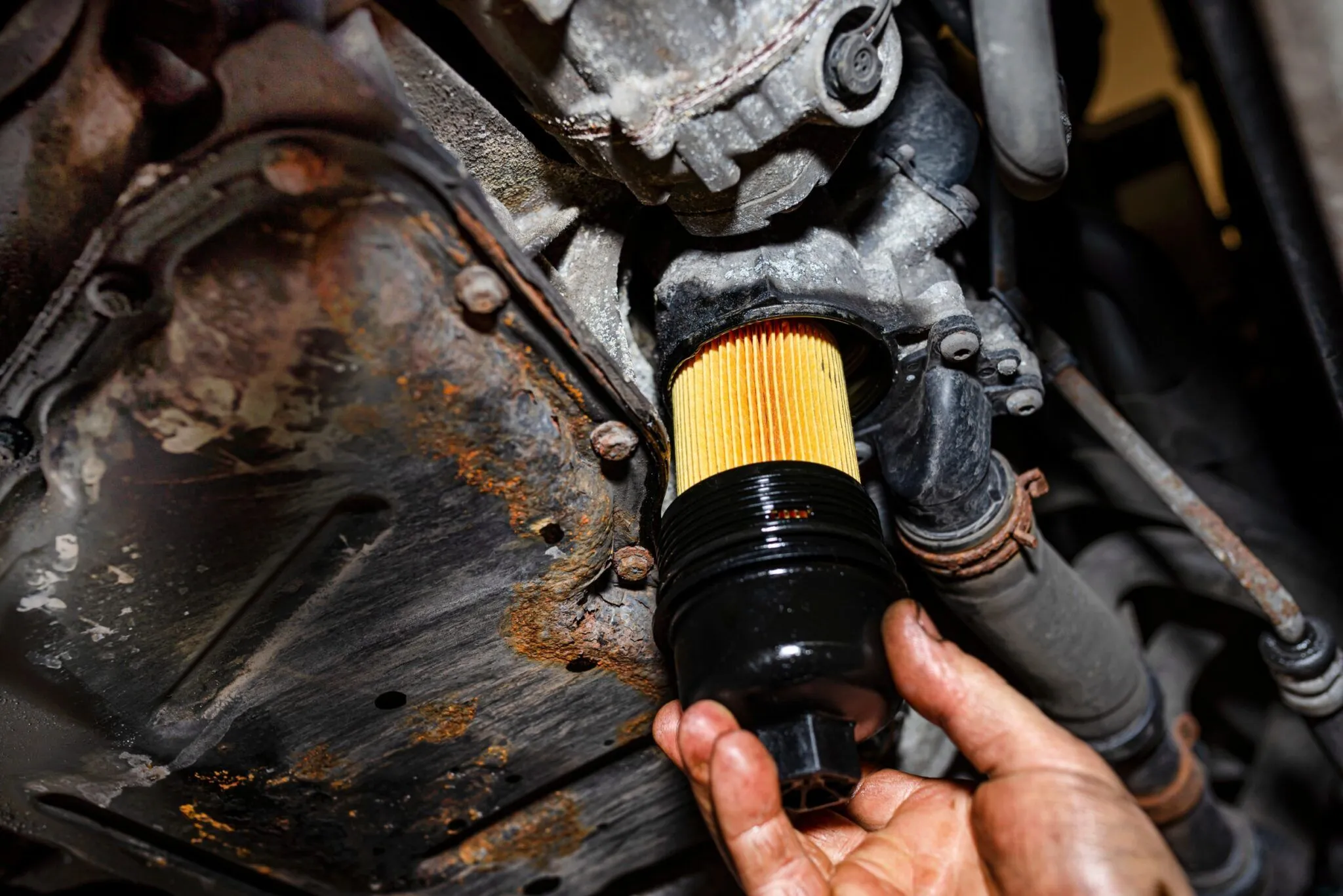
Cartridge oil filters, also known as element-style filters, consist of a replaceable filtration element housed within a permanent metal casing attached to the engine. During maintenance, only the filter element is replaced, while the housing remains on the engine. Cartridge filters are increasingly common in modern vehicles, especially in European and high-performance engines.
Key Features of Cartridge Filters:
- Reduced Waste: Only the filter element is replaced, which is more environmentally friendly than replacing the entire unit.
- Customizable Media: Cartridge designs allow for the use of advanced filtration media, including synthetic fibers, to enhance performance.
- Compact Design: The filter housing is typically integrated into the engine design, allowing for more efficient use of space.
- Maintenance Considerations: Installation can be slightly more complex, requiring proper seating of the filter element and attention to gaskets or seals.
Cartridge filters are often preferred in applications where engine design or environmental considerations demand longer service intervals and more precise filtration.
Filtration Performance Comparison
While both spin-on and cartridge filters perform the same basic function, filtration efficiency can vary depending on design and media quality. Cartridge filters often provide greater flexibility in media selection, allowing manufacturers to use high-efficiency synthetic fibers capable of capturing smaller particles. Spin-on filters, while convenient, may be limited in media volume and configuration due to their compact, all-in-one design.
High-quality filters from reputable suppliers, including China oil filter manufacturers, ensure that both types meet or exceed OEM specifications for particle retention, oil flow, and pressure resistance.
Environmental and Cost Considerations
Spin-on filters are simple and convenient but generate more waste since the entire unit is discarded at each oil change. Cartridge filters reduce waste by replacing only the element, making them more environmentally friendly. In terms of cost, spin-on filters are generally less expensive upfront, while cartridge filters may have slightly higher initial costs but can save money over time by reducing waste and supporting longer service intervals.
Application Preferences
The choice between spin-on and cartridge filters often depends on vehicle type, engine design, and maintenance practices. Spin-on filters are commonly used in personal vehicles, light trucks, and regions where quick service is preferred. Cartridge filters are favored in modern, high-performance, or European vehicles where space optimization, advanced filtration, and environmental considerations are prioritized.
Conclusion
Spin-on and cartridge oil filters both protect engines by removing contaminants from engine oil, but they differ significantly in design, installation, maintenance, and environmental impact. Spin-on filters offer convenience and ease of replacement, while cartridge filters provide customization, reduced waste, and higher filtration flexibility. Partnering with a reliable China Oil Filter Supplier ensures access to high-quality options in both categories, supporting engine performance, reliability, and sustainability. By understanding these differences, vehicle owners and manufacturers can make informed choices that meet technical, environmental, and operational requirements.