
The injection molding process has become one of the most reliable and cost-effective manufacturing technologies for producing plastic components in large volumes. From automotive interiors and consumer electronics to medical devices and household products, injection molding supports countless industries that require precision, consistency, and fast production. Its ability to manufacture identical parts repeatedly makes it a preferred solution for both established manufacturers and innovative product developers.
Unlike many traditional production methods, injection molding combines speed, accuracy, and material efficiency into a single manufacturing process. Once a mold has been created, thousands or even millions of identical components can be produced with minimal variation. This combination of scalability and repeatability explains why plastic manufacturing companies continue to invest heavily in advanced molding technologies.
Whether you are developing a new product or improving an existing design, understanding how the injection molding process works helps you make informed decisions about materials, tooling, production planning, and quality control.
What Is the Injection Molding Process?
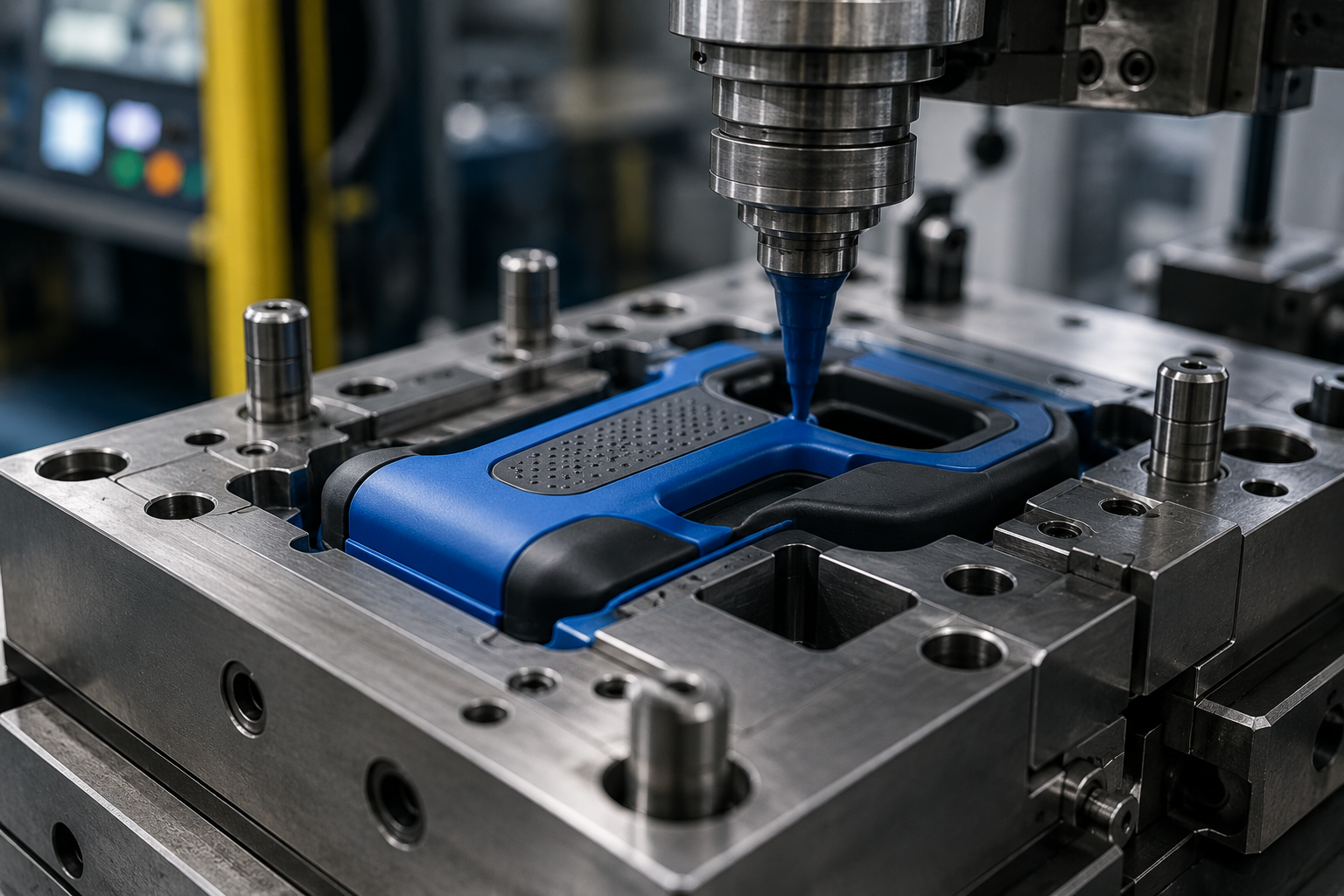
The injection molding process is a manufacturing method in which molten plastic material is injected into a precisely engineered mold cavity. After the material cools and solidifies, the finished component is ejected from the mold, ready for inspection or secondary operations.
Because the mold determines the final shape of the product, manufacturers can achieve exceptional dimensional accuracy and repeatability. The process supports both simple and highly complex geometries while maintaining excellent production consistency.
Modern plastic manufacturing facilities use advanced molding equipment capable of producing thousands of precision parts every day with minimal waste.
Why Injection Molding Is Widely Used
Manufacturers choose the injection molding process because it delivers outstanding efficiency during high-volume production. Once tooling has been completed, production cycles become extremely fast, allowing businesses to manufacture large quantities of parts within short timeframes.
The process also offers remarkable flexibility. Components can be produced in different sizes, shapes, colors, and material types while maintaining strict quality standards. This versatility makes injection molding suitable for industries ranging from aerospace and healthcare to consumer goods and industrial equipment.
Compared with many alternative production methods, injection molding offers an excellent balance between cost, speed, and product quality.
Key Stages of the Injection Molding Process
Every successful injection molding process follows a series of carefully controlled production stages. Plastic pellets are first loaded into the machine hopper, where they are gradually heated until reaching a molten state.
The molten material is then injected under high pressure into a precision mold cavity. Once the cavity is completely filled, controlled cooling allows the plastic to solidify while maintaining its intended shape. After cooling, the mold opens, and ejector pins remove the finished part before the next production cycle begins.
These automated steps allow manufacturers to produce large quantities of identical components with exceptional consistency.
Material Selection in Plastic Manufacturing
Material choice plays a critical role in successful plastic manufacturing. Different engineering plastics provide unique mechanical, thermal, and chemical properties depending on the intended application.
Common materials include ABS, polypropylene, polycarbonate, nylon, polyethylene, PEEK, and thermoplastic elastomers. Each material offers advantages such as impact resistance, flexibility, chemical stability, heat resistance, or electrical insulation.
Selecting the right material ensures the finished product performs reliably throughout its expected service life while supporting efficient production methods.
Mold Design and Its Importance
The mold is often considered the foundation of the injection molding process. High-quality molds directly influence product accuracy, surface finish, production speed, and manufacturing consistency.
Engineers carefully design molds to optimize material flow, cooling performance, venting, and part ejection. Proper gate placement, balanced runner systems, and efficient cooling channels help reduce cycle times while improving overall product quality.
Although tooling represents a significant initial investment, well-designed molds provide reliable performance over long production runs.
Advantages of Injection Molding
One of the greatest strengths of the injection molding process is its ability to produce complex components with outstanding precision. Tight tolerances, detailed surface textures, and integrated design features can often be achieved in a single production cycle.
The process also minimizes material waste because excess plastic can frequently be recycled into future production batches. Automation further improves manufacturing consistency while reducing labor requirements.
These advantages explain why injection molding remains one of the most efficient production methods available today.
Quality Control During Production
Maintaining consistent product quality is essential in modern plastic manufacturing. Manufacturers monitor numerous production variables, including injection pressure, temperature, cooling time, cycle duration, and mold performance.
Finished components undergo dimensional inspection, visual examination, and functional testing to ensure compliance with engineering specifications. Advanced quality systems help detect production variations before they affect product consistency.
Effective quality control reduces scrap rates while improving customer satisfaction and long-term manufacturing reliability.
Factors That Influence Production Efficiency
Several variables affect the overall efficiency of the injection molding process. Component complexity, wall thickness, material properties, mold design, and machine capabilities all influence production speed and cost.
Uniform wall thickness helps improve material flow while reducing cooling time. Efficient mold cooling systems shorten production cycles, allowing manufacturers to increase output without compromising quality.
Optimizing these variables enhances both productivity and overall manufacturing performance.
Applications Across Multiple Industries
The versatility of the injection molding process allows it to support numerous industries. Automotive manufacturers produce dashboards, trim panels, connectors, and structural components using injection molding technology.
Medical companies rely on precision molding for diagnostic equipment, surgical instruments, and disposable healthcare products. Consumer electronics manufacturers produce housings, connectors, switches, and protective enclosures through advanced plastic manufacturing techniques.
Industrial machinery, packaging, telecommunications, construction, and household appliance manufacturers also depend heavily on injection molding for reliable component production.
Common Design Considerations
Design optimization significantly improves manufacturing success. Engineers developing components for the injection molding process should consider wall thickness consistency, draft angles, rib placement, corner radii, and proper gate locations.
Avoiding unnecessary complexity simplifies production while reducing tooling costs and cycle times. Early collaboration between product designers and manufacturing specialists often results in products that perform better while remaining economical to manufacture.
Good design decisions benefit both product performance and long-term production efficiency.
Future Trends in Injection Molding
Innovation continues to improve the injection molding process. Smart manufacturing systems now integrate automation, artificial intelligence, and real-time production monitoring to increase efficiency and reduce downtime.
Sustainable plastic manufacturing is also becoming increasingly important. Many manufacturers are adopting recycled materials, energy-efficient equipment, and environmentally responsible production techniques without sacrificing product quality.
As technology advances, injection molding will continue evolving to support faster production, greater precision, and improved sustainability.
Conclusion
The injection molding process remains one of the most effective production methods for manufacturing precision plastic components at scale. Its combination of speed, consistency, material efficiency, and design flexibility makes it an essential technology across countless industries.
By understanding material selection, mold design, quality control, and efficient plastic manufacturing practices, businesses can produce reliable products while optimizing production performance. Whether manufacturing prototypes or high-volume commercial products, investing in a well-planned molding guide and experienced engineering support helps ensure consistent quality, reduced production costs, and long-term manufacturing success.