
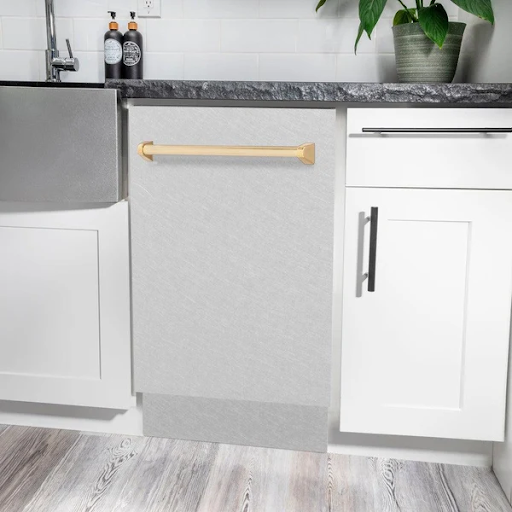
Kitchen space is often limited, particularly in apartments, smaller homes, secondary kitchens, and renovated spaces where every cabinet and appliance dimension matters. A compact dishwasher can provide an alternative to a full-size dishwasher when available space is restricted, while still offering automated dish cleaning and useful water-saving features.
Choosing the right dishwasher requires more than looking at its exterior size. Capacity, installation type, water consumption, cycle options, noise levels, interior arrangement, and available space all influence how well an appliance will work in a particular kitchen. Understanding these factors can help homeowners make a more informed decision.
What Is a Compact Dishwasher?
A compact dishwasher is a smaller dishwasher designed for kitchens where a standard full-size model may not be practical. Compact models are generally narrower than standard dishwashers, although exact dimensions vary by manufacturer and configuration.
Some compact dishwashers are designed for permanent installation beneath a counter, while others are portable or countertop units. Built-in compact models can provide a more integrated appearance, whereas portable designs may be useful for renters or kitchens without a dedicated dishwasher opening.
The right type depends on the kitchen layout, plumbing availability, household size, and how frequently dishes need to be washed.
How Much Can a Compact Dishwasher Hold?
Capacity is one of the most important considerations when comparing dishwashers. A smaller exterior footprint usually means less interior capacity than a full-size model.
Manufacturers commonly describe dishwasher capacity using place settings. A place setting represents a standardized collection of dishes and utensils used by one person during a meal.
A smaller dishwasher can be appropriate for:
- Individuals
- Couples
- Small families
- Apartments
- Guest kitchens
- Office kitchens
- Secondary living spaces
However, households that frequently cook large meals may find that a larger dishwasher reduces the number of cycles required.
What Are the Main Types of Compact Dishwashers?
There are several configurations worth considering.
Built-In Compact Models
Built-in models are installed permanently within the kitchen cabinetry. They can provide a cleaner appearance and integrate with the rest of the kitchen design.
Installation typically requires appropriate water, drainage, and electrical connections.
Countertop Models
Countertop dishwashers occupy worktop space but generally require less installation infrastructure than built-in appliances. They can be useful where cabinet space is unavailable.
The trade-off is that they reduce available countertop workspace and generally have smaller capacities.
Portable Models
Portable dishwashers can be moved when necessary and may connect to a kitchen faucet during operation. They can be useful in rental properties or kitchens that lack a permanent dishwasher connection.
Which Features Should You Look For?
When selecting a compact dishwasher, focus on features that directly affect everyday use.
Adjustable Racks
Flexible racks can make it easier to accommodate dishes, bowls, glasses, and larger cookware.
Multiple Wash Cycles
Different cycles allow users to select an appropriate programme for lightly soiled dishes, heavily soiled cookware, delicate items, or quick cleaning.
Heated Drying
Some models use heated drying systems, while others rely on condensation or air-based drying. The appropriate option depends on the user’s priorities regarding drying performance and energy consumption.
Soil Sensors
Certain dishwashers use sensors to detect how dirty the water is and adjust parts of the wash programme accordingly.
Delay Start
A delay-start function allows the user to schedule a wash cycle for a later time, which can be useful for managing household routines.
Are Compact Dishwashers Energy Efficient?
Size alone does not determine energy or water efficiency. Actual consumption depends on the appliance’s design, cycle selection, usage frequency, and efficiency rating.
In the United States, ENERGY STAR provides standardized efficiency criteria for qualifying dishwashers. The organization states that certified dishwashers use less water and energy than standard models while meeting performance requirements. (energystar.gov)
For buyers, comparing official energy and water-use information can be more useful than assuming a smaller dishwasher automatically consumes less.
How Important Is Dishwasher Noise?
Noise is another important factor, especially when the kitchen is close to living areas, bedrooms, or open-plan dining spaces.
Dishwasher noise is typically measured in decibels, or dB. Lower numbers generally indicate quieter operation.
Modern dishwashers can include sound-reduction materials and quieter pumps to reduce operating noise. When comparing premium dishwashers, buyers should check the manufacturer’s published noise specification rather than relying only on descriptions such as “quiet.”
A small difference in noise level can become noticeable when the appliance runs frequently in an open-plan home.
What Makes Premium Dishwashers Different?
The term premium dishwashers generally refers to appliances positioned at the higher end of the market in terms of construction, features, design, or technology. However, “premium” is not a standardized technical classification.
Features that may appear in higher-end models include:
- Advanced filtration
- Flexible rack systems
- Specialized wash zones
- Multiple spray patterns
- Enhanced drying
- Low operating noise
- Stainless-steel interiors
- Smart connectivity
Not every household needs these features. Buyers should determine which functions provide meaningful benefits instead of assuming a higher price automatically means better suitability.
Are Luxury Dishwashers Worth Considering?
The term luxury dishwashers is also largely a market-positioning description rather than a standardized performance category. Such models may emphasize quiet operation, premium materials, sophisticated controls, integrated design, or advanced cleaning and drying systems.
For homeowners designing a high-end kitchen, appearance and integration can be important alongside performance. Fully integrated models, for example, can be designed to blend with surrounding cabinetry.
However, even in a luxury kitchen, the appliance should be evaluated according to capacity, dimensions, cycle performance, maintenance requirements, and installation compatibility.
What Should You Check Before Buying?
Before choosing a compact dishwasher, measure the available space carefully.
Important measurements include:
- Width
- Height
- Depth
- Door clearance
- Adjacent cabinet clearance
- Plumbing connection location
- Electrical outlet location
For built-in models, cabinet dimensions need to match the appliance’s installation requirements. Even a small dimensional mismatch can create problems during installation.
It is also worth checking whether the door can open completely without hitting nearby cabinets or appliances.
How Does a Compact Dishwasher Compare With a Standard Model?
The primary advantage of a compact dishwasher is space efficiency. A smaller model can make automated dishwashing possible in kitchens where a full-size appliance would consume too much cabinet space.
The main disadvantage is capacity. Smaller households may find the capacity sufficient, while larger families or frequent entertainers may need to run more cycles.
The choice therefore depends on the balance between kitchen space and dishwashing requirements.
What About Buying a Dishwasher Online?
When looking for a dishwasher, buyers should evaluate the complete cost rather than focusing only on the advertised purchase price.
Additional expenses may include:
- Delivery
- Installation
- Plumbing modifications
- Electrical work
- Cabinet alterations
- Removal of an existing appliance
Warranty coverage and service availability should also be reviewed before purchasing. These factors can have a substantial impact on the long-term ownership experience.
How Can You Choose the Right Dishwasher?
Start by determining how much space is available and how many dishes your household typically generates each day. Next, decide whether a built-in, countertop, or portable design is appropriate.
After that, compare capacity, noise, water and energy consumption, wash cycles, drying systems, rack flexibility, and installation requirements.
For shoppers comparing higher-end appliances, it can be helpful to separate genuinely useful features from marketing terminology. A dishwasher should ultimately match the household’s actual needs rather than simply its price category.
Conclusion
A compact dishwasher can be a practical solution for kitchens where space is limited but automated dishwashing is still important. Its smaller footprint can make it suitable for apartments, smaller households, secondary kitchens, and other spaces where a full-size dishwasher may not fit. The most important considerations include capacity, installation type, dimensions, noise, water and energy consumption, rack flexibility, wash programmes, and drying performance. Buyers should also calculate installation and ownership costs rather than evaluating the purchase price alone. Whether comparing premium dishwashers, researching luxury dishwashers, or looking for a dishwasher for sale, the best choice is the one that fits the available kitchen space while providing the capacity and functions needed for everyday use.