

18mm Film Faced Plywood Selection Guide: How to Choose the Right Thickness for Different Construction Applications
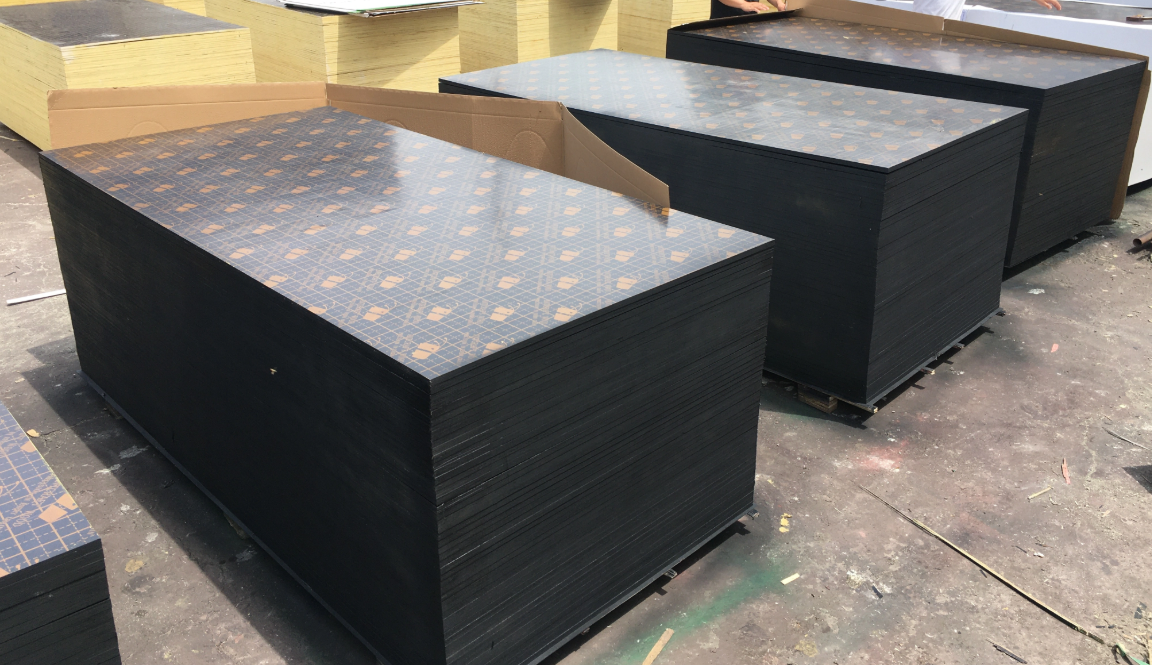
For global B2B procurement managers, general contractors, and construction firms, selecting the right wholesale film faced plywood specification is one of the most critical decisions that directly impacts project cost control, construction safety, and concrete finish quality. Among the various thickness options, 18mm film faced plywood / 1220x2440mm has become the preferred global standard for commercial and residential building projects, thanks to its superior strength, durability, and cost-effectiveness.
But is 18mm really the “universal answer” for every project? Let’s begin with a real-world lesson from a construction site.
A US$50,000 Lesson in Thickness Selection
Picture this scene at a mid-rise residential project somewhere in the Middle East. The concrete pump is running, and the crew is preparing for the 6th-floor slab pour. Everything proceeds according to schedule—until a dull cracking sound echoes from inside the formwork.
The 15mm film faced plywood had bulged and delaminated under the lateral pressure of the concrete. Wet concrete gushed through the ruptured surface, creating a total mess on site. The final outcome: 5 working days of downtime, panel replacement, cleanup, and repairs—direct and indirect losses exceeding US$50,000.
The post-incident investigation traced the root cause to a single factor: the wrong thickness was chosen. The 15mm panels performed adequately through the first 5 pours, but by the 6th pour, their structural strength could no longer withstand the lateral pressure of a mid-rise building.
This lesson raises the central question of this article: Is 18mm film faced plywood truly a universal solution? When should you choose it, and when should you upgrade or downgrade?
Technical Breakdown of 18mm x 1220x2440mm
Why Is This Dimension the “International Standard”?
The 18mm film faced plywood / 1220x2440mm has become the gold-standard dimension in global construction formwork—and for good reason.
First, the 1220×2440mm (4×8 feet) dimension perfectly aligns with the joist spacing standards of the world’s leading formwork systems, including PERI, DOKA, and MEVA (typically 450-600mm). When sourcing wholesale film faced plywood, there is minimal need for on-site cutting, directly reducing waste rates and labor costs.
Second, the 18mm thickness achieves the optimal balance in structural mechanics. Under standard joist spacing, 18mm panels provide sufficient rigidity to resist fresh concrete’s lateral pressure without significant deflection. Compared to 15mm panels, it delivers 5-8 additional reuses; compared to 21mm panels, it is lighter and more cost-effective to transport.
Thickness Tolerance – A Clause You Must Specify in Your Purchase Contract
International standards require the thickness tolerance of film faced plywood 18mm to be within ±0.5mm. Top-tier film faced plywood manufacturers can achieve ±0.3mm.
Why does this matter? Excessive thickness deviation directly compromises the flatness of panel joints. Poorly fitted joints mean grout leakage, grout leakage means concrete surface defects, and surface defects mean additional patching and finishing costs. Request thickness tolerance data from your film faced plywood supplier and explicitly specify it in your contract—this is a fundamental practice of professional procurement.
The Practical Value of 1220mm Width
The practical value of 1220mm-wide concrete formwork plywood on construction sites is often underestimated. It perfectly matches the module of standard steel-frame formwork systems, delivering:
Reduced cutting: No on-site resizing required, saving time and labor
Lower waste: Less cutting means lower material loss
Standardized assembly: Workers become more efficient with consistent panel sizes
Global Project Type × Thickness Recommendation Matrix (Core Decision-Making Tool)
Different projects demand vastly different wholesale film faced plywood specifications. Below is a thickness selection guide based on international engineering practice:
| Project Type | Recommended Thickness | Target Reuse Cycles | Key Considerations |
|---|---|---|---|
| Low-rise Residential / Villas | 12-15mm | 5-8 times | Cost priority; low lateral pressure |
| Commercial Buildings / Shopping Centers | 18mm | 15-20 times | Optimal cost-performance ratio; global standard |
| High-rise Buildings (20+ stories) | 18mm (premium core) | 15-20 times | Requires high-density core (≥600kg/m³) |
| Bridges / Dams / Infrastructure | 21mm | 20+ times | Safety first; extremely high lateral pressure |
| Architectural / Fair-faced Concrete | 18mm + high-weight film (≥220g/m²) | 15-20 times | Film weight directly determines surface finish |
For the vast majority of commercial and residential projects, 18mm is the “safest, most economical, and most versatile” choice. However, for infrastructure projects such as bridges and viaducts, structural engineers typically specify 21mm panels due to higher lateral pressure and greater safety margin requirements.
Film Weight: A Critical Factor Even More Overlooked Than Thickness
Professional buyers will tell you: film weight (film basis weight) determines reuse cycles even more than thickness does.
| Film Type | Weight (g/m²) | Expected Reuse Cycles | Best Application Scenario |
|---|---|---|---|
| Standard Brown Film | 120g/m² | 5-10 times | General formwork; foundation work |
| Reinforced Brown Film | 220g/m² | Up to 15 times | Commercial projects; standard formwork |
| Premium Phenolic Film | 220g/m² | 15-20 times | High-rise construction; export-grade products |
| Dynea Phenolic Film | 220-350g/m² | 25-40+ times | High-reuse projects; demanding conditions |
| Anti-Slip Film | 120-220g/m² | Varies by condition | Scaffolding; working platforms |
Film weight directly correlates with reuse cycles—heavier film means higher initial cost but lower cost per use. Concrete formwork plywood using premium film (such as Dynea brand) can support 25-40+ reuses, making it particularly suitable for large-scale commercial and infrastructure projects.
The Economic Truth of 18mm: Calculating “Cost Per Use”
Many buyers selecting wholesale film faced plywood are lured by “unit price” alone, overlooking the far more critical metric—Cost Per Use (CPU) .
Formula: Cost Per Use = Purchase Price ÷ Expected Reuse Cycles
Real-World Comparison Case:
| Metric | Option A: Budget Panels | Option B: Premium Panels |
|---|---|---|
| Unit Price | $28/sheet | $42/sheet |
| Film Weight | 120g/m² | 220g/m² Dynea |
| Claimed Reuse Cycles | 8 times | 20 times |
| Cost Per Use | $3.50 | $2.10 |
| Total Cost for 100 Sheets × 20 Pours | $7,000 | $4,200 |
Conclusion: Panels costing 50% more actually deliver a 40% lower cost per use.
Industry data indicates that the break-even point between 120g/m² film and 220g/m² phenolic film typically occurs at the 8th to 9th pour—if your project requires fewer reuses, budget panels win; if it exceeds that threshold, phenolic film panels win on both cost and surface consistency.
A Trusted Film Faced Plywood Manufacturer Partner – Fortuna
When selecting a film faced plywood supplier, factory scale, certifications, and project track record are critical decision-making factors. A great supplier is not just a product provider but a long-term partner in your project’s success.
Fortuna has been dedicated to the research, development, and manufacturing of high-quality film faced plywood since 1993, accumulating over 30 years of specialized expertise in the global construction formwork industry.
Global Production & Supply Capacity
Fortuna operates a 208,000m² manufacturing facility located in Linyi, Shandong, China—one of the world’s largest plywood industry clusters. Leveraging this uniquely advantageous industrial ecosystem, Fortuna achieves an annual production capacity of 300,000m³, consistently shipping over 100 containers monthly to reliably support large-scale infrastructure and commercial projects worldwide.
In terms of export reach, Fortuna serves more than 170 countries and regions globally, partnering with numerous renowned construction firms and distributors. This extensive international market coverage not only demonstrates the adaptability of its products to diverse climates and construction standards but also validates its delivery capability and export service excellence as a globally recognized film faced plywood manufacturer.
International Certifications & Quality Assurance
Fortuna holds multiple authoritative certifications in the international forestry and building materials industry:
FSC Forest Certification: Guarantees legal and sustainable wood raw material sourcing
CE Certification: Complies with EU construction product safety standards
CARB Phase 2 Certification: Meets California’s stringent formaldehyde emission regulations
ISO 9001 Quality Management System Certification: Ensures full-process quality control throughout production
Premium Film Options & Functional Solutions
To accommodate diverse project requirements and budget levels, Fortuna offers flexible material options:
Dynea Film – The industry’s most recognized premium phenolic film brand, supporting 25-40+ high-reuse cycles. Dynea film is renowned for exceptional abrasion resistance, weatherability, and release performance, making it the ideal surface material for high-quality concrete formwork plywood.
Anti-Slip Solutions – Anti-slip texture applied to the film surface, effectively enhancing worker safety when operating on formwork—a particularly valuable added feature for overseas projects with stringent safety standards.
Proven Performance in World-Class Landmark Projects
Fortuna‘s products have passed the most demanding project inspections worldwide, having been delivered to numerous iconic global landmarks:
Beijing National Stadium (Bird’s Nest) – One of China’s most iconic sports venues
Hamad International Airport (Doha) – A critical aviation hub in the Middle East
Shanghai Pudong International Airport – One of the world’s busiest international aviation gateways
Burj Khalifa (Dubai) – The world’s tallest building, with exceptionally rigorous material strength and durability requirements
These landmark projects not only validate the product quality and consistency of Fortuna‘s wholesale film faced plywood but also demonstrate its capability as a film faced plywood supplier to deliver reliable solutions in complex engineering environments. Choosing a manufacturer with world-class project experience means choosing a quality commitment and project assurance that has been proven on the world’s biggest stages.
VII. Procurement Checklist (Save & Print for Use)
Before placing an order for wholesale film faced plywood, we recommend confirming the following items with your film faced plywood supplier:
- □
Provide valid certifications including FSC, CE, CARB P2, and ISO 9001
- □
Specify core wood species and density (e.g., eucalyptus or mixed hardwood, ≥600kg/m³)
Confirm film weight and brand (e.g., 220g/m² Dynea phenolic film)
Confirm WBP phenolic glue is used, and request the impregnation peel test report (72-hour boil test)
Confirm thickness tolerance range (within ±0.5mm; ±0.3mm is even better)
Confirm whether four-side edge sealing is applied (to prevent moisture ingress that causes swelling and delamination)
Confirm OEM customization capabilities (logo printing, custom sizing, edge painting, etc.)
FAQs – The 5 Most Frequently Asked Questions by Buyers
Q1: What is the maximum reuse cycle for 18mm film faced plywood?
A: Under normal construction conditions, high-quality film faced plywood 18mm / 1220x2440mm can achieve 15-20 reuses. With premium Dynea film (220g/m² or above), WBP phenolic glue, and high-density core materials, products can reach 25-40+ reuses. Actual reuse cycles are affected by construction practices, release agent application, edge protection, and storage conditions.
Q2: How can I verify whether a supplier’s reuse cycle claims are reliable?
A: We recommend a three-step verification process: ① Request third-party test reports (SGS/Intertek) for the same production batch, with particular attention to impregnation peel test results (no delamination after 72-hour boiling) and surface abrasion resistance data; ② Request actual site usage records from other projects using identical specifications; ③ Place a trial order—start with no more than one container, conduct on-site testing, and scale up only after verification. A reliable film faced plywood manufacturer is typically willing to accommodate these verification procedures.
Q3: What is the difference between WBP phenolic glue and standard glue?
A: WBP (Weather and Boil Proof) is a waterproof and boil-proof adhesive grade that withstands 72-hour boiling immersion testing without delamination—this is a mandatory requirement for concrete formwork plywood subjected to repeated use in outdoor, high-moisture environments. Standard MR (Moisture Resistant) glue is suitable only for indoor dry environments and will rapidly degrade when exposed to moisture. Melamine glue offers some water resistance but falls far short of phenolic glue in long-term weatherability. Always specify WBP phenolic glue in your contract.
Q4: What is the standard thickness to lerance for 18mm film faced plywood?
A: International standards require thickness tolerance within ±0.5mm. Top-tier factories can achieve ±0.3mm. We strongly recommend explicitly specifying the thickness tolerance range in your purchase contract, along with return/exchange terms should the tolerance be exceeded during on-site inspection. Thickness deviation directly affects joint flatness and concrete finish quality.
Q5: How can I ensure quality when sourcing wholesale film faced plywood from China?
A: We recommend five measures: ① Video factory inspection—confirm you are dealing with a manufacturer rather than a trading company; inspect production lines and quality control processes; ② Verify certifications—confirm all certificates (FSC, CE, CARB P2, ISO9001) are valid and within their effective periods; ③ Request third-party test reports—review original SGS/Intertek data rather than in-house “certificates of conformity”; ④ Sample testing—conduct the 72-hour boil test and actual thickness measurements; ⑤ Contractual safeguards—explicitly specify all critical parameters including thickness tolerance, glue type, and film weight, along with penalty clauses for non-compliance.
Conclusion
18mm film faced plywood / 1220x2440mm, with its perfect balance of strength, cost, and versatility, remains the preferred specification for the vast majority of commercial and residential projects. However, true procurement value is not about the lowest unit price—it is about optimizing Cost Per Use. This is exactly why selecting high-quality wholesale film faced plywood and a reliable film faced plywood manufacturer matters so much.
When evaluating concrete formwork plywood suppliers, make core density, film weight, glue grade, and thickness tolerance your non-negotiable benchmarks. If you are preparing for a medium-to-large-scale project, we invite you to reach out to an experienced film faced plywood supplier like Fortuna—with over 30 years of export experience and a proven track record of delivering to world-class landmark projects—to receive a customized procurement solution and complimentary samples tailored to your specific requirements.
This article is intended as a procurement decision-making reference. For specific specification selections, we recommend consulting a professional film faced plywood manufacturer for technical support.