
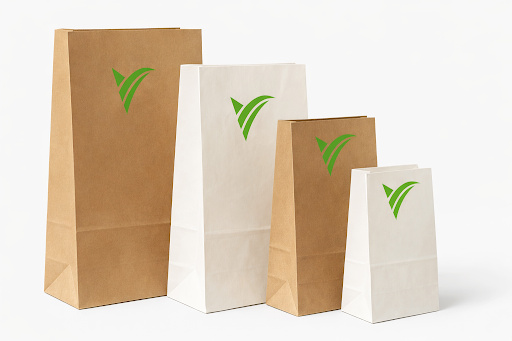
The packaging a business chooses can influence how customers view its products before they even open the bag. In retail, grocery, fashion, food service, and e-commerce, a well-made paper bag combines convenience with brand presentation. Among the many available options, brown kraft paper bags remain popular because of their natural appearance, practical versatility, and suitability for a wide range of printing and construction styles.
At the same time, businesses are paying closer attention to where packaging materials come from. This has increased interest in FSC certified paper bag manufacturers that can discuss responsible sourcing alongside product quality, production consistency, and customisation. Choosing the right supplier means looking beyond appearance and understanding how the bag will perform throughout its intended use.
Why Brown Kraft Paper Remains a Popular Choice
Kraft paper is widely used in packaging because it can provide a useful balance of strength, flexibility, and a natural visual finish. Its familiar brown appearance works particularly well for brands that want a simple, understated, or environmentally conscious look.
The material can be used for shopping bags, grocery packaging, takeaway orders, product carriers, and e-commerce applications. Depending on the paper grade and bag construction, it can be specified for different product weights and handling requirements.
The appeal of brown kraft paper bags is also linked to their design flexibility. A business can keep the surface plain for a minimal look or add a printed logo, brand colours, product information, or promotional message. The natural background can suit independent stores as well as established retail chains.
However, choosing kraft paper alone is not enough. Buyers should consider grammage, bag dimensions, bottom construction, handle strength, and the type of products being carried. The correct specification helps the bag remain practical rather than simply attractive.
Understanding FSC Certification in Paper Packaging
The Forest Stewardship Council (FSC) provides certification frameworks associated with responsible forest management and the supply chains that handle forest-based materials. For packaging buyers, FSC-related claims can provide information about the sourcing and traceability of eligible materials.
Businesses should understand that certification claims have specific requirements. Not every paper bag produced by a supplier is necessarily FSC-certified, and a supplier’s general statement should not replace product-specific verification. Buyers should request the relevant certification details and confirm that the claim applies to the material and product being ordered.
Working with FSC certified paper bag manufacturers can be useful for companies that have responsible sourcing policies or need supporting information for procurement and sustainability reporting. It is important to use any certification reference accurately and avoid making broader environmental claims than the available documentation supports.
Responsible sourcing is one part of a wider packaging decision. Buyers should also consider whether the bag is correctly sized, durable enough for its intended load, and designed to avoid unnecessary material use.
Selecting the Right Bag Style
A manufacturer may offer several construction types to serve different industries. The best option depends on how the bag will be filled, carried, stored, and presented.
SOS paper bags feature a square bottom that allows the bag to stand upright. They are useful for food outlets, pharmacies, grocery stores, and other businesses that need efficient packing.
Flat-handle paper bags are a practical choice for retail stores, clothing brands, gift shops, and everyday shopping. Their handle design supports convenient carrying and can be produced in different sizes.
Twisted-handle paper bags offer a more refined appearance and are often selected by boutiques, luxury retailers, and event businesses. They can help create a premium presentation while remaining functional.
Sheet-fed paper bags are suitable for designs that require additional finishing options. Depending on the specification, these bags can support foiling, embossing, UV coating, and other decorative treatments.
E-commerce paper bags address the needs of online retailers and direct-to-consumer businesses. Suitable closures and printing can help packaging fit into dispatch and fulfilment processes.
A supplier should help buyers compare these options according to quantity, product type, budget, and brand requirements.
Why Manufacturing Capability Matters
A supplier’s production capability can influence every stage of the order, from sampling to delivery. Businesses placing repeat orders need bags that maintain consistent dimensions, paper quality, handle construction, and print appearance.
Working directly with a manufacturer can make it easier to discuss specifications and coordinate changes. In-house production can also help connect the approved sample with the final manufacturing process. Buyers should ask how quality checks are performed and how the supplier handles colour matching and repeat orders.
For larger businesses, production capacity is another important factor. A packaging partner should understand the required volume and expected delivery schedule. If orders are seasonal, the buyer should discuss demand forecasts early so that production can be planned effectively.
Printing and Customisation for Brand Recognition
A paper bag can serve as a mobile brand communication tool. Customers may carry it through shopping areas, public transport, workplaces, and residential neighbourhoods. A recognisable logo and consistent design can help reinforce brand identity after the purchase.
Flexographic printing is often used for efficient production, particularly where repeatability and consistent output are important. Offset printing can support more detailed artwork and premium presentation. The suitable method depends on the design, material, quantity, and desired finish.
Businesses can also explore QR code integration to connect packaging with online catalogues, product information, feedback forms, or promotional campaigns. For premium retail and gifting, finishes such as foil, embossing, and UV effects can add visual interest.
Good design should still consider readability and the practical shape of the bag. Artwork needs to account for folds, side panels, handle placement, and the available printing area. Approving a sample before bulk production helps confirm how the finished design will look.
Questions to Ask a Manufacturer Before Ordering
A careful supplier evaluation can prevent problems later. Businesses should ask whether production is handled in-house, what paper grades are available, and which bag styles can be manufactured in the required dimensions.
If FSC certification is a procurement requirement, ask for the relevant documentation and confirm which materials and products it covers. Buyers should also discuss printing options, sample approval, production timelines, minimum quantities, delivery coverage, and quality-control procedures.
It is useful to provide the supplier with a complete brief rather than requesting a price based on a general description. Include the intended use, approximate load, dimensions, paper weight, handle type, artwork, and order quantity. This gives the manufacturer a better basis for recommending a suitable product.
Balancing Sustainability, Strength, and Cost
The lowest-priced bag is not necessarily the most economical choice. If a bag is too weak for its intended contents, it may tear, require replacement, or create an unsatisfactory customer experience. On the other hand, specifying unnecessarily heavy paper can increase material use and cost.
The aim should be to find a suitable balance. A business should select a paper grade that meets the expected carrying requirements, choose a design that fits the product, and consider responsible sourcing where relevant.
Clear specifications also help suppliers avoid unnecessary variations. Consistent material choices, approved samples, and planned repeat orders can support better control over quality and purchasing.
Conclusion
Paper bags have become an important part of how businesses package, protect, and present their products. From natural kraft designs to premium printed carriers, the right choice depends on material quality, bag construction, sourcing information, and reliable manufacturing.
For businesses seeking FSC certified paper bag manufacturers and versatile brown kraft paper bags, VTPL Paper Bags offers a range of packaging formats, in-house printing and customisation, and delivery across India. Sharing clear requirements and confirming material documentation before production can help buyers select packaging that meets both practical and brand expectations.