A swimming pool can be much more than a place to cool off during warm weather. With thoughtful design and modern technology, it can become a distinctive outdoor feature that improves comfort, convenience, and the overall appearance of a property. From creative lighting systems to automated cleaning equipment, today’s pool designs offer numerous ways to combine functionality with visual appeal.
A well-planned Custom Swimming Pool allows homeowners to incorporate features that reflect their lifestyle, available space, and personal preferences. Rather than following a standard design, they can select elements that make the swimming experience more enjoyable while complementing the surrounding landscape. Understanding the available options can help homeowners decide which innovations are worth including in their pool project.
1. LED Lighting for a Striking Visual Effect
Lighting can dramatically change the appearance and atmosphere of a swimming pool. Modern LED systems offer flexible lighting options that make the pool more attractive after sunset while improving visibility around the water.
Homeowners can choose from different colors, brightness levels, and lighting arrangements. Underwater lights can highlight the pool’s shape, while perimeter lighting can emphasize architectural details and surrounding landscaping.
Energy-efficient LED fixtures are also a practical choice because they generally consume less electricity and have a longer operating life than traditional lighting options.
2. Automated Pool Cleaning Systems
Maintaining clean pool water is essential, but manual cleaning can require considerable time and effort. Automated cleaning systems help simplify this responsibility by removing debris, dirt, and other unwanted particles from pool surfaces.
Robotic pool cleaners are particularly useful because many models operate independently and can clean floors and walls. Some advanced systems also include scheduling features and intelligent navigation.
When selecting a cleaning system, consider the pool’s dimensions, shape, surface material, and filtration requirements. The right equipment can make routine maintenance more convenient.
3. Smart Pool Automation Technology
Smart technology has made swimming pool management more convenient. Automated systems allow homeowners to monitor and control various pool functions through digital interfaces, including compatible smartphone applications.
Depending on the equipment installed, these systems may manage:
- Water circulation and filtration schedules.
- Pool heating and temperature settings.
- Underwater and landscape lighting.
- Water features and pumps.
- Selected water chemistry monitoring functions.
Automation can reduce the need for constant manual adjustments. It also helps homeowners monitor important operating conditions and manage energy consumption more effectively.
4. Integrated Water Features
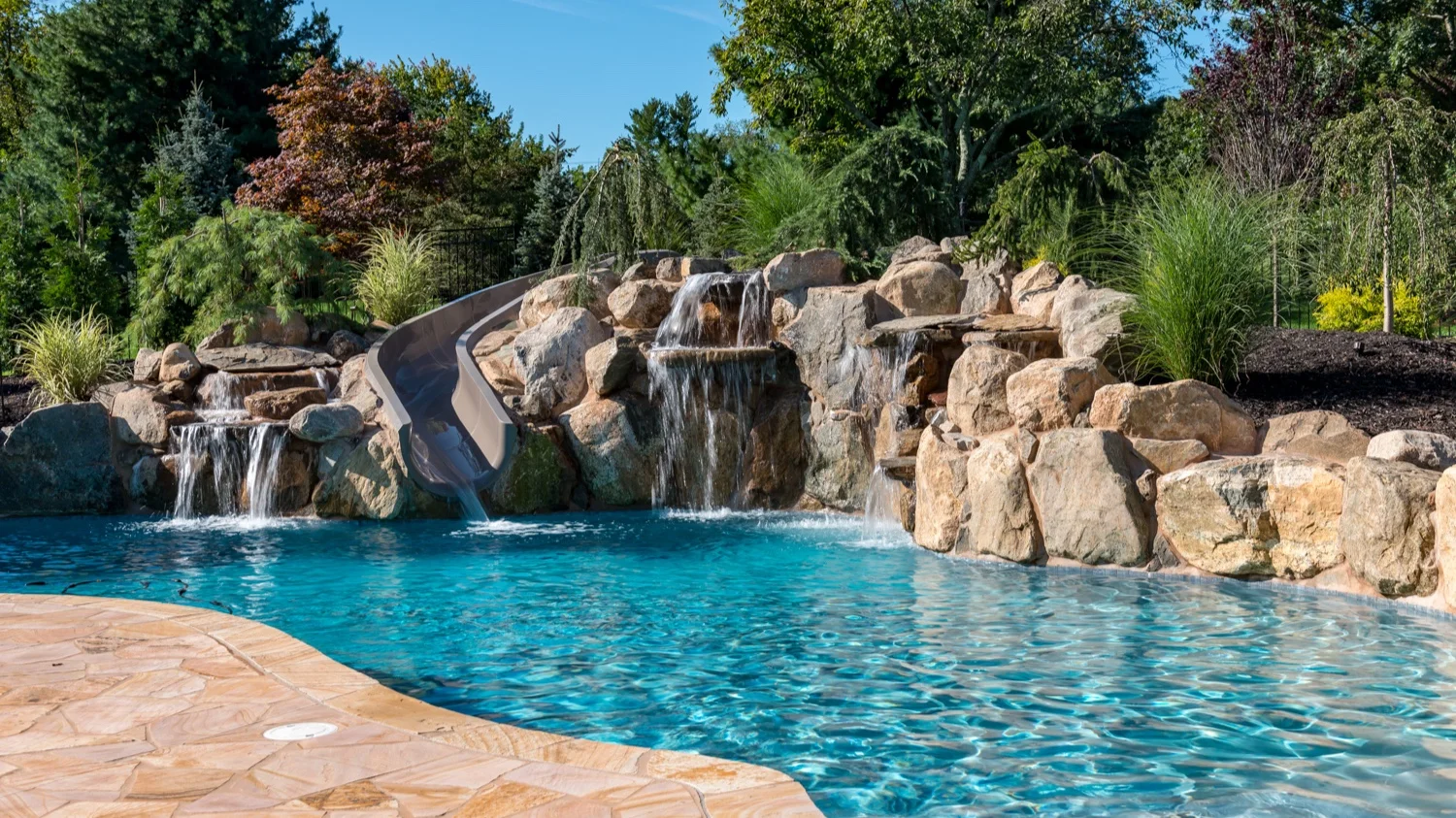
Water features can introduce movement, sound, and visual interest into a swimming pool design. They can also create a more relaxing environment by incorporating the natural sound of flowing water.
Popular options include:
Waterfalls
Waterfalls create a striking focal point and can complement natural stone, modern concrete, or landscaped pool surroundings. Their size and placement should match the overall design.
Deck Jets
Deck jets produce streams of water that travel from the poolside into the swimming area. They offer a contemporary appearance and can be enhanced with suitable lighting.
Bubblers and Fountains
Bubblers create gentle water movement, usually in shallow areas, while decorative fountains can add elegance to larger pool environments.
The selection of water features should account for additional plumbing, pump capacity, water circulation, and ongoing maintenance.
5. Energy-Efficient Heating Systems
Pool heating systems can make swimming more comfortable when outdoor temperatures become cooler. Modern heating solutions offer different advantages depending on the local climate, pool size, and expected usage.
Heat pumps are a popular option because they transfer heat from the surrounding air into the pool water. Solar heating systems can also reduce reliance on conventional energy sources when sufficient sunlight is available.
A properly fitted pool cover helps retain heat and reduce water evaporation. Combining suitable heating equipment with an effective cover can improve overall efficiency.
6. Infinity Edges for a Modern Appearance
Infinity-edge pools create the visual impression that water extends beyond the pool’s boundary. This effect is particularly attractive for properties overlooking gardens, landscapes, or scenic views.
The design typically uses a carefully engineered overflow edge and a collection system that recirculates water into the pool.
Although visually impressive, infinity-edge installations require additional structural planning, specialized hydraulic equipment, and suitable site conditions. They are generally best suited to properties where the surrounding views can enhance the effect.
7. Built-In Seating and Relaxation Areas
Comfortable seating can make a swimming pool more versatile. Instead of using the pool exclusively for swimming, homeowners can incorporate spaces designed for relaxation and social activities.
Built-in benches provide convenient seating within the water, while tanning ledges offer shallow areas where users can sit or relax partially submerged.
Other possibilities include integrated spa sections, submerged seating arrangements, and nearby shaded lounge areas.
These features should be planned carefully to ensure they do not interfere with swimming space or create unnecessary maintenance challenges.
8. Saltwater Pool Systems
Saltwater pool systems are an alternative to traditional chlorine-dosing methods. They use a salt chlorine generator to produce chlorine from dissolved salt through a process called electrolysis.
These systems can provide consistent chlorine production and reduce the need to handle and store certain chlorine products manually.
However, saltwater pools still require regular water testing, sanitization management, and equipment maintenance. Salt concentration, pH levels, and other chemical parameters must remain within recommended ranges.
Homeowners should also select compatible materials and equipment to account for the corrosive potential of salt exposure.
9. Advanced Water Monitoring Systems
Maintaining balanced water chemistry is one of the most important aspects of pool ownership. Modern monitoring devices can make this task easier by measuring selected water parameters and providing information about conditions that may require attention.
Depending on the system, monitoring equipment may measure pH, sanitizer levels, temperature, and other water quality indicators.
Some connected devices send notifications when readings move outside recommended ranges. Although these tools can improve convenience, they do not eliminate the need for periodic manual testing and appropriate maintenance.
10. Sustainable Materials and Eco-Friendly Design
Sustainability is becoming an important consideration in residential pool construction. Choosing appropriate materials and efficient equipment can help reduce environmental impact and long-term operating expenses.
Some practical options include:
- Energy-efficient circulation pumps.
- Solar-powered heating solutions.
- Durable materials with long service lives.
- Pool covers that reduce evaporation.
- Efficient filtration and water management systems.
- Native landscaping that requires less irrigation.
Sustainable design does not have to compromise appearance. Natural stone, responsibly selected decking, and thoughtful landscaping can create an attractive outdoor environment while supporting more efficient resource use.
How to Choose the Right Features for Your Pool
Although modern swimming pools offer many innovative possibilities, not every feature is necessary for every property. The best choices depend on how the pool will be used, the available budget, and the amount of maintenance the homeowner is willing to manage.
Before selecting additional features, consider the following questions:
- Will the pool primarily support exercise, family recreation, or relaxation?
- Which technologies will provide meaningful everyday convenience?
- Are the selected features compatible with the pool’s design and dimensions?
- What additional installation and operating costs should be expected?
- Will the features require specialized maintenance or servicing?
Discussing these questions with an experienced pool professional can help prioritize useful upgrades and avoid unnecessary expenses.
Conclusion
Innovative swimming pool features can improve comfort, convenience, energy efficiency, and visual appeal. From smart automation and LED lighting to infinity edges, integrated seating, and advanced cleaning systems, modern options allow homeowners to create outdoor spaces that reflect their individual preferences.
The key is to select features that serve a practical purpose while complementing the property’s design. With careful planning, suitable equipment, and professional installation, a thoughtfully designed swimming pool can provide an enjoyable and functional outdoor environment for years to come.