Landscaping businesses need machinery that can support a variety of outdoor tasks without creating unnecessary complications for workers, property owners, or surrounding areas. Projects may involve garden renovation, planting preparation, drainage improvements, pathway installation, ground shaping, and maintenance of commercial landscapes. Equipment must be capable of handling the work while remaining practical to transport, position, and operate across different properties.
A landscaping company considering an electric mini excavator for sale should evaluate whether battery-powered compact equipment matches its services, project locations, and daily work schedules. Electric mini excavators may be useful for selected landscaping activities, particularly where access, direct exhaust emissions, or operating noise are relevant considerations. However, their value depends on digging performance, machine dimensions, battery capacity, charging access, attachment compatibility, and ownership costs.
Matching Equipment to Landscaping Services
Landscaping businesses often provide several types of services, and equipment requirements may differ between them. Garden renovation may involve removing soil and reshaping ground, while planting projects may require excavation of individual areas. Drainage improvements can involve trenching, and pathway installation may require preparation of specific ground levels.
Companies should identify which tasks occur most frequently and determine the machine capabilities required for those activities. The equipment should be suitable for the recurring work rather than selected based on occasional applications.
This approach helps businesses avoid investing in machinery that offers capabilities they rarely use or lacks important features needed for regular projects.
Improving Access to Residential Properties
Landscaping work frequently takes place on private properties where equipment access may be limited. Gates, narrow pathways, garden layouts, fences, walls, and existing landscaping can restrict movement.
Compact excavators may help reach smaller working areas, but access must be measured carefully. Contractors should consider machine width, height, length, turning space, operating weight, and the route from the delivery point to the excavation area.
They should also plan how the machine will move around finished surfaces and existing features. Appropriate surface protection or alternative routes may be necessary depending on ground conditions.
Considering Battery-Powered Operation
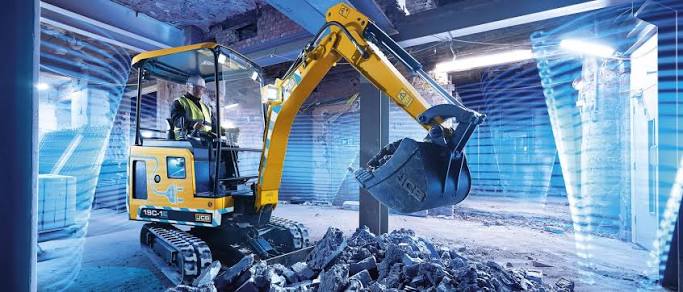
Electric equipment may offer advantages for selected landscaping environments. Battery-powered operation produces no direct exhaust emissions during normal electric use, which may be relevant when working near occupied properties or in certain enclosed areas.
Electric machines may also operate more quietly than some comparable conventional equipment, although excavation, tracks, hydraulic functions, and attachments still generate sound.
Landscaping companies should consider the surrounding environment and evaluate actual equipment specifications. They should not assume that every electric machine offers the same performance or noise characteristics.
Selecting Appropriate Attachments
A landscaping business may require different tools depending on the work performed. Buyers should identify suitable buckets or other compatible attachments for digging, trenching, soil movement, or selected ground preparation tasks.
Attachment compatibility should be confirmed before purchase. The contractor should review mounting arrangements, machine capacity, relevant hydraulic or electrical requirements, and manufacturer guidance.
The business should also consider attachment storage, transport, maintenance, and operator training. Purchasing tools that match recurring work can improve equipment versatility without unnecessary expenditure.
Managing Battery Use Across Multiple Properties
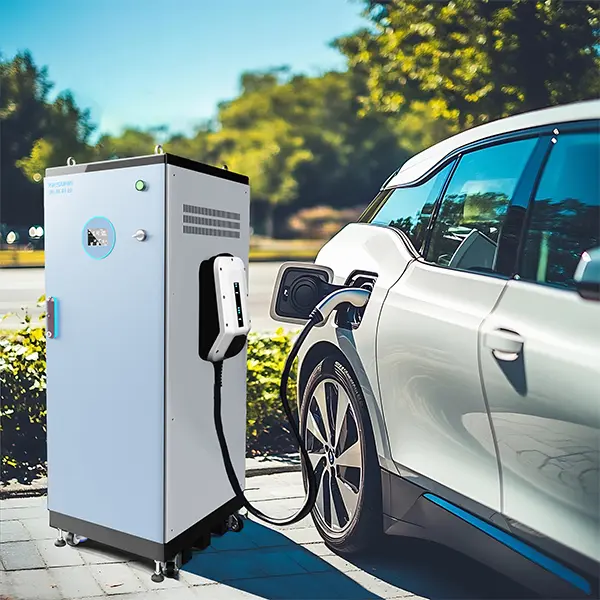
Landscaping businesses may operate at several properties during the same day. This can create different charging and transport requirements compared with a machine that remains at one construction site.
The company should estimate expected operating hours, workload, and movement between locations. It should determine whether charging is available at the depot or whether other compatible arrangements are needed.
Battery operating duration depends on conditions, so the schedule should be based on realistic work requirements. Contractors should confirm charging duration and connection compatibility before making a purchase.
Evaluating Productivity and Labour Requirements
A compact excavator may reduce the amount of manual excavation required for suitable tasks. However, productivity depends on the nature of the work, machine capability, operator experience, material handling, and site layout.
Businesses should evaluate how the machine fits into their existing workflow. They may need to coordinate excavation with landscaping crews, soil delivery, planting, installation, and cleanup activities.
Equipment should be selected to support the complete service process rather than considered as an isolated tool.
Reviewing Maintenance and Financial Considerations
Before purchasing, landscaping companies should investigate maintenance requirements, warranty terms, service availability, replacement parts, battery support, and technical documentation.
Total ownership costs may include the purchase price, transport, charging infrastructure, financing, insurance, repairs, maintenance, training, and attachments. Companies should compare these costs against expected utilisation and the work the machine will support.
Conclusion
Electric mini excavators may be a practical addition to landscaping businesses undertaking ground preparation, drainage, garden renovation, and other suitable excavation activities. Their value depends on access, machine capability, battery arrangements, attachment options, and support. Landscaping companies that evaluate equipment according to their actual services and project conditions can make more informed investment decisions and determine whether electric compact machinery fits their business strategy.