When it comes to managing personal finances, understanding interest rates is crucial. Whether you’re looking to save for the future or identify loan options, grasping the nuances of compound interest can be a game-changer. A compound interest calculator is a powerful tool that can assist with this understanding, providing immediate insights into how your financial decisions can have long-term effects. In this article, we will dissect the workings of a compound interest calculator, offer quick references for its use, and also touch on how it fits into broader financial decisions, such as applying for an instant personal loan.
Understanding Compound Interest
Before diving into how to use a compound interest calculator, let’s clarify what compound interest is. Compound interest is the interest calculated on the initial principal and on the accumulated interest of previous periods. Unlike simple interest, which is only calculated on the principal amount, compound interest can grow your finances exponentially over time.
Formula for Compound Interest
The formula for calculating compound interest is as follows:
A=P(1+rn)ntA = P(1 + \frac{r}{n})^{nt}
Where:
- A = the amount of money accumulated after n years, including interest.
- P = the principal amount (the initial investment).
- r = the annual interest rate (decimal).
- n = the number of times that interest is compounded per year.
- t = the time the money is invested for, in years.
This formula illustrates how each component plays a significant role in determining the total amount at the end of the investment period.
The Role of a Compound Interest Calculator
A compound interest calculator simplifies the mathematical complexities outlined above. It allows users to input specific values to quickly calculate how much their investment will grow over time. Here are some reasons why using a calculator is advantageous:
Simplifies Complex Calculations
Rather than manually calculating compound interest using the formula, a calculator automates the process, allowing users to arrive at a figure instantaneously.
Provides Visual Representations
Many compound interest calculators include graphs or charts demonstrating how the investment grows over time, helping users visualize their financial journey.
Facilitates Scenario Analysis
Users can experiment with different principal amounts, interest rates, and compounding frequencies to see how each variable affects their investment. This kind of flexibility is invaluable in planning and decision-making.
How to Use a Compound Interest Calculator
Using a compound interest calculator is typically straightforward. Here’s a step-by-step guide to maximize your effectiveness:
Step 1: Identify Your Inputs
- Principal (P): Determine how much money you plan to invest or save.
- Annual Interest Rate (r): Input the interest rate offered by the investment or savings account.
- Compounding Frequency (n): Select how frequently the interest is compounded (e.g., annually, semi-annually, quarterly, monthly).
- Time Period (t): Decide the number of years you plan to keep your investment.
Step 2: Use the Calculator
Input the values into the calculator, ensuring you double-checked each entry for accuracy.
Step 3: Interpret the Results
The calculator will generate the total amount of money you will have after the specified time period. It may also provide insights on how much interest was earned, which can be pivotal for further financial planning.
Practical Applications of a Compound Interest Calculator
Saving for Retirement
Planning for retirement can be daunting. However, using a compound interest calculator can demonstrate how early savings can yield substantial returns. By investing small amounts regularly, you can leverage time to build a substantial retirement fund.
Investment Growth Estimation
If you are considering investing in stocks, bonds, or mutual funds, a compound interest calculator can show how your investments grow over time. This is particularly useful for risk assessment in long-term investments.
Saving for Major Purchases
Using a compound interest calculator can help you understand how much you’ll need to save for significant purchases, such as a home or education. You can set savings goals with a clearer picture of your financial future.
Applying for an Instant Personal Loan: A Side Note
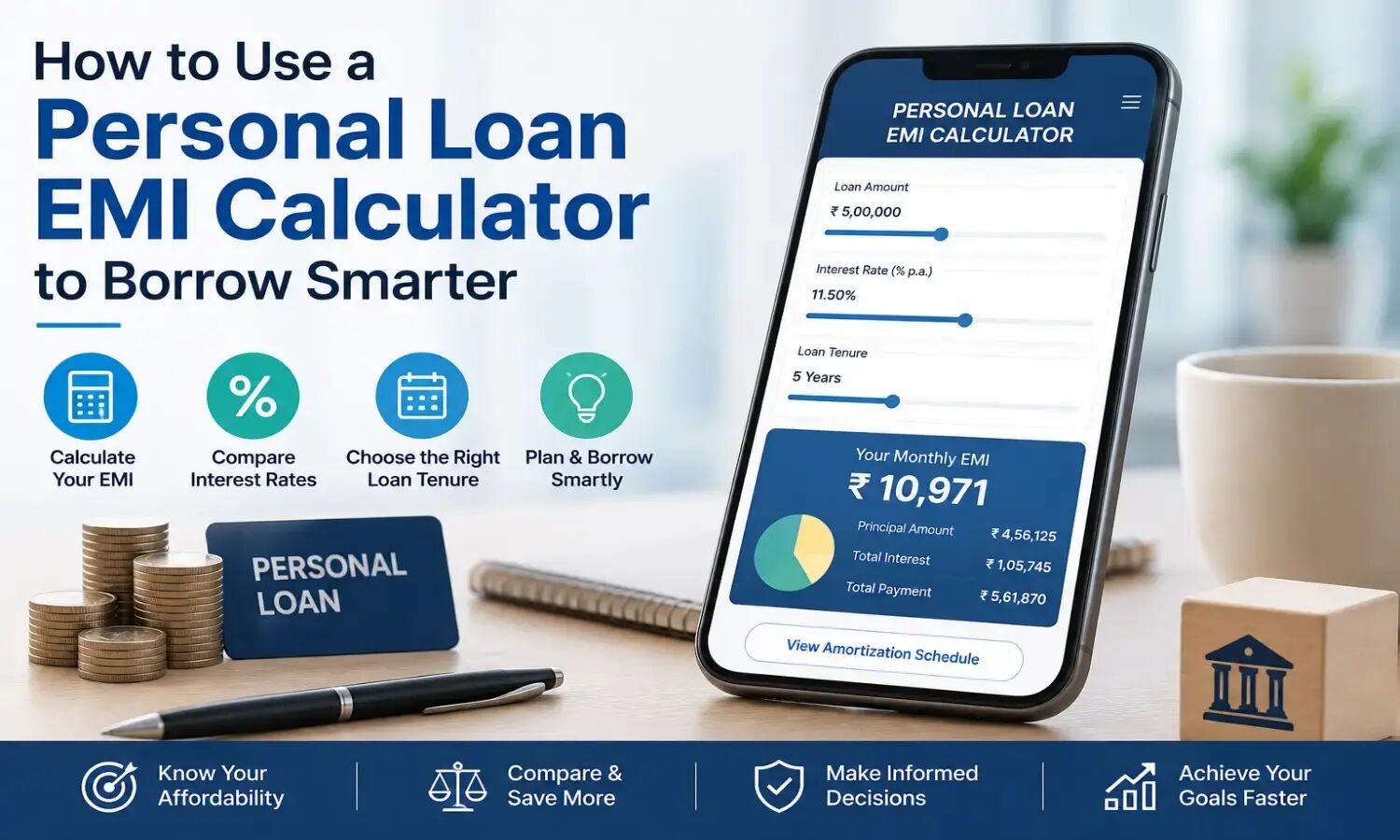
While understanding compound interest is primarily associated with savings and investments, it can also be relevant when considering loans. If you are looking to apply for an instant personal loan, understanding how the interest rate compounds can help you make more informed decisions about which loan to choose. You can also apply for instant personal loan options after comparing the applicable interest rates and repayment terms to understand the potential cost of borrowing.
Calculating Loan Interest
When taking out a personal loan, you may encounter different types of interest – including simple and compound. Knowing how to calculate potential repayments using a compound interest calculator can provide insights into the overall cost of the loan.
Comparing Loan Offers
With multiple lenders and various interest rates available, utilizing a compound interest calculator allows you to compare loan offers effectively. You can input different loan amounts, interests, and repayment durations to see the total costs involved with each option.
Conclusion
In summary, a compound interest calculator is an essential tool for anyone serious about managing their finances. By simplifying complex calculations and providing visual representations of growth, it empowers users to make informed investment decisions and plan for the future. Additionally, understanding how compound interest applies across different financial products allows for better decision-making, especially when considering options such as applying for an instant personal loan. Whether you are saving, investing, or borrowing, using a compound interest calculator can put you in a more favorable financial position.
By leveraging such tools and understanding the importance of compound interest, you can significantly enhance your financial literacy and achieve your monetary goals with confidence.