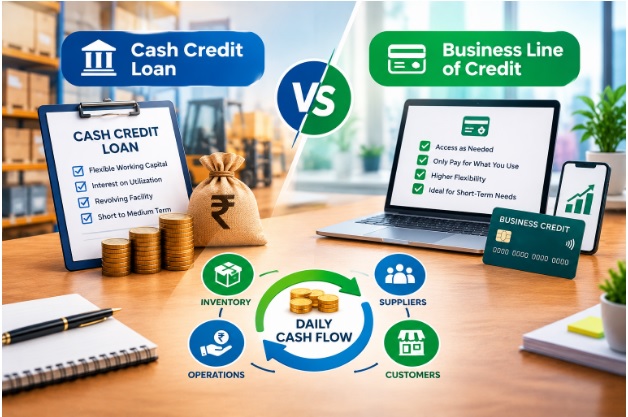
Managing daily cash flow is essential for every business, whether it is a small shop, a manufacturing unit, or a growing enterprise. Businesses often need short-term funds to purchase inventory, pay employee salaries, manage supplier payments, and cover unexpected expenses before customer payments arrive. A cash credit loan and a business line of credit are two financing options that help businesses handle these situations. Although both provide access to funds when required, they differ in their structure, eligibility requirements, interest charges, and repayment terms. Understanding these differences can help business owners choose the right funding option for their working capital needs.
What Is a Cash Credit Loan?
A cash credit loan is a working capital facility commonly offered by banks in India to eligible businesses. It allows a borrower to withdraw money up to a sanctioned limit, usually against eligible security such as inventory, stock, or receivables. Businesses can use the available funds to meet regular operational expenses without applying for a new loan every time they need money. Interest is generally charged on the amount utilised rather than the entire sanctioned limit, subject to the lender’s terms. The facility is particularly useful for businesses that experience frequent gaps between making payments and receiving money from customers.
For example, a trading business may need ₹5 lakh to purchase inventory while waiting for outstanding customer invoices to be paid. If its bank has approved a cash credit limit, it can draw the required amount within that limit to maintain operations. The business can repay the utilised amount when customer payments arrive and use the available credit again, subject to the facility’s conditions. Banks may require periodic reviews, stock statements, financial records, and renewal of the facility.
What Is a Business Line of Credit?
A business loc is a flexible financing arrangement that allows a business to borrow up to an approved limit whenever funds are needed. Depending on the lender and product, it may be secured or unsecured. Businesses can draw money for short-term requirements, repay the borrowed amount, and access the available credit again according to the agreed terms. Interest is generally charged on the amount borrowed, although processing fees, renewal charges, or other costs may apply.
For instance, a service company may receive customer payments irregularly but must pay salaries and software expenses every month. A business line of credit can help cover these costs until payments are received. Some lenders offer digital application processes and flexible access to funds, making this option attractive to eligible small businesses and startups. However, credit limits, repayment schedules, interest rates, and eligibility criteria vary by lender.
Cash Credit Loan vs Business Line of Credit: Key Differences
The main difference between a cash credit loan and a business line of credit lies in their structure and accessibility. A cash credit facility in India is commonly linked to working capital requirements and may be secured against business assets. A business line of credit can offer similar flexibility, but its conditions depend on the lender and the product.
Cash credit facilities may require more detailed financial documentation, security arrangements, and periodic assessments. A business line of credit may provide a simpler borrowing process, particularly when offered through digital lending platforms, although this is not guaranteed. Both options can support recurring expenses, and interest is typically linked to the amount used. Business owners should compare the annualised borrowing cost, fees, collateral requirements, repayment flexibility, and renewal conditions before making a decision.
Which Option Is Better for Managing Daily Cash Flow?
A cash credit loan may suit established businesses with regular inventory requirements, substantial receivables, and predictable working capital needs. Manufacturers, wholesalers, and retailers may benefit from this facility when they need continuous access to funds for purchasing raw materials or maintaining stock.
A business line of credit may be more suitable for businesses seeking flexible access to short-term funds for fluctuating expenses. Service providers and smaller enterprises may find it useful when customer payments are unpredictable or occasional funding gaps arise. However, the right option depends on the business’s financial position, borrowing history, lender requirements, and total financing cost.
Tips for Choosing the Right Business Financing Option
Before applying, estimate your monthly working capital requirements and determine how frequently you will need to borrow. Compare interest rates, processing fees, renewal charges, collateral requirements, and repayment terms offered by different lenders. Review your business cash flow to ensure you can repay borrowed amounts without affecting essential operations. Maintain accurate financial statements, bank records, tax returns, and other documents required by the lender. Avoid borrowing more than necessary, as repeated dependence on short-term credit can increase financial pressure.
Conclusion
Both a cash credit loan and a business line of credit can help businesses manage daily cash flow, pay suppliers, maintain inventory, and handle temporary funding gaps. A cash credit facility may be appropriate for businesses with ongoing working capital needs, while a business line of credit can offer flexibility for changing expenses. Compare the terms carefully and choose a facility that matches your cash flow cycle, repayment capacity, and long-term business goals.