
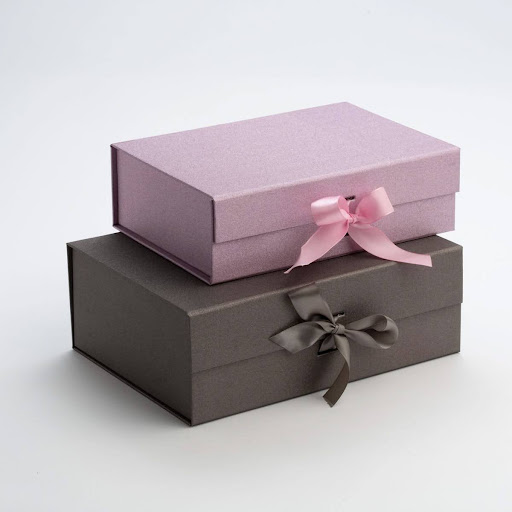
Why does a thoughtful present so often end up looking rushed? Usually, the item has an awkward shape, the wrap tears at a corner, or there is no box of the right size at hand. Craft paper card solves much of this because you can cut the package to fit the gift.
This guide covers two practical styles: a curved pillow box and a sliding sleeve box. Before choosing, answer three questions:
Choose the Right Packaging First
| Your gift | Best choice | Reason |
| Soft and thin, such as a hair tie or silk pocket square | Pillow box | Quick to close and needs little material |
| Flat but needs support, such as a card set or bracelet | Sleeve and tray | Straight walls hold the item in place |
| Heavy, fragile, or high in value | Rigid box | Folded paper card may not protect it |
For both projects, use craft card with a weight of about 200–300 GSM (grams per square meter). Thin wrapping paper will not hold these shapes. You need a ruler, pencil, scissors, glue or double-sided tape, and an empty ballpoint pen for scoring. Scoring means pressing a groove along a line so the card bends cleanly.
Style One: The Pillow Box
The problem it solves: small, soft gifts that get lost inside a square box.
The example below uses a sheet 19.5 cm wide and 18 cm tall. It suits a thin item no larger than about 7 × 9 cm.
Mark the template
- Draw two panels side by side, each 9 cm wide. Add a 1.5 cm glue strip along one outer edge.
- Rule a light guide line 2 cm below the top edge and another 2 cm above the bottom edge.
- At both ends of each panel, draw a shallow curve bulging outward to the sheet edge. A round plate or lid makes a handy stencil.
- Mirror that curve inward from the same two corner points. Each end should now look like a narrow lens.
Cut, score and close
- Cut around the outside, following the outward curves.
- Score the inward curves, the line between the panels, and the glue strip line.
- Fold along the center line. Glue the strip inside the opposite edge to make a flat tube.
- Gently squeeze the sides so the box opens into its pillow shape.
- Push in one curved flap, then the other. Slip in the gift and close the second end.
If the card cracks: score again with lighter, even pressure and warm up the curve by bending it gradually. Check the paper grain too. Card usually folds more smoothly along the grain than across it.
If the ends pop open: your curves may be too shallow, or the gift too thick. Deepen the curve slightly on a test piece, or seal the end with a sticker.
Style Two: The Sleeve and Tray Box
The problem it solves: flat gifts that bend or slide around in a bag.
This matchbox-style design has two parts. The tray holds the present, and the sleeve keeps it closed. Our example tray measures 10 cm long, 7 cm wide and 3 cm deep.
Build the tray
- Cut a rectangle 16 × 13 cm. This is the tray size plus twice the depth in each direction.
- Score a line 3 cm in from all four edges.
- On each short end, cut along the two long score lines for 3 cm. This creates four corner tabs.
- Fold up the long walls and turn the tabs inward.
- Raise the end walls and glue them to the tabs.
Build the sleeve
- Cut a strip 22.3 cm wide and 10 cm long.
- From one side, score at 7.2, 10.4, 17.6 and 20.8 cm. The last 1.5 cm is your glue tab.
- Fold on every line, wrap the card around the tray and glue the tab to the first panel. Keep glue off the tray.
The extra 2 mm in the sleeve panels gives the tray room to move. Thick card may need a little more.
If the tray sticks: make a new sleeve with 1 mm more on each panel.
If it slides out too easily, reduce that allowance or tie a paper band or a cotton cord around the box. For easier opening, punch a half-circle thumb notch at each end of the sleeve.
Quick Fixes for Common Packing Worries
The gift rattles. Add shredded paper or a folded card insert with a slot cut to the item’s shape.
The package looks too plain. Use one focal point, such as a stamped initial, a coloured band, or a handwritten tag. Decorate flat panels before gluing.
The gift must travel. Place the finished package inside a snug outer carton with cushioning on all sides. Decorative packaging is not a shipping box.
The gift is edible or scented. Seal it in a suitable food-safe or oil-resistant inner wrap first. This protects both the contents and the card.
When Is a Rigid Box the Better Answer?
Handmade cards work well for one-off, lightweight presents. Rigid boxes are made from much thicker board, usually covered with a decorative paper. They keep their shape and feel more substantial, although they normally cost more and take up more storage space.
Custom Rigid Gift Boxes with lids are worth considering for corporate gifts, candles, jewelry sets, or keepsakes that people will reuse. A lid alone does not guarantee protection, so match the insert to the product.
If you are comparing Rigid Boxes or similar premium styles, request a sample and test it with your actual item. Check these points:
- Internal length, width, and depth
- Corner finish and lid fit
- Insert material and how firmly it holds the product
- Printing proof, minimum order, and delivery time
Measure the gift first, including any wrapping. Ordering from outside dimensions is an easy and costly mistake.
Make a Test Piece First
Try your chosen style on an old cereal carton before using good card. Put the gift inside, close it and give it a gentle shake. Adjust anything that feels tight, loose, or weak. A few minutes of testing can save a whole sheet and a last-minute scramble.
Conclusion
Gift packaging starts with the item itself, not the decoration. A pillow box gives small, soft products a neat presentation, while a sleeve and tray box provides better support for flat gifts that might otherwise bend. Both styles allow you to customize the dimensions and test the structure before using your final material. Premier Rigid Boxes understands the importance of combining attractive presentation with practical protection.
Handmade packaging has its limitations. Heavy, fragile, or high-value products usually need a well-fitted rigid box with a suitable insert. An additional outer carton can provide extra protection during shipping. Measure the item carefully, prepare a sample, and select a packaging style that keeps the contents secure. The right design creates a thoughtful presentation and makes the unboxing experience more enjoyable.