
Few things are harder for a dog owner than watching a once-bouncy companion struggle to climb the stairs or get up after a nap. When a vet diagnoses joint pain or prescribes pain relief after surgery, Rimadyl is a name that often comes up. Owners then go looking for it and discover different forms, strengths and pack sizes.
This guide explains how to identify Rimadyl carprofen chewable tablets for dogs, how to read the label correctly and how to keep the medicine safe at home. It does not replace your vet’s advice, and it does not offer dosing guidance.
What Rimadyl chewable tablets are
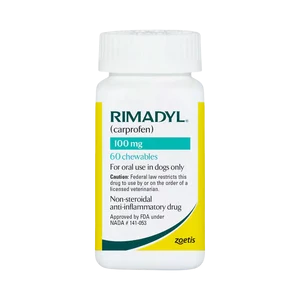
Rimadyl chewable tablets contain the active ingredient carprofen. The listing described here presents:
- Brand: Rimadyl
- Active ingredient: carprofen
- Form: chewable tablet
- Animal: dog
- Strength: 100 mg per tablet
- Pack: 60 chewable tablets (100 mg × 60)
Other strengths and tablet counts exist as separate presentations, but they are not part of this listing. Rimadyl is a prescription medicine. A vet must examine your dog and decide whether it is appropriate, and prescription and supply requirements must be confirmed before ordering.
Chewable tablets vs other Rimadyl forms
Rimadyl has been made in more than one form in different markets. A chewable tablet is not the same product as other forms, even though the active ingredient is shared. Forms can differ in strength, how they are given and how they should be stored.
If your vet prescribed chewable tablets, keep to chewable tablets of the prescribed strength. Do not switch forms or strengths without your vet’s direction.
Reading the label properly
The figure 100 mg describes how much carprofen is in one chewable tablet. It is not a dose for your dog. Your vet works out the dose based on your dog’s weight, health, age and other medicines, and may prescribe a fraction of a tablet or a different strength.
Always use the strength and pack count together when describing the product: Rimadyl 100 mg × 60 chewable tablets. This helps avoid mix-ups when ordering or talking to your clinic.
Only use details the label confirms
When a product page or a label does not show a certain detail, such as an alternative strength or a different count, do not assume it. Ask the supplier or your vet. Guessing can lead to the wrong pack being ordered.
Checking a listing
When you look at a product page, check each detail against your prescription. The Rimadyl carprofen chewable tablets for dogs listing on Vetra Recare shows the brand, active ingredient, chewable tablet form, 100 mg strength and the 60-tablet pack. Availability is handled by enquiry, and the page notes that prescription and supply requirements must be confirmed first.
Checklist:
- Brand: Rimadyl.
- Active ingredient: carprofen.
- Form: chewable tablet.
- Strength: 100 mg.
- Pack: 60 tablets.
- Animal: dog.
Safe storage matters
Chewable tablets are designed to be palatable, which helps at medicine time but creates a real risk if a dog finds the pack. Dogs have been known to chew through containers to reach tasty tablets. To stay safe:
- Store the pack in a closed cupboard, well out of reach.
- Never leave tablets on a table, bag or bedside.
- Keep the medicine in its original packaging.
- If your dog eats extra tablets, contact your vet or an emergency clinic straight away.
Medicines, supplements and joint care
Many owners combine prescription pain relief with other joint-care measures. Browsing a range of pet joint and pain-care products shows how these are separated: prescription pain medicines on one side, and nutritional joint supplements on the other. A supplement does not replace a prescribed medicine, and adding supplements without telling your vet can make it harder to judge what is working.
Beyond products, many dogs with joint problems benefit from steady weight control, regular gentle exercise, non-slip flooring and supportive bedding. Ask your vet which of these suit your dog.
Watch and report
While your dog is on any pain medicine, keep an eye on:
- Appetite and eating habits.
- Vomiting, diarrhoea or dark stools.
- Water intake and urination.
- Energy and behaviour changes.
Report anything unusual to your vet promptly. Some medicines need periodic blood tests during long-term use, and your vet will advise on a monitoring schedule.
Questions to ask your vet
- Why has Rimadyl been prescribed for my dog?
- Should it be given with food?
- How long should my dog take it?
- Which side effects should I watch for?
- Are blood tests needed during treatment?
Before and after surgery
Pain relief is often prescribed after surgery or an injury. If your dog has had an operation, follow your vet’s instructions closely about how long to give the medicine and when to return for a check. Do not stop early or continue longer without advice, and avoid giving any other pain relief, including human medicines, unless your vet specifically says it is safe.
Frequently asked questions
What strength are these Rimadyl chewable tablets?
The listing presents 100 mg chewable tablets in a pack of 60.
Are Rimadyl chewables the same as other Rimadyl forms?
No. Different forms are separate presentations. Keep to the form and strength your vet prescribed.
Can I give Rimadyl to my cat?
This product is presented for dogs. Never give it to a cat or any other animal unless your vet specifically directs it.
Does Rimadyl need a prescription?
Yes. It is a prescription medicine, and supply requirements must be confirmed before ordering.
Final thoughts
Rimadyl carprofen chewable tablets for dogs are simple to identify when you read the brand, form, strength and pack together. Store them securely, keep to your vet’s instructions and watch your dog closely during treatment. With careful handling and regular check-ins, you can help your dog stay as comfortable as possible.