
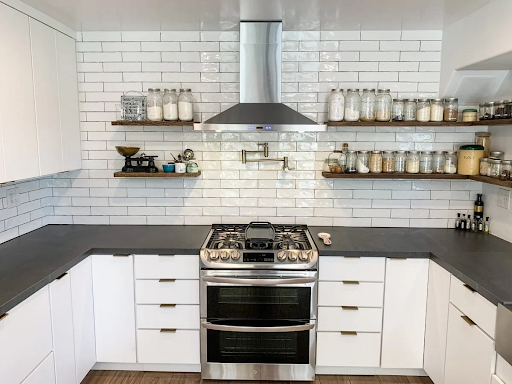
Kitchen design in 2026 is moving toward spaces that feel warmer, more personal, and more integrated with the rest of the home. While cabinetry, countertops, lighting, and appliances continue to shape the overall look, ventilation is also becoming an important design consideration. Current kitchen trends emphasize natural materials, softer forms, warm neutrals, and appliances that combine practical performance with visual appeal.
For homeowners working with compact or moderately sized cooking areas, 24 inch range hoods can offer a practical balance between ventilation and available space. Choosing the right hood, however, involves more than matching its width to the cooktop. Airflow, installation, cooking habits, ducting, noise, and overall kitchen design should all be considered.
Why Are 24-Inch Range Hoods Useful?
A 24-inch hood is designed to fit narrower cooking surfaces and kitchens where space may be limited. It can be particularly appropriate for smaller apartments, compact kitchens, secondary cooking areas, or layouts where a larger hood would overwhelm the surrounding cabinetry.
The goal is to provide sufficient capture area for cooking emissions without unnecessarily occupying valuable wall or cabinet space. The hood should generally be appropriately sized for the cooking surface and installed according to the manufacturer’s specifications.
Before choosing a hood, homeowners should measure the cooking appliance, surrounding cabinetry, available wall space, and potential duct route. A visually compact hood may still require sufficient clearance and installation space behind or above the appliance.
What Kitchen Colors Are Trending in 2026?
One of the strongest kitchen directions for 2026 is the move toward warm, natural colors. The National Kitchen & Bath Association’s 2026 Kitchen Trends Report found that 96% of surveyed professionals identified neutrals as popular, while greens and blues were also prominent choices.
This shift is influencing how homeowners select appliances and ventilation equipment. Instead of treating the range hood as a purely functional object, designers are increasingly integrating it into the kitchen’s broader material palette.
Warm wood cabinetry, creamy neutrals, muted green, earthy tones, and darker accents can all work with appropriately selected ventilation finishes. A smaller hood can be particularly easy to integrate because it does not necessarily dominate the visual composition of a compact kitchen.
Are Natural Materials Becoming More Popular?
Natural materials are a significant part of the 2026 kitchen aesthetic. Wood grain, stone, textured surfaces, and earthy finishes are being used to create kitchens that feel less clinical and more comfortable.
The NKBA report identifies natural materials and warm tones as important directions, while current design coverage also highlights the growing preference for kitchens that combine functionality with a more lived-in character.
This trend can influence range hood design as well. Instead of leaving a stainless-steel appliance visually isolated, homeowners can coordinate the hood with cabinetry, plaster, tile, wood, or other surrounding materials.
Are Curved Range Hoods Trending?
Yes. Curved and arched forms are becoming increasingly visible in kitchen design. Houzz’s 2026 Emerging Summer Trends Report found that searches for “arched range hood” increased by 177%, suggesting growing consumer interest in softer architectural shapes.
Curved forms can soften the hard lines traditionally associated with kitchens. They may also work well in transitional, traditional, and contemporary spaces.
For a smaller kitchen, however, proportions remain important. A dramatic hood shape should complement rather than overpower the cooking area. The dimensions of the appliance, cabinetry, ceiling height, and surrounding architectural elements should be considered together.
How Does Minimalism Affect Range Hood Design?
Minimalist kitchens remain relevant in 2026, but the definition of minimalism is becoming more nuanced. Instead of simply using white cabinets and completely plain surfaces, designers are incorporating warmth, texture, and carefully selected details.
The NKBA’s 2026 findings identify contemporary and modern minimalism among the leading kitchen styles, alongside transitional and organic designs.
This approach can make an integrated hood particularly appealing. A ventilation system that sits beneath cabinetry or within a custom enclosure can maintain clean visual lines while allowing the kitchen’s materials and architecture to remain the focus.
What Airflow Should You Consider?
Appearance should never be the only consideration when choosing 24 inch range hoods. Ventilation performance needs to match the cooking surface and the way the kitchen is used.
Airflow is commonly measured in cubic feet per minute, or CFM. The appropriate airflow depends on factors including cooking appliance type, heat output, cooking style, kitchen size, and duct configuration.
A manufacturer’s sizing guidance can provide a useful starting point. Proline’s published guidance, for example, considers both kitchen volume and cooking equipment when estimating airflow requirements and notes that duct length and bends can affect the final requirement.
Homeowners who frequently sear, grill, fry, or cook with high heat may need more ventilation than someone who primarily prepares low-heat meals.
Should You Choose Ducted or Recirculating Ventilation?
The ventilation configuration is another important decision. Ducted hoods move captured air outside through a ventilation system, while recirculating models filter the air before returning it to the kitchen.
Where practical, exterior exhaust can provide more comprehensive removal of cooking-related pollutants, moisture, and odors. The U.S. Environmental Protection Agency recommends using a range hood when cooking and venting it outdoors when possible.
For kitchens where external ducting is not feasible, recirculating systems can still provide filtration. However, filters require appropriate cleaning or replacement to maintain performance.
Are Range Hoods Becoming Design Features?
Range hoods are increasingly being treated as part of the kitchen’s visual design rather than simply as appliances. Coverage of 2026 European kitchen design trends notes that range hoods are becoming more distinctive and visually prominent, with customized forms and finishes designed to interact with other elements in the room.
At the same time, other designers are moving toward subtler, integrated hood designs that blend with cabinetry and surrounding materials. This creates two complementary directions: the range hood can either become a statement feature or nearly disappear into the architecture.
For smaller kitchens, an integrated or proportionally sized hood may provide a more balanced result.
How Can You Choose the Right 24-Inch Hood?
Start by measuring the cooktop and available installation area. Next, determine whether the kitchen can accommodate exterior ducting and identify the required airflow based on the cooking appliance and habits.
Consider the hood’s noise level, controls, lighting, filter type, cleaning requirements, and installation instructions. The finish should also complement the surrounding cabinetry and appliances.
Most importantly, do not choose a hood solely because it looks attractive. Ventilation performance, correct installation, and appropriate maintenance are essential to long-term functionality.
Conclusion
The kitchen trends for summer 2026 show a clear movement toward warmer colors, natural materials, curved details, personalized spaces, and designs that combine visual character with practical performance. For compact cooking areas, 24 inch range hoods can provide an effective way to incorporate ventilation without overwhelming the kitchen’s proportions. The best choice should account for cooking habits, required airflow, ducting possibilities, installation requirements, and the overall design of the space.