

Choosing the Right Aerial Work Platforms Manufacturer: A Practical Guide for Businesses
Working at height leaves little room for error. Whether you’re maintaining a warehouse, constructing a commercial building, or servicing industrial equipment, the machines you rely on directly affect worker safety, project efficiency, and operating costs. That’s why selecting the right equipment supplier deserves careful thought rather than a quick purchasing decision.
Partnering with the right aerial work platforms manufacturer means investing in equipment built for reliability, safety, and long-term performance. A trusted manufacturer does more than produce lifting machines—they provide engineering expertise, quality assurance, technical support, and products that help businesses complete projects with confidence.
Why Your Choice of Manufacturer Matters
Many buyers focus on lifting height, platform capacity, or purchase price. While these specifications are important, they only tell part of the story.
The manufacturer behind the equipment determines how well every component works together. From structural design and hydraulic systems to electronic controls and safety mechanisms, quality engineering plays a major role in daily performance.
A dependable manufacturer also helps reduce downtime by offering replacement parts, maintenance support, and technical guidance throughout the equipment’s service life.
Understanding Aerial Work Platforms
An aerial work platform (AWP), also known as a mobile elevating work platform (MEWP), is designed to lift workers, tools, and materials safely to elevated work areas.
These machines have become an essential part of many industries because they offer a safer and more efficient alternative to traditional ladders and scaffolding.
Common industries using aerial work platforms include:
- Commercial construction
- Manufacturing
- Warehousing
- Facility management
- Airports
- Shopping centers
- Telecommunications
- Energy and utilities
- Property maintenance
Every work environment presents unique challenges, making equipment selection an important part of project planning.
Types of Aerial Work Platforms
Not every job requires the same type of lifting equipment. Understanding the available options helps businesses choose machines that best suit their daily operations.
Scissor Lifts
Scissor lifts provide straight vertical movement and a spacious work platform.
They are commonly used for:
- Ceiling installations
- Electrical work
- Warehouse maintenance
- Indoor construction
- Inventory management
Electric scissor lifts are especially popular indoors because they operate quietly and produce no exhaust emissions.
Boom Lifts
Boom lifts provide both vertical and horizontal reach, allowing workers to access areas that are difficult to approach directly.
Typical applications include:
- Exterior building maintenance
- Steel construction
- Utility line repairs
- Tree maintenance
- Industrial inspections
Articulating boom lifts offer additional flexibility by reaching over obstacles.
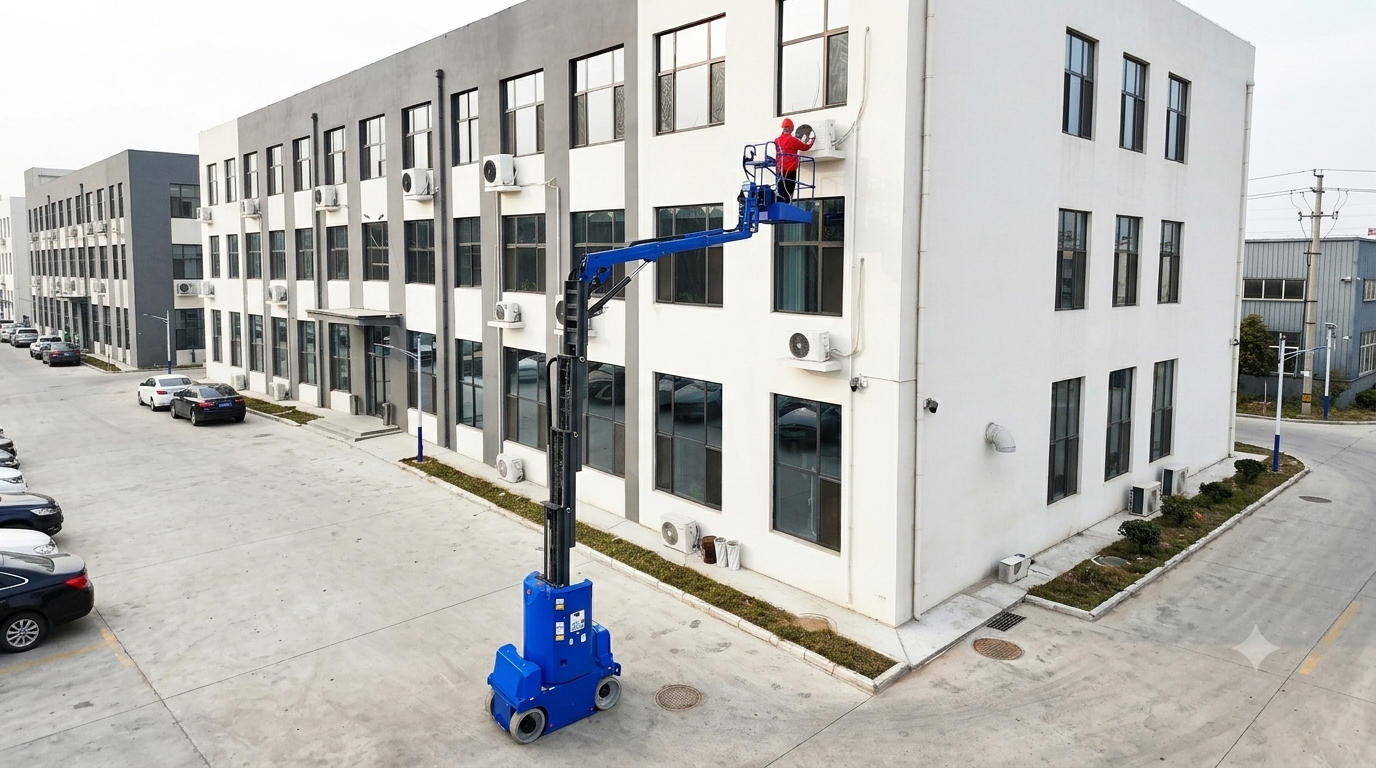
Vertical Mast Lifts
These compact machines are ideal for confined indoor spaces.
Businesses often use them in:
- Hotels
- Hospitals
- Libraries
- Office buildings
- Retail stores
Their small footprint makes navigation through narrow aisles much easier.
Order Pickers
Distribution centers rely on order pickers to improve productivity during inventory handling while providing operators with a secure elevated working position.
Qualities of a Reliable Manufacturer
Not all manufacturers maintain the same production standards. Looking beyond brochures and product catalogs helps identify companies that consistently deliver dependable equipment.
Strong Engineering Capabilities
Reliable manufacturers invest heavily in product development.
Well-engineered equipment generally provides:
- Stable lifting performance
- Efficient hydraulic systems
- Smooth platform controls
- Reduced maintenance needs
- Better energy efficiency
Good engineering often leads to longer equipment life and fewer unexpected repairs.
High Manufacturing Standards
Consistent manufacturing processes improve product reliability.
Quality production includes:
- Precision welding
- High-strength steel construction
- Protective surface coatings
- Thorough assembly inspections
- Functional performance testing
Attention to detail during production reduces the likelihood of equipment failures later.
Compliance with Safety Standards
Safety remains the highest priority when working at elevated heights.
Manufacturers should produce equipment that complies with recognized international safety standards and quality management systems.
These certifications demonstrate a commitment to product reliability and operator protection.
Features Modern Buyers Should Consider
Today’s aerial work platforms include technology designed to improve productivity while enhancing workplace safety.
Useful features include:
- Platform overload detection
- Emergency lowering systems
- Automatic braking
- Non-marking tires
- Battery monitoring displays
- Intelligent diagnostic systems
- Proportional joystick controls
- Compact turning radius
These improvements help operators work more comfortably while reducing maintenance concerns.
Matching Equipment to Your Industry
Different industries have different operational priorities.
Construction Projects
Construction companies usually require equipment capable of handling rough terrain and demanding jobsite conditions.
Key priorities include:
- High platform capacity
- Excellent stability
- Durable chassis
- Extended working height
Warehousing and Logistics
Warehouse operators typically prefer compact electric machines that can safely maneuver through narrow aisles.
Important considerations include:
- Quiet operation
- Zero emissions
- Tight turning radius
- Reliable battery performance
Manufacturing Facilities
Manufacturing plants often need versatile lifting equipment that fits into production environments without interrupting daily operations.
Electric lifts remain a popular choice because they reduce noise and require less routine maintenance.
Commercial Property Maintenance
Facility managers frequently use aerial work platforms for routine inspections, lighting repairs, HVAC maintenance, painting, and cleaning.
Compact equipment allows technicians to move efficiently throughout buildings while minimizing disruption.
Questions Every Buyer Should Ask
Before choosing a manufacturer, it helps to gather as much information as possible.
Consider asking:
- How many years has the company been manufacturing lifting equipment?
- What quality certifications do they maintain?
- How quickly are replacement parts available?
- What warranty coverage is included?
- Do they provide operator training?
- Is technical support available after delivery?
- Can equipment be customized for specialized applications?
The answers often reveal how committed a manufacturer is to long-term customer satisfaction.
A Real-Life Business Scenario
Imagine two companies expanding their warehouse operations.
The first chooses the least expensive equipment available. Initially, they save money, but recurring breakdowns interrupt daily operations. Replacement parts are difficult to source, causing delays that affect customer deliveries.
The second company invests in equipment from an experienced manufacturer known for dependable engineering and responsive support. Although the initial investment is higher, maintenance costs remain predictable, equipment reliability improves productivity, and downtime becomes much less frequent.
Over several years, the second company often spends less overall despite paying more upfront.
This example highlights why total ownership cost matters more than purchase price alone.
The Value of After-Sales Support
Buying equipment is only the beginning of the relationship.
Professional manufacturers continue supporting customers through:
- Spare parts supply
- Preventive maintenance guidance
- Technical assistance
- Warranty service
- Equipment documentation
- Operator training
- Troubleshooting support
Responsive after-sales service helps businesses maximize equipment uptime while protecting their investment.
Sustainability Is Becoming a Competitive Advantage
Environmental responsibility continues shaping equipment development.
Modern manufacturers increasingly focus on:
- Electric-powered models
- Longer battery life
- Energy-efficient charging systems
- Reduced operating noise
- Environmentally responsible production methods
- Recyclable materials
These improvements help businesses reduce operating expenses while supporting sustainability goals.
Signs You’ve Found a Trustworthy Manufacturing Partner
Experienced buyers often evaluate manufacturers using more than product specifications.
Look for companies that demonstrate:
- Proven industry experience
- Strong engineering expertise
- Consistent product quality
- Positive customer feedback
- International safety compliance
- Reliable technical support
- Readily available spare parts
- Continuous product improvement
- Transparent warranty policies
These qualities usually indicate a manufacturer that values long-term customer relationships rather than short-term sales.
Final Thoughts
Selecting an aerial work platform is about much more than comparing specifications or choosing the lowest price. The manufacturer behind the equipment influences reliability, safety, maintenance costs, and overall productivity for years after the purchase.
Taking time to evaluate engineering quality, manufacturing standards, customer support, and long-term service can help businesses make a smarter investment. Reliable equipment not only protects workers but also improves operational efficiency and reduces costly interruptions.
When safety, productivity, and long-term value are your priorities, choosing the right manufacturing partner becomes one of the most important decisions your business can make.