

The Importance of Precision Engineering in Gear Pump Manufacturing
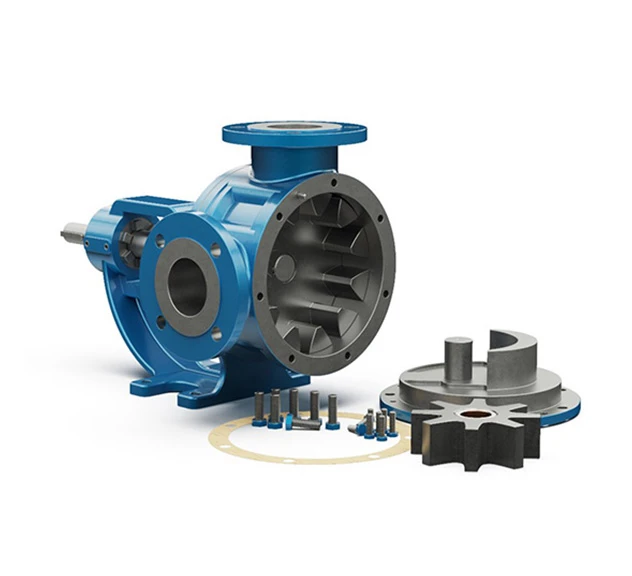
Precision engineering is a fundamental part of producing reliable gear pumps. Because these pumps depend on the controlled movement of closely fitted components, even small variations in dimensions, alignment, or surface finish can affect flow, efficiency, noise, and service life.
For a gear pump manufacturer, precision engineering involves much more than accurate machining. It includes gear design, material selection, dimensional control, assembly, testing, and quality management. When these elements are carefully coordinated, manufacturers can produce pumps that deliver more consistent performance across demanding industrial applications.
Why Precision Matters in Gear Pumps
Gear pumps operate through the interaction of rotating gears and a closely fitted housing. The gears must rotate smoothly while maintaining appropriate clearances for the fluid being pumped.
If clearances are too large, internal leakage can increase and reduce volumetric efficiency. If they are too small, friction and heat generation may increase, potentially accelerating component wear.
Precision engineering helps manufacturers find the appropriate balance for each pump design and operating condition.
Accurate Gear Manufacturing
The gears are among the most critical components in a gear pump. Their tooth profile, dimensions, alignment, and surface finish directly influence how fluid moves through the pump.
Modern manufacturing methods allow gear components to be produced within tightly controlled tolerances. Accurate gear geometry helps support smooth rotation and consistent displacement.
For applications involving higher pressures or demanding duty cycles, maintaining gear accuracy becomes especially important.
Controlling Internal Clearances
Internal clearance is another important engineering consideration. The space between the gears, housing, and other components must be carefully controlled.
Clearances that are too generous can allow fluid to move backward within the pump, reducing output efficiency. Excessively tight clearances may create unwanted contact between components.
Manufacturers determine suitable clearances based on factors such as fluid viscosity, pressure, temperature, speed, and material expansion.
Precision Shafts and Bearings
Gears cannot perform properly without accurately manufactured and aligned shafts. Shaft dimensions and surface quality influence how the gears rotate within the housing.
Bearings and bushings also require appropriate tolerances. Poor alignment can create uneven loading, vibration, and premature wear.
Precision engineering therefore extends throughout the pump assembly rather than focusing on the gears alone.
Advanced Machining Processes
Producing precision pump components often requires carefully controlled machining operations. Computer-controlled equipment can help manufacturers achieve repeatable dimensions across production batches.
Depending on the component, processes may include turning, milling, grinding, honing, or other finishing techniques.
The objective is to create parts that meet defined dimensional and surface requirements while maintaining consistency from one unit to another.
Surface Finish and Component Performance
Surface finish can affect friction, wear, sealing, and fluid movement. Rough or inconsistent surfaces may increase resistance or contribute to premature component deterioration.
Manufacturers may use specialized finishing processes on gears, shafts, housings, and other critical surfaces.
The required finish depends on the component and its function within the pump. Not every surface requires the same level of treatment.
Material Selection and Dimensional Stability
Precision design must account for the materials used in the pump. Different materials respond differently to pressure, temperature, corrosion, and mechanical loading.
Thermal expansion is particularly important in applications involving significant temperature changes. Component dimensions can change as temperatures rise or fall, potentially affecting internal clearances.
Selecting suitable materials and accounting for their characteristics during design can help maintain reliable performance.
Precision in Pump Assembly
Even accurately machined components can produce poor results if they are assembled incorrectly. Gears, shafts, bearings, seals, and housings must be positioned and fitted according to the design requirements.
Controlled assembly procedures help maintain alignment and prevent unnecessary mechanical stress.
Manufacturers may use inspection equipment and defined assembly procedures to verify critical dimensions and positioning before final testing.
The Role of Computer-Aided Design
Computer-aided design and engineering tools can support the development of modern gear pumps. Engineers can use digital models to evaluate component dimensions, clearances, mounting arrangements, and potential interference.
These tools also make it easier to modify designs for specialized applications.
Digital engineering does not replace physical testing, but it can help identify potential design issues earlier in the development process.
Quality Inspection During Production
Precision engineering requires effective measurement and inspection. Manufacturers may inspect components at multiple stages rather than waiting until final assembly.
Inspection can cover:
- Gear dimensions
- Shaft diameter and alignment
- Housing dimensions
- Surface finish
- Component clearances
- Assembly accuracy
Consistent inspection helps identify deviations before they affect the finished pump.
Performance Testing
Dimensional accuracy is important, but the finished pump must also demonstrate the expected operating performance. Testing can provide practical confirmation of the design and manufacturing process.
Depending on the application, manufacturers may evaluate flow rate, pressure, leakage, operating temperature, noise, and vibration.
Performance testing can help identify issues that may not be apparent from dimensional inspection alone.
Precision and Pump Efficiency
Precision engineering can contribute directly to pumping efficiency. Appropriate internal clearances and accurate gear geometry can reduce unnecessary internal leakage and mechanical losses.
When a pump maintains its intended displacement more effectively, the system may require less additional energy to achieve the desired fluid output.
Efficiency gains can become particularly significant in equipment that operates continuously or at high utilization rates.
Supporting Longer Service Life
Precision manufacturing can also influence durability. Properly aligned components experience more predictable loading, while appropriate surface finishes and clearances can help control wear.
A pump designed and manufactured accurately is better positioned to maintain its intended performance over an extended operating period.
However, service life also depends on correct installation, suitable operating conditions, fluid cleanliness, and regular maintenance.
Importance in Custom Gear Pump Applications
Precision becomes even more important when developing customized pumps. Changes to dimensions, materials, mounting arrangements, or performance characteristics must be carefully evaluated.
A custom design should maintain the necessary relationships between gears, shafts, housing surfaces, seals, and other components.
Manufacturers with strong precision engineering capabilities can better manage these requirements while adapting pumps to specialized applications.
Conclusion
Precision engineering is central to reliable gear pump manufacturing. Accurate gears, controlled clearances, properly aligned shafts, suitable materials, careful assembly, and thorough inspection all contribute to consistent pump performance.
For industrial users, precision can affect efficiency, durability, leakage control, and maintenance requirements. By combining advanced manufacturing techniques with effective quality control and performance testing, manufacturers can produce gear pumps that are better suited to demanding and long-term industrial applications.