

The Importance of Precision Engineering in Piston Pump Manufacturing
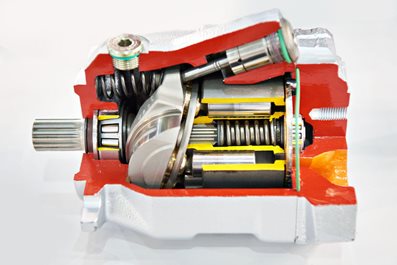
Piston pumps are built from multiple mechanical components that must work together accurately to deliver consistent fluid flow and pressure. In demanding industrial applications, even small variations in component dimensions or assembly can affect performance, efficiency, and service life.
For this reason, precision engineering is an important part of modern pump production. A piston pump manufacturer relies on accurate design, machining, inspection, and assembly processes to produce equipment that can operate consistently under its specified conditions.
What Is Precision Engineering?
Precision engineering involves designing and manufacturing components to closely controlled dimensions and tolerances. In piston pumps, this applies to parts that interact mechanically or control the movement of fluid.
The objective is not simply to make components accurate in isolation. Each part must also work correctly with the other components in the completed pump.
Why Precision Matters in Piston Pumps
Piston pumps rely on reciprocating movement to displace fluid. The piston, cylinder, valves, seals, crankshaft, bearings, and connecting components must operate in coordination.
If critical dimensions are incorrect, several problems may occur, including increased friction, internal leakage, vibration, uneven wear, or reduced pumping efficiency. Precision helps control these risks.
Accurate Piston and Cylinder Manufacturing
The relationship between the piston and cylinder is particularly important. Excessive clearance can increase internal leakage, while insufficient clearance can increase friction and the risk of mechanical contact.
Manufacturers therefore need to control dimensions, surface finishes, and alignment during production. Consistent machining can help maintain the intended relationship between these components.
Precision in Valve Components
Valves regulate the movement of fluid through the pump. Their timing, seating, and movement can influence pressure and flow performance.
Accurately manufactured valve components can support effective sealing and predictable operation. Poorly matched or incorrectly manufactured valve parts may contribute to leakage, pressure loss, or inconsistent fluid delivery.
The Role of Sealing Precision
Sealing systems must maintain fluid containment while allowing mechanical movement to occur. Their performance depends on factors such as material, dimensions, surface condition, pressure, and temperature.
Precision engineering helps ensure that seals and the surfaces they contact are manufactured and assembled appropriately. This can reduce leakage and help maintain consistent pump performance.
Reducing Mechanical Friction
Moving components naturally create mechanical friction, but excessive friction can waste energy and accelerate component wear.
Accurate machining and alignment help ensure that pistons, shafts, bearings, and other moving parts operate smoothly. Appropriate lubrication and surface finishes can further support efficient mechanical operation.
Improving Pump Efficiency
Internal leakage and mechanical losses can reduce the useful output of a piston pump. Precision manufacturing can help minimize these losses by maintaining appropriate clearances and component relationships.
Greater consistency between individual components can also make pump performance more predictable. This is particularly valuable when equipment is used in systems with defined pressure and flow requirements.
Supporting High-Pressure Operation
High-pressure applications place considerable stress on pump components. Small manufacturing inconsistencies can become more significant when equipment operates under substantial mechanical and hydraulic loads.
Precision engineering helps manufacturers control critical dimensions and ensure that components are suitable for their intended pressure range. Material selection and structural design remain equally important.
Using Advanced Manufacturing Processes
Modern pump production can involve computer-aided design, CNC machining, automated measurement, and other controlled manufacturing technologies.
These methods can help improve repeatability and reduce variation between components. However, technology alone does not guarantee quality; appropriate process control, inspection, and skilled engineering remain essential.
Inspection and Measurement
Precision manufacturing requires reliable inspection methods. Critical components may be measured during and after machining to confirm that they meet specified requirements.
Inspection can cover dimensions, tolerances, surface finishes, alignment, and other characteristics. Final assembly checks can then confirm that components work together as intended.
Quality Control Throughout Production
Precision should be maintained throughout the manufacturing process rather than checked only at the end. Manufacturers can establish quality checkpoints for materials, machining, assembly, and final testing.
A consistent quality-control process helps identify deviations early. This can reduce the likelihood of defective components reaching final assembly or being delivered to customers.
Precision and Long-Term Reliability
Accurate components can contribute to more stable pump operation and predictable wear patterns. When critical parts are properly manufactured and aligned, unnecessary mechanical stress can be reduced.
This does not eliminate normal wear, but it can help support longer service intervals when the pump is correctly selected, installed, and maintained.
Precision Engineering and Custom Pump Design
Specialized applications may require customized pump dimensions, materials, pressure ratings, or component configurations. Precision engineering becomes particularly important when adapting a pump to unusual requirements.
Custom designs need to account for how each modification affects the rest of the pump. Careful engineering and measurement can help ensure that customized components remain compatible with the complete assembly.
Why Precision Should Be Considered When Selecting a Manufacturer
Buyers evaluating pump suppliers should ask how critical components are manufactured and inspected. Useful questions may cover machining capabilities, dimensional controls, testing procedures, and quality-management practices.
It is also worth reviewing technical documentation and asking how the manufacturer maintains consistency between production batches. These details can provide a clearer understanding of manufacturing capabilities than product descriptions alone.
Conclusion
Precision engineering plays a fundamental role in piston pump manufacturing. Accurate design, machining, component inspection, and assembly help control leakage, friction, vibration, wear, and performance variation.
For industrial users, choosing a pump involves more than reviewing pressure and flow specifications. Understanding how precisely the equipment is engineered and manufactured can provide valuable insight into its expected reliability and suitability for demanding applications.