

Mixers for Refractories: Types, Features, and Industrial Applications
Refractory materials are designed to withstand extreme temperatures, chemical exposure, thermal cycling, and mechanical stress. Producing these materials requires careful control of raw materials and processing conditions, particularly during the mixing stage. A uniform mixture helps provide more consistent properties in the finished refractory product.
Choosing appropriate Mixers For Refractories depends on the material formulation, particle size, moisture level, production capacity, and required mixing intensity. Different mixer designs provide different types of material movement, making equipment selection an important part of refractory manufacturing.
Why Mixing Is Important for Refractory Materials
Refractory formulations commonly contain coarse aggregates, intermediate particles, fine powders, binders, and additives.
These ingredients can differ considerably in size and density. Effective mixing helps distribute them throughout the batch and reduces variations in composition.
Consistent mixing can contribute to predictable characteristics such as density, strength, workability, porosity, and thermal performance.
Types of Refractory Mixers
There is no single mixer design suitable for every refractory formulation. The appropriate equipment depends on the characteristics of the material and the intended production process.
Intensive Pan Mixers
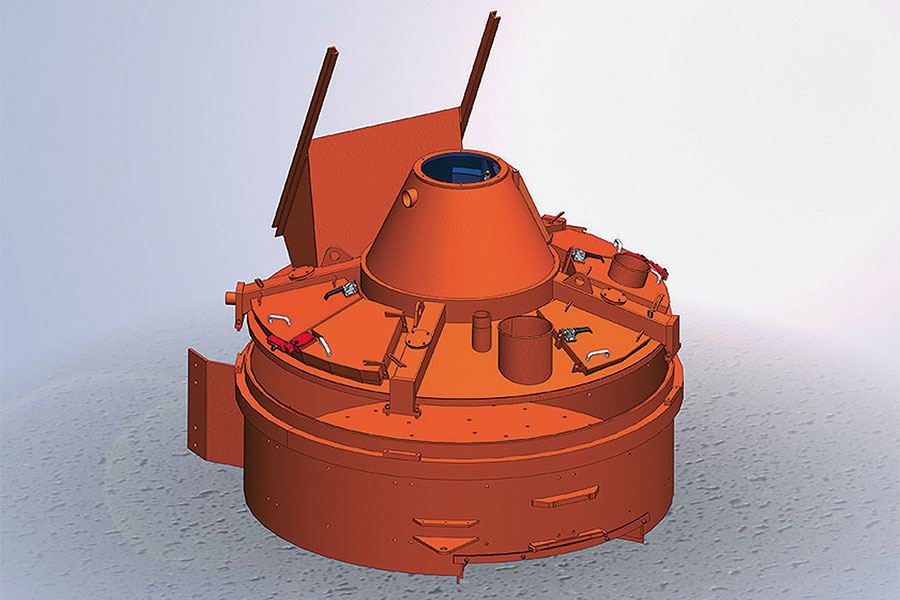
Intensive pan mixers combine movement of the mixing vessel with mechanical rotation of mixing tools.
This creates strong material circulation and can be useful for refractory formulations containing fine powders, aggregates, binders, or controlled moisture.
They can also be used for conditioning and other processes where intensive material movement is required.
Planetary Mixers
Planetary mixers use mixing tools that rotate around their own axes while traveling around the mixing chamber.
This creates multiple mixing paths and can provide thorough distribution of refractory components.
Planetary systems can be suitable for castables, mortars, and other formulations where consistent mixing is important.
Twin Shaft Mixers
Twin shaft mixers use two parallel shafts fitted with mixing tools.
The counter-rotating shafts create strong material movement and are commonly associated with high-throughput industrial applications.
Their suitability depends on the refractory formulation, aggregate characteristics, and required production rate.
Pan or Paddle Mixers
Pan and paddle mixer designs use rotating tools to move material through a fixed or rotating vessel.
They can be used for various dry and moist refractory formulations, depending on their configuration and mixing intensity.
Important Features to Consider
Mixing Intensity
Refractory materials may require substantial mechanical action to distribute fine powders and binders.
The mixer should provide sufficient intensity without unnecessarily increasing energy consumption or component wear.
Wear Resistance
Many refractory ingredients are abrasive. Mixing tools and liners should therefore be constructed to withstand continuous contact with abrasive materials.
Wear-resistant components can help reduce maintenance frequency.
Mixing Tool Configuration
Tool shape and arrangement influence material circulation.
The configuration should match the particle characteristics and required mixing effect.
Capacity
Mixer capacity should be selected according to the typical batch size and required production rate.
Operating outside the recommended working volume can affect material circulation and mixing uniformity.
Dry Mixing and Wet Mixing
Refractory production may involve dry or wet mixing depending on the product formulation.
Dry mixing focuses on distributing powders, aggregates, and additives without introducing significant liquid.
Wet mixing incorporates water or liquid binders to produce a material with a specified consistency.
The equipment and process parameters should be selected according to the required moisture level.
Applications of Refractory Mixers
Mixing equipment is used to prepare materials for numerous high-temperature industrial applications.
Steel Industry
Steel production relies on refractory materials for furnaces, ladles, tundish systems, and other high-temperature equipment.
Consistent refractory formulations are important because these materials operate under severe thermal and chemical conditions.
Cement Industry
Cement plants use refractory linings in kilns, preheaters, coolers, and other high-temperature areas.
Mixers help prepare refractory castables and other materials used to construct or repair these linings.
Foundries
Foundries use refractory materials in furnaces, crucibles, ladles, and molds.
The mixing process must produce materials with suitable consistency and resistance to thermal stress.
Glass Manufacturing
Glass furnaces operate at high temperatures and require specialized refractory components.
Consistent mixing of refractory raw materials helps support the production of components designed for these demanding environments.
Nonferrous Metal Processing
Aluminum, copper, and other nonferrous metal operations also use refractory materials.
Mixer selection depends on the formulation and application requirements.
Factors Affecting Mixing Performance
Several variables influence how effectively refractory materials are mixed.
Particle Size Distribution
A formulation containing coarse aggregates and fine powders requires effective circulation to achieve uniform distribution.
Bulk Density
Large differences in material density can increase the possibility of segregation.
Moisture Content
Water affects flowability, cohesion, and the behavior of the mixture during processing.
Binder Type
Different binders can require different addition methods and mixing conditions.
Mixing Time
The cycle must be long enough to achieve the desired uniformity but not so long that it unnecessarily reduces production efficiency.
Choosing the Right Mixer
Selecting a mixer should begin with a detailed analysis of the production process.
Consider:
- Refractory formulation
- Particle size and density
- Material abrasiveness
- Dry or wet processing
- Batch capacity
- Required production rate
- Mixing intensity
- Mixing cycle time
- Liquid or binder addition
- Maintenance requirements
Material trials can provide additional information when the formulation is specialized.
Wear and Maintenance
Abrasive refractory materials can cause gradual wear to mixing tools, liners, scrapers, seals, and other components.
Routine inspection helps identify worn parts before they significantly affect mixing performance.
Manufacturers should also evaluate the ease of replacing wear components and the availability of spare parts.
Automation and Process Control
Automated batching and mixing systems can improve production consistency.
Depending on the facility, automation may control raw material dosing, water or binder addition, mixing speed, mixing time, and discharge.
Integration with conveyors, storage systems, weighing equipment, and downstream forming equipment can further streamline production.
Discharge and Cleaning
Efficient discharge is important because refractory materials need to move quickly to the next production stage.
A mixer that minimizes material retention can help reduce waste and shorten cleaning time.
Easy access to the mixing chamber is also valuable for routine inspection and maintenance.
Energy Efficiency
Intensive refractory mixing can require considerable mechanical energy.
Efficient operation depends on selecting appropriate equipment capacity and optimizing mixing speed and cycle time.
The objective should be to achieve the required material uniformity without excessive processing.
Material Testing
Testing actual refractory formulations can help determine the most suitable mixer and operating conditions.
Trials can evaluate mixing time, material circulation, liquid addition, discharge behavior, and final uniformity.
This approach is especially useful when processing new formulations or materials with unusual characteristics.
Total Cost of Ownership
The initial equipment price should be considered alongside long-term operating expenses.
These may include energy consumption, wear parts, maintenance, cleaning, labor, installation, and downtime.
A durable mixer that provides consistent performance may offer better long-term value than equipment selected solely on initial purchase cost.
Conclusion
Refractory mixers are available in several configurations, including intensive pan, planetary, twin shaft, and paddle-based designs. Each type creates a different material-flow pattern and may be better suited to particular refractory formulations.
When selecting equipment, manufacturers should evaluate material characteristics, mixing intensity, capacity, wear resistance, moisture requirements, automation, discharge, and maintenance. Proper equipment selection and process control can help produce more uniform refractory mixtures for demanding high-temperature applications.