

Mescolatore Planetario Per Cemento: Features, Applications, and Buying Guide
Consistent concrete mixing is essential for producing materials with predictable strength, workability, and durability. Cement, aggregates, water, and additives must be combined thoroughly so that each batch meets the required formulation. The choice of mixer can therefore have a significant effect on production consistency and efficiency.
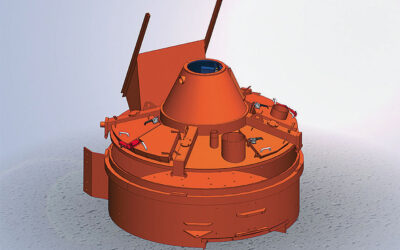
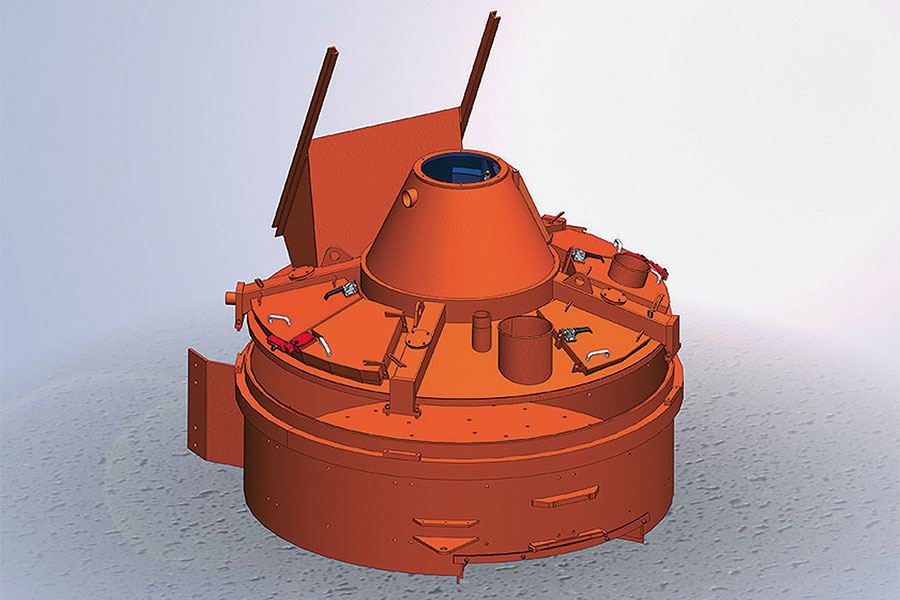
A Mescolatore Planetario Per Cemento is designed to provide intensive mixing through the combined movement of multiple mixing tools. The tools rotate around their own axes while traveling around the center of the mixing pan, creating extensive material circulation and helping distribute concrete ingredients more uniformly.
What Is a Planetary Cement Mixer?
A planetary cement mixer is a type of industrial mixer commonly used for concrete and cement-based materials. It typically consists of a fixed mixing pan with one or more rotating mixing units.
Unlike a conventional single-shaft mixer, the mixing tools follow planetary paths. This allows them to work across different areas of the pan and continuously move material through the active mixing zone.
The design is particularly useful for applications where consistent and intensive mixing is required.
Key Features to Consider
Different planetary mixers can vary considerably in their configuration and capabilities. Understanding the main features can help manufacturers select equipment that matches their production requirements.
Planetary Mixing Movement
The combination of tool rotation and planetary movement creates multiple mixing paths. This helps distribute materials throughout the mixing chamber and reduces the possibility of inactive areas.
Multiple Mixing Tools
Using multiple tools allows different areas of the batch to be processed simultaneously. The number and arrangement of tools can influence mixing intensity and overall production capacity.
Scraping System
Scrapers can help move material away from the walls of the mixing pan and return it to the active mixing area. This can improve circulation and reduce material buildup.
Wear-Resistant Components
Concrete contains abrasive aggregates that can gradually wear internal components. Durable mixing tools, liners, and other wear-prone parts can help maintain reliable performance.
How Planetary Mixing Works
The working principle is based on two simultaneous movements. Each mixing tool rotates around its own axis while also moving around the central axis of the pan.
This creates a complex circulation pattern that repeatedly brings different portions of the concrete into contact with the mixing tools.
As the cycle continues, cement paste, aggregates, water, and additives become more evenly distributed throughout the batch.
Applications of Planetary Cement Mixers
Planetary mixers are suitable for a wide range of cement and concrete production applications.
Common uses include:
- Precast concrete components
- Concrete blocks
- Pavers and paving stones
- Concrete pipes
- Railway sleepers
- Dry-cast concrete products
- High-performance concrete
- Specialty cement-based materials
The required mixer size and configuration will depend on the formulation and production volume.
Benefits of Planetary Mixing
Improved Homogeneity
Intensive material circulation can help produce a more uniform concrete mixture. This is important when consistent mechanical and visual properties are required.
Suitable for Stiff Mixtures
Planetary mixers can handle relatively stiff or low-slump formulations where strong mixing action is necessary to distribute the ingredients effectively.
Better Distribution of Additives
Small quantities of chemical admixtures, pigments, and mineral additives need to be dispersed evenly. Proper mixing can help prevent localized concentrations.
Repeatable Production
When ingredient quantities and mixing parameters are controlled, planetary mixers can support consistent batch-to-batch production.
Factors to Consider Before Buying
Choosing a planetary mixer requires more than comparing the maximum batch capacity. Several factors should be evaluated together.
Production Capacity
Determine the required batch volume and hourly output. Consider the complete cycle, including loading, mixing, discharge, and any cleaning time.
Concrete Formulation
Analyze the type of concrete being produced. Aggregate size, moisture content, cement content, additives, and slump can all influence mixer requirements.
Mixing Cycle
The required mixing time depends on the formulation and desired uniformity. A shorter cycle is not necessarily better if it results in inadequate mixing.
Discharge System
Efficient discharge can reduce cycle time and minimize residual material inside the pan. The discharge arrangement should be suitable for the consistency of the concrete.
Automation
Automated batching and mixing controls can improve repeatability. Consider whether the mixer can integrate with existing weighing, feeding, conveying, and production systems.
Check Maintenance and Wear Parts
Maintenance requirements should be considered before purchasing the equipment. Concrete and aggregates can cause gradual wear to mixing tools, liners, scrapers, and other components.
Ask about the expected service life of wear parts and how easily they can be inspected and replaced.
Accessible components can make routine maintenance faster and help reduce production downtime.
Consider Energy Efficiency
Planetary mixing involves intensive mechanical movement, so energy consumption should be evaluated in relation to production output and mixing performance.
The goal is to achieve the required concrete uniformity without unnecessarily extending mixing cycles.
Energy efficiency should be considered alongside capacity, durability, and maintenance costs when comparing different equipment options.
Evaluate Equipment Integration
A mixer should fit into the complete concrete production process. This may include aggregate bins, cement silos, weighing systems, conveyors, control panels, and molding equipment.
Before installation, check available space, material flow, electrical requirements, and control-system compatibility.
Good integration can help minimize manual handling and prevent bottlenecks.
Compare Total Cost of Ownership
The purchase price is only one part of the investment. Long-term expenses can include energy, maintenance, replacement parts, installation, and downtime.
A mixer with a higher initial cost may offer better value if it provides durable components and reliable production over a longer operating period.
Comparing total ownership costs provides a more practical basis for purchasing decisions.
Questions to Ask Before Purchase
Before selecting a planetary mixer, manufacturers should obtain clear answers about:
- What batch capacity is recommended for the intended production volume?
- What types of concrete can the mixer process effectively?
- What mixing cycle is required for the specific formulation?
- Which components are most exposed to wear?
- How are mixing tools and liners replaced?
- What automation and control options are available?
- How efficient is the discharge system?
- What technical and maintenance support is provided?
These questions can help identify potential differences between equipment options.
Conclusion
A Mescolatore Planetario Per Cemento provides intensive mixing through the combined rotation and planetary movement of multiple mixing tools. This design can support uniform concrete production and is suitable for applications such as precast components, blocks, pavers, pipes, and specialty concrete products.
When buying a planetary mixer, manufacturers should consider capacity, formulation, mixing performance, automation, maintenance, discharge efficiency, and total operating costs. Selecting equipment based on the complete production process can help achieve consistent results and reliable long-term operation.