Scaffolding plays an important role in construction by providing temporary access and working platforms at elevated locations. From residential building projects to large industrial developments, selecting an appropriate scaffold system can influence worker safety, installation efficiency, and overall project progress. Different construction environments require different equipment configurations, making it essential to evaluate site conditions before choosing a solution.
When selecting a Scaffold For Construct project, contractors should consider several factors, including working height, load requirements, building design, material quality, and installation conditions. A suitable system should meet the technical demands of the project while allowing workers to perform their tasks safely and efficiently. Understanding the available options and their characteristics helps construction professionals make informed equipment decisions.
Understanding the Role of Scaffolding in Construction
Scaffolding is a temporary structure designed to provide access and support for workers, tools, and approved materials during construction, maintenance, and repair activities.
It is commonly used for tasks such as:
- Bricklaying and masonry work.
- Exterior painting and surface finishing.
- Plastering and wall repairs.
- Structural installation and renovation.
- Roofing and façade maintenance.
- Industrial inspection and equipment servicing.
A properly selected scaffold system provides stable working platforms and suitable access between different levels. Its design must account for the intended activities, site layout, and applicable safety requirements.
Common Types of Scaffolding Used in Construction
Different scaffold systems are designed for different applications. Understanding their structural arrangements can help contractors identify the most appropriate option.
1. Frame Scaffolding
Frame scaffolding is widely used for residential construction, commercial buildings, and general maintenance work.
It consists of prefabricated frames connected through compatible braces and accessories. Its standardized design can make assembly relatively straightforward when the components are properly matched.
Common advantages include:
- Simple modular arrangements.
- Convenient transportation and storage.
- Suitability for repetitive construction tasks.
- Availability of compatible platforms and accessories.
Frame scaffolding is generally most suitable when the building layout and working requirements align with the available frame dimensions.
2. Ringlock Scaffolding
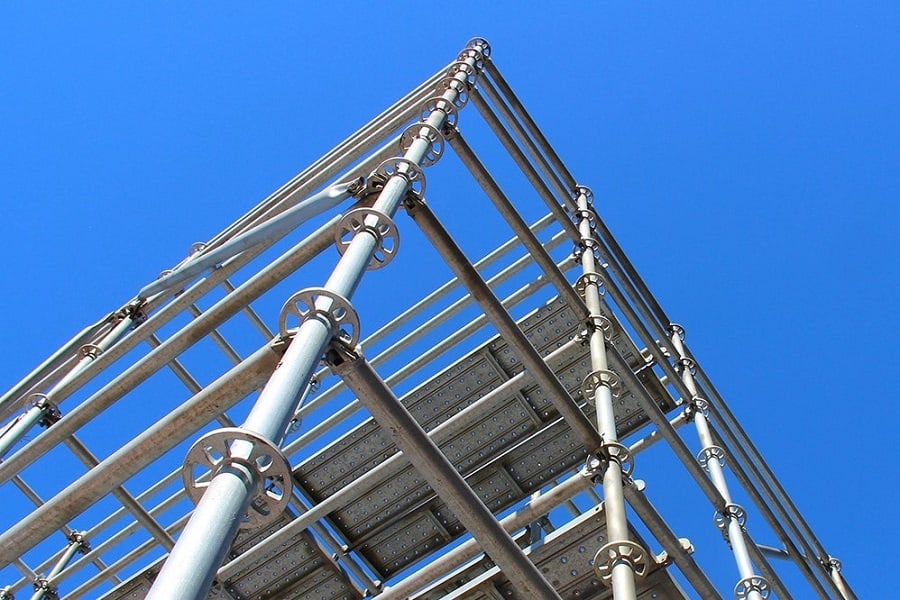
Ringlock scaffolding uses vertical standards fitted with circular rosette connection plates. Horizontal ledgers and diagonal braces connect to these plates through locking mechanisms.
This arrangement allows components to connect in multiple directions, making the system useful for complicated layouts and projects with varying elevations.
Ringlock systems are frequently considered for industrial facilities, infrastructure developments, and large construction projects.
3. Cuplock Scaffolding
Cuplock scaffolding uses cup-shaped connection components to secure horizontal members to vertical standards.
Its connection design supports relatively quick assembly and dismantling. The system is commonly used in building construction, formwork support, and selected infrastructure applications.
4. Tube-and-Coupler Scaffolding
Tube-and-coupler scaffolding uses individual tubes joined through specialized couplers.
It offers considerable flexibility because contractors can create customized arrangements around different structural shapes and site obstacles.
However, assembly requires careful positioning and tightening of the connections, as well as appropriate supervision and inspection.
5. Suspended Scaffolding
Suspended scaffolding uses platforms supported by suspension equipment from an overhead structure.
It is commonly used for façade maintenance, window installation, painting, and exterior repairs on tall buildings.
Because the platform is suspended, its support arrangements, lifting equipment, anchorage, and fall-protection systems require careful design and inspection.
Essential Factors to Consider When Choosing a Scaffold
Selecting scaffolding should involve a detailed assessment of project requirements rather than relying on price or appearance alone.
1. Project Type and Building Design
The first consideration is the nature of the construction work.
A straightforward residential project may require a different scaffold arrangement from a large industrial facility or a bridge construction site.
Contractors should evaluate building dimensions, structural shapes, access restrictions, and the activities that workers will perform.
For example, a modular system may be suitable for projects with repetitive layouts, while tube-and-coupler arrangements may be more practical where customized configurations are necessary.
2. Working Height and Access Requirements
Scaffold height influences component selection, structural design, and access arrangements.
Contractors should determine the required working levels and identify suitable methods for workers to move safely between platforms.
Ladders, stair towers, and other access components should be selected according to the scaffold configuration and applicable requirements.
The complete structure must also include appropriate ties, braces, and restraints where required by its design.
3. Load-Bearing Capacity
Load capacity is one of the most important considerations when choosing scaffolding.
The structure may need to support workers, tools, building materials, and equipment simultaneously. These loads should be calculated according to the intended use and applicable design requirements.
Important considerations include:
- The number of workers using each platform.
- The weight and distribution of stored materials.
- Equipment loads.
- Platform dimensions and support arrangements.
- Environmental forces, including wind exposure.
Contractors should follow the manufacturer’s rated capacities and the approved scaffold design. Platforms must never be overloaded or used for purposes beyond their intended specifications.
4. Material Selection
Scaffolding is commonly manufactured from steel or aluminum, with each material offering different characteristics.
Steel scaffolding is widely used because of its strength, durability, and suitability for demanding construction applications.
Aluminum scaffolding is lighter and generally easier to transport and reposition, making it useful for certain maintenance and access activities.
The correct choice depends on structural requirements, environmental exposure, handling needs, and the design of the complete system.
5. Ground and Foundation Conditions
Scaffolding must stand on a suitable supporting surface.
Uneven, soft, or unstable ground can affect the distribution of loads and increase the risk of settlement or movement.
Before installation, contractors should assess ground conditions and provide suitable base plates, adjustable jacks, sole boards, or other support arrangements where required.
The foundation must be capable of safely carrying the loads transferred through the scaffold structure.
6. Environmental Conditions
Outdoor scaffolding may be exposed to rain, wind, sunlight, humidity, and changing temperatures.
These conditions can affect equipment performance and installation requirements.
For example, steel components may require suitable corrosion protection, particularly when used in humid or coastal environments. Wind exposure must also be considered when designing and using exposed scaffold structures.
Weather conditions should be monitored throughout the project, and work should be suspended when conditions make scaffold use unsafe.
How to Match Scaffold Systems With Different Construction Projects
The most suitable scaffold system depends on the project’s size, complexity, access requirements, and expected working conditions.
Residential Construction
Residential projects commonly involve brickwork, plastering, painting, and exterior finishing.
Frame scaffolding can be practical for many straightforward building layouts because its prefabricated components support repetitive arrangements.
Smaller maintenance activities may also benefit from suitable lightweight access systems.
Commercial Building Construction
Commercial projects often involve larger façades, multiple working levels, and more complex access requirements.
Ringlock and cuplock systems can provide modular arrangements that accommodate different heights and structural layouts.
The final choice should reflect the building design, required platform loading, and installation conditions.
Industrial Construction
Industrial facilities frequently contain machinery, pipelines, tanks, and structural obstacles.
Modular scaffolding can provide adaptable access arrangements around these features when supported by appropriate engineering.
Material quality, corrosion protection, and connection reliability are especially important in demanding industrial environments.
Infrastructure Projects
Bridge construction, tunnels, transportation facilities, and other infrastructure developments may require specialized scaffolding arrangements.
These projects can involve unusual geometries, significant working heights, and complex loading conditions.
A project-specific design is essential to establish the correct components, supports, bracing, and access provisions.
Safety Features That Should Not Be Overlooked
Selecting suitable scaffold components is only one part of creating a safe working environment. Proper installation, inspection, and use are equally important.
A complete scaffold arrangement should include appropriate safety provisions based on its design and the applicable regulations.
Guardrails and Toe Boards
Guardrails help prevent workers from falling from exposed platform edges. Toe boards help reduce the risk of tools and materials falling from working surfaces.
These protective components should be installed wherever required by the relevant safety standards.
Secure Working Platforms
Platforms should be suitable for the intended loads and properly supported.
Workers should have sufficient working space, and platform surfaces should be maintained in a safe condition without unnecessary gaps or obstructions.
Proper Bracing and Tying
Diagonal braces and scaffold ties contribute to structural stability.
Their positioning and installation must follow the approved scaffold design rather than relying on improvised arrangements.
Safe Access
Workers should use designated ladders, stairways, or other approved access systems.
Climbing scaffold frames or using unsuitable structural members as access routes can create unnecessary hazards.
Regular Inspections
Scaffolding should be inspected by competent personnel before use and at the intervals required by applicable regulations.
Additional inspections may be necessary after severe weather, alterations, impact, or other events that could affect structural integrity.
The Importance of Quality Materials and Reliable Suppliers
The quality of scaffold components can influence the performance and durability of the complete system.
Contractors should work with suppliers that provide clear technical specifications and consistent product quality.
Before purchasing, consider the following:
- Material grades and component dimensions.
- Manufacturing and welding quality.
- Connection compatibility.
- Surface treatments and corrosion protection.
- Rated load information.
- Relevant testing and certification documentation.
- Availability of replacement components and accessories.
It is also important to ensure that components from different manufacturers are not combined unless their compatibility has been properly verified.
A dependable supplier should be able to explain product specifications and provide documentation that supports informed purchasing decisions.
Balancing Project Efficiency and Equipment Costs
Cost is an important part of scaffold selection, but the lowest initial price does not always represent the best overall value.
Contractors should consider the complete cost of equipment ownership, including transportation, installation, maintenance, storage, and replacement.
A modular system may require a higher initial investment but offer advantages through repeated use and standardized components. Lightweight equipment may reduce handling demands in suitable applications, while durable protective finishes can help limit corrosion-related maintenance.
Project planning should also consider workforce experience and installation time. A system that is appropriate for the site and familiar to the installation team can support more organized operations.
Maintenance Practices That Extend Scaffold Service Life
Proper maintenance helps preserve scaffold components and supports safe reuse across multiple projects.
Before each use, equipment should be examined for defects such as:
- Bent or distorted tubes and frames.
- Cracked welds or damaged connection points.
- Corrosion and deteriorated surface coatings.
- Worn wedges, couplers, and locking mechanisms.
- Damaged platforms or missing fittings.
Defective components should be removed from service and assessed by qualified personnel. Repairs should follow approved procedures, and unsuitable components should not be returned to use.
After dismantling, equipment should be cleaned when necessary, sorted by type, and stored in appropriate conditions to reduce damage and unnecessary environmental exposure.
Conclusion
Choosing the right scaffold for construction requires a careful evaluation of project design, working height, load requirements, materials, ground conditions, and environmental exposure. Frame, ringlock, cuplock, tube-and-coupler, and suspended systems each offer different capabilities for specific applications.
Beyond the initial equipment selection, reliable performance depends on compatible components, appropriate structural design, competent installation, and regular inspections. Contractors who consider these factors can make better purchasing decisions, manage construction activities more efficiently, and create safer working environments for their teams.