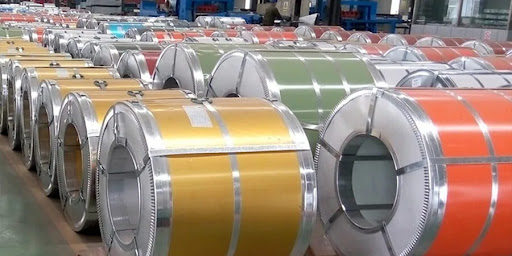
Continuous production has become a defining feature of modern industrial manufacturing, especially in metal surface finishing. Unlike batch processing, continuous systems allow materials to move through multiple processing stages without interruption, improving efficiency, reducing waste, and ensuring consistent product quality. This approach is particularly important in aluminum processing, where precision and uniformity are essential.
A modern aluminum coil coating line is built around the principle of continuous production, where aluminum coils are unwound, processed, coated, cured, and recoiled in a seamless flow. This integrated system enables large-scale manufacturing with stable quality control and high operational efficiency.
Concept of Continuous Coil Coating Production
Continuous production in coil coating refers to processing a moving strip of aluminum through a series of connected treatment stages. Instead of stopping between steps, the material flows steadily through the entire system.
This method provides several advantages:
- Eliminates production downtime between stages
- Ensures uniform coating application
- Increases overall production speed
- Reduces material handling and damage risk
By maintaining uninterrupted flow, manufacturers can achieve high-volume output with consistent quality.
Entry Section and Coil Feeding Process
The continuous process begins with the entry section, where raw aluminum coils are loaded and prepared for processing. The coil is unwound and fed into the line under controlled tension.
Key features of this stage include:
- Automatic coil loading systems
- Tension-controlled uncoilers
- Strip alignment mechanisms
- Entry accumulators for continuous feeding
These systems ensure smooth material entry without disrupting downstream operations.
Continuous Surface Preparation Process
Surface preparation is fully integrated into the continuous workflow. As the aluminum strip moves through the line, it undergoes cleaning and chemical treatment without stopping.
This stage typically includes:
- Degreasing and cleaning units
- Water rinsing sections
- Chemical pretreatment systems
- Drying zones before coating
Continuous processing ensures that surface quality remains consistent across the entire coil length.
Inline Coating Application Technology
Coating application in continuous systems is performed while the aluminum strip is in motion. Precision roller coating machines apply primer and finish layers evenly across the surface.
Advantages of inline coating include:
- Uniform coating thickness
- High-speed application capability
- Reduced coating waste
- Stable surface finish quality
The continuous nature of the process ensures that every section of the coil receives identical coating treatment.
Continuous Drying and Curing Process
After coating application, the aluminum strip moves directly into drying and curing zones. These thermal systems operate continuously, maintaining stable temperature profiles as the material passes through.
Key characteristics include:
- Multi-zone temperature control
- Continuous airflow management
- Rapid solvent evaporation
- Efficient energy utilization
This stage is essential for transforming liquid coatings into durable protective layers.
Role of Strip Accumulators in Continuous Operation
Strip accumulators are critical for maintaining uninterrupted production flow. They store temporary lengths of aluminum strip, allowing coil changes without stopping the line.
Functions of accumulators include:
- Maintaining continuous operation during coil replacement
- Balancing line speed variations
- Reducing downtime between production batches
- Ensuring stable process flow
This technology is essential for achieving true continuous production efficiency.
Automation in Continuous Production Systems
Automation is the backbone of modern coil coating lines. Advanced control systems synchronize all stages of production, ensuring that each process operates in harmony with others.
Automated systems manage:
- Line speed synchronization
- Coating thickness control
- Temperature regulation
- Tension adjustment
- Quality monitoring
This level of automation reduces human intervention and improves production stability.
Real-Time Monitoring and Process Feedback
Continuous production relies heavily on real-time monitoring systems that track key process variables. Sensors collect data throughout the line and provide instant feedback to operators.
Monitored parameters include:
- Surface quality and defects
- Coating thickness consistency
- Temperature and airflow stability
- Line tension and speed
This data allows immediate adjustments, ensuring consistent product quality.
Energy Optimization in Continuous Systems
Energy efficiency is a major consideration in continuous coil coating operations. Since the system runs without interruption, optimizing energy usage is essential for reducing operational costs.
Common energy-saving strategies include:
- Heat recovery from curing ovens
- Insulated processing chambers
- Variable-speed drives for motors
- Smart energy management systems
These technologies help balance performance with sustainability.
Benefits of Continuous Production Methods
Continuous production offers significant advantages compared to traditional batch processing methods. It is especially suitable for large-scale industrial manufacturing.
Key benefits include:
- Higher production efficiency
- Consistent product quality
- Lower labor requirements
- Reduced material waste
- Improved process control
These advantages make continuous systems the preferred choice in modern aluminum processing industries.
Integration Within an Aluminum Coil Coating Line
All continuous production methods are fully integrated into a modern aluminum coil coating line. From entry to exit, every stage is connected in a synchronized workflow that ensures uninterrupted processing.
This integration enables:
- Seamless material flow across all stages
- Coordinated mechanical and thermal systems
- Centralized control and monitoring
- High-speed industrial production capability
The result is a highly efficient manufacturing system capable of producing large volumes of coated aluminum with consistent quality.
Conclusion
Continuous production methods have transformed aluminum coil coating into a highly efficient and reliable industrial process. By eliminating interruptions and integrating all processing stages into a unified system, manufacturers can achieve superior productivity and product consistency.
Within a modern aluminum coil coating line, continuous production ensures stable operation, reduced waste, and high-quality output. As technology advances, further improvements in automation, energy efficiency, and process control will continue to enhance the performance and sustainability of coil coating systems.