Increasing production output is a major objective for manufacturers operating in competitive industrial environments. As customer demand grows, businesses must find ways to process larger product volumes without compromising packaging quality or increasing operational costs unnecessarily. Improving the efficiency of the packaging department is an important part of achieving this goal because delays at the final production stage can affect the entire manufacturing workflow.
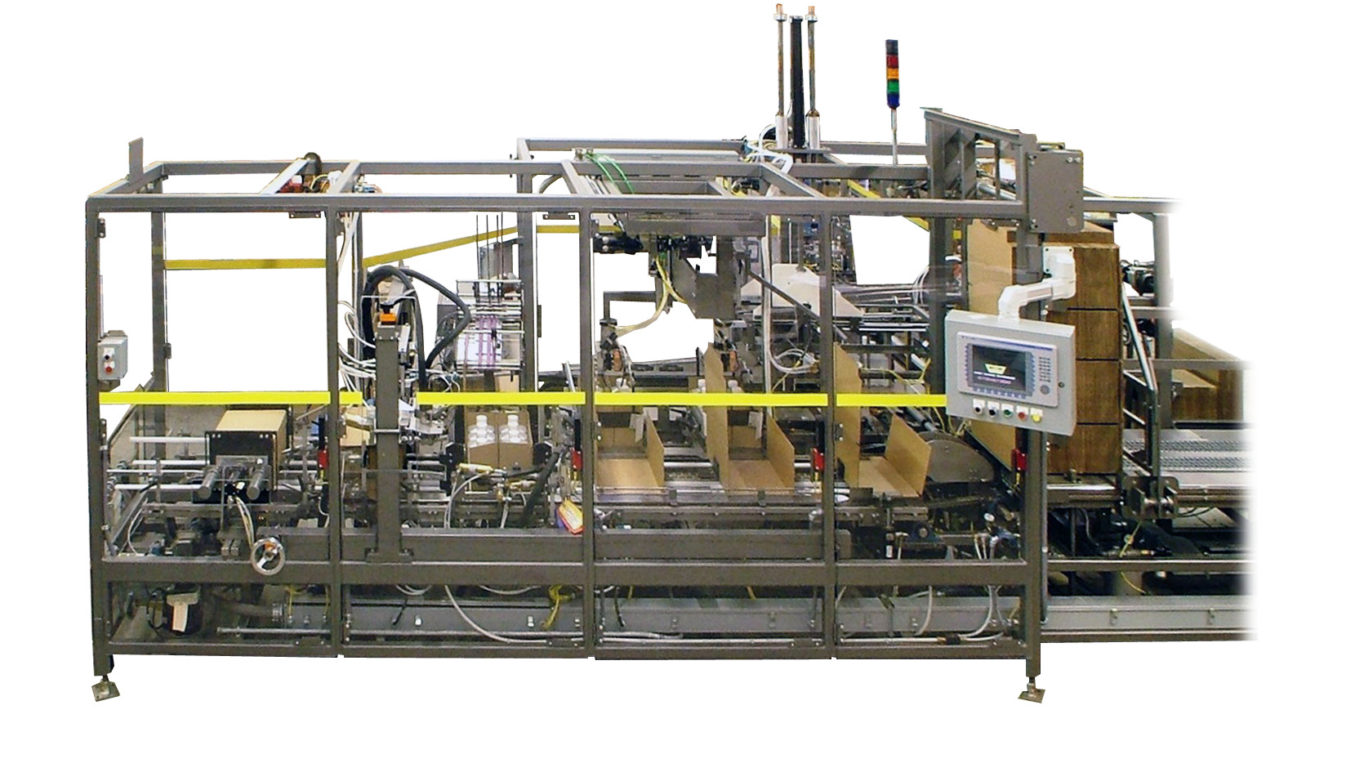
Advanced automation provides manufacturers with practical opportunities to improve packaging performance. A Wrap Around Case Packer automates product grouping, carton formation, folding, and sealing within a coordinated process. By reducing repetitive manual operations and maintaining consistent packaging cycles, this equipment can help businesses increase throughput and manage high-volume production more effectively.
Understanding the Role of Advanced Case Packing Equipment
A wrap-around case packing machine uses flat corrugated cardboard blanks to form shipping cases directly around grouped products. Unlike conventional packaging methods that require pre-assembled cartons, this technology creates the case during the packaging cycle.
The process generally involves several stages:
- Feeding individual products into the machine.
- Grouping products according to the required case configuration.
- Supplying and positioning corrugated cardboard blanks.
- Wrapping and folding the cardboard around the products.
- Sealing the completed case.
- Discharging finished cartons for inspection or palletizing.
By combining these operations, manufacturers can simplify packaging workflows and reduce delays associated with separate manual activities.
Ways to Improve Production Output with an Advanced Wrap-Around Case Packer
1. Increase Packaging Throughput Through Automation
Manual carton packaging can become a bottleneck when production volumes increase. Employees must repeatedly assemble cartons, arrange products, load cases, and seal packages, which can limit the number of finished cases produced during a shift.
An advanced case packing machine performs these activities through synchronized mechanical operations. This helps maintain a consistent packaging cycle and allows manufacturers to process larger product volumes with less manual intervention.
For the best results, machine capacity should match the actual output of upstream production equipment.
2. Maintain Consistent Product Feeding
Product feeding plays an important role in determining overall packaging performance. Irregular product spacing or inconsistent feeding can interrupt grouping operations and reduce machine efficiency.
Advanced packaging systems may use controlled conveyors, sensors, and product guides to maintain a steady supply of products.
Manufacturers should ensure that products arrive at the case packer in a consistent flow. Proper coordination between filling, labeling, inspection, and packaging equipment helps prevent unnecessary interruptions.
3. Improve Product Grouping Accuracy
Before products are enclosed in cartons, they must be arranged into the required case configuration.
Incorrect grouping can result in product misalignment, carton formation problems, and additional machine stoppages. Modern case packing systems use mechanical guides and synchronized transfer mechanisms to position products accurately.
Consistent grouping helps reduce packaging errors and supports a smoother operating cycle.
4. Reduce Manual Handling and Labor Dependency
Manual packaging activities require employees to perform repetitive physical tasks throughout production shifts. These activities can consume time and create variations in packaging performance.
Automation reduces the need for direct human involvement in routine carton preparation and product loading.
Employees can instead focus on machine supervision, quality inspections, packaging material replenishment, and preventive maintenance. This improves workforce allocation while allowing production teams to manage packaging operations more effectively.
5. Minimize Machine Downtime
High production output depends not only on machine speed but also on equipment availability.
Unexpected breakdowns, cardboard feeding problems, incorrect machine settings, and worn mechanical components can interrupt packaging operations.
Manufacturers can reduce these interruptions by:
- Following preventive maintenance schedules.
- Inspecting conveyors and moving components regularly.
- Monitoring sensors and control systems.
- Checking cardboard blanks before feeding.
- Training operators to identify common machine faults.
- Keeping essential replacement components available.
A proactive maintenance approach helps maintain stable production performance and reduces unexpected downtime.
Important Features That Support Higher Production Performance
Advanced case packing equipment may include several features designed to improve operational efficiency.
Automated Corrugated Blank Feeding
An automatic feeding mechanism supplies flat cardboard blanks to the packaging section. Reliable feeding reduces manual material handling and helps maintain continuous carton formation.
Advanced Control Systems
Programmable control systems coordinate product movement, grouping, folding, and sealing operations. Touchscreen interfaces can make machine adjustments and operating status monitoring easier for production personnel.
Flexible Changeover Settings
Manufacturers handling different product sizes may need to change carton dimensions or grouping arrangements frequently.
Convenient adjustment mechanisms and stored machine settings can help reduce changeover time and minimize production interruptions.
Accurate Folding and Sealing
Consistent carton folding and reliable sealing help reduce packaging defects. This minimizes the need for rework and supports more predictable finished-case quality.
Production Monitoring Capabilities
Modern equipment may provide information about production output, machine status, and operational faults. Monitoring this information helps manufacturers identify performance issues and make timely adjustments.
The Importance of Packaging Line Integration
An advanced case packer cannot deliver its full production potential if it operates independently from the rest of the manufacturing line.
Packaging efficiency depends on the coordination of upstream and downstream equipment. For example, a filling machine may produce products faster than the case packer can process them, creating accumulation between operations.
Similarly, an inefficient discharge conveyor or palletizing system may restrict the flow of completed cases.
To improve overall production output, manufacturers should evaluate integration with:
- Filling and processing equipment.
- Labeling and inspection machines.
- Product transfer conveyors.
- Automated case inspection systems.
- Coding and marking equipment.
- Robotic or conventional palletizing systems.
Proper synchronization helps maintain balanced production speeds and reduces bottlenecks throughout the packaging department.
Choosing the Right Machine Configuration
Selecting equipment based on actual production requirements is essential for achieving reliable output improvements.
Manufacturers should consider several factors before investing in an advanced case packing system.
Production Capacity: Determine the required cases per minute and compare this with expected daily production volumes.
Product Specifications: Evaluate product dimensions, weight, shape, and fragility to ensure compatibility with the machine.
Carton Requirements: Review corrugated board thickness, blank dimensions, and the required case configurations.
Factory Layout: Confirm that sufficient space is available for installation, material storage, operator access, and maintenance.
Automation Compatibility: Check whether the equipment can integrate with existing conveyors and production controls.
Maintenance Support: Consider spare parts availability, technical assistance, and recommended servicing intervals.
A machine that matches these requirements is more likely to provide consistent performance without creating unnecessary operational challenges.
How to Measure Improvements in Production Output
Manufacturers should monitor relevant performance indicators to determine whether an advanced case packing system is delivering the expected results.
Some useful measurements include:
Cases Produced Per Minute
This metric measures the number of completed shipping cases produced within a specific period. Comparing output before and after automation helps identify changes in packaging throughput.
Machine Availability
Availability measures the percentage of scheduled production time during which the equipment is operational.
Higher availability generally supports more consistent production output.
Packaging Defect Rate
Monitoring incorrect folding, poor sealing, and damaged cartons helps identify quality problems that may require rework or material replacement.
Changeover Time
The time required to switch between product formats or carton sizes can influence total production capacity, particularly in facilities handling multiple product types.
Overall Equipment Effectiveness
Overall Equipment Effectiveness (OEE) combines availability, performance, and quality into one measurement. It provides a broader understanding of how efficiently packaging equipment is being utilized.
Regularly reviewing these indicators allows manufacturers to identify improvement opportunities and make informed operational decisions.
Best Practices for Maintaining High Production Output
Consistent machine performance requires proper operating procedures and ongoing maintenance.
Manufacturers can support long-term packaging efficiency by following these practices:
- Establish preventive maintenance schedules based on machine specifications.
- Use corrugated blanks that meet the required dimensions and quality standards.
- Keep product feeding and conveyor systems properly adjusted.
- Train operators to manage machine settings and troubleshoot common issues.
- Monitor packaging quality throughout production shifts.
- Record machine downtime and investigate recurring problems.
- Review production data to identify opportunities for process improvements.
These practices help maintain stable operating conditions and reduce avoidable production interruptions.
Conclusion
Improving production output requires more than investing in faster machinery. Manufacturers must also focus on consistent product feeding, accurate grouping, reliable carton formation, effective maintenance, and proper integration with the wider production line.
An advanced wrap-around case packing system can support these objectives by automating multiple packaging operations and reducing repetitive manual work. When selected according to actual production requirements and maintained properly, it can help manufacturers increase packaging throughput, improve carton consistency, and establish a more efficient manufacturing process.