
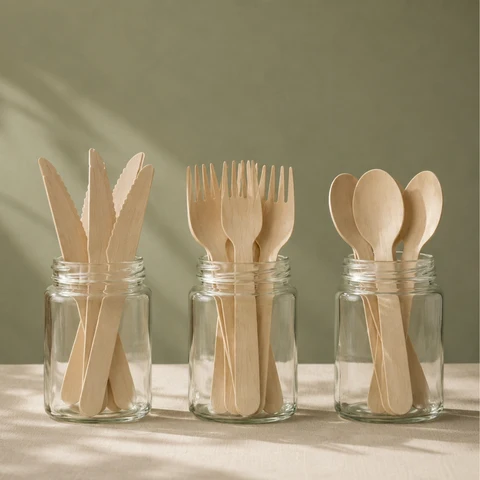
Managing large quantities of disposable food service products requires careful planning, reliable sourcing, and efficient inventory control. Restaurants, catering companies, hotels, food distributors, and takeaway businesses often need disposable cutlery in substantial volumes to support their daily operations. When demand increases, maintaining sufficient stock while controlling purchasing costs can become challenging.
Professional Disposable Cutlery Suppliers help businesses address these challenges by providing bulk purchasing options, consistent product availability, and packaging solutions suited to different operational requirements. Their role goes beyond supplying forks, spoons, and knives. They also contribute to order planning, product customization, transportation coordination, and supply chain management.
1. Providing Consistent Stock for Large Orders
Businesses with high disposable cutlery consumption cannot afford frequent stock shortages. Restaurants need utensils for everyday customer orders, while catering companies may require thousands of pieces for a single event.
Wholesale suppliers help meet these requirements by maintaining inventory and organizing production according to customer demand.
A reliable supply arrangement allows businesses to plan purchases in advance and reduce the risk of running out of essential products during busy periods.
Before choosing a supplier, buyers should evaluate its inventory management practices, manufacturing capacity, and ability to fulfill repeat orders.
2. Offering Different Bulk Packaging Options
Bulk packaging is not the same for every business. Some buyers require large cartons of loose utensils, while others need individually wrapped products or complete cutlery sets.
Suppliers can support different purchasing requirements through packaging options such as:
- Bulk cartons containing individual forks, spoons, or knives.
- Individually wrapped disposable utensils.
- Complete cutlery sets containing multiple items.
- Retail-ready packaging for distribution businesses.
- Customized packaging for restaurants and food service brands.
Selecting the right packaging format can improve storage, simplify handling, and make product distribution more efficient.
3. Helping Businesses Reduce Purchasing Costs
Buying disposable cutlery in larger quantities can help businesses manage their purchasing budgets. Bulk orders may provide access to lower unit prices and reduce the frequency of repeat purchases.
However, wholesale purchasing should be based on actual consumption rather than price alone.
Businesses should compare product specifications, minimum order quantities, packaging costs, and shipping expenses before confirming large orders.
A detailed cost evaluation can help identify whether a bulk purchase provides genuine savings after transportation and storage expenses are included.
4. Supporting Different Business Requirements
Bulk packaging requirements vary across the food service industry. Suppliers need to understand these differences to provide suitable products and quantities.
Restaurants and Cafes
Restaurants and cafes often require regular supplies of forks, spoons, and knives for dine-in alternatives, takeaway orders, and customer convenience.
Bulk packaging helps these establishments maintain sufficient stock without placing frequent small orders.
Catering Companies
Catering businesses may handle large events involving hundreds or thousands of guests. They require organized quantities of disposable utensils that can be transported and distributed efficiently.
Suppliers can help by arranging larger orders and offering suitable packaging formats for event preparation.
Food Delivery Businesses
Takeaway and delivery companies often prefer compact cutlery sets or individually wrapped utensils.
These formats make order preparation easier and help businesses include the required accessories with customer meals.
Food Distributors and Wholesalers
Distributors generally require multiple product categories and substantial quantities for resale.
Suppliers that offer different materials, sizes, and packaging configurations can help distributors serve a wider customer base.
5. Maintaining Product Quality Across Large Orders
Purchasing thousands of disposable utensils is only beneficial when the products meet consistent quality expectations.
Poor-quality cutlery can bend, crack, or break during use, resulting in customer complaints and unnecessary replacements.
Suppliers should maintain appropriate manufacturing and inspection procedures to ensure that bulk orders meet agreed product specifications.
Buyers should evaluate:
- Material strength and durability.
- Consistency in product dimensions.
- Smooth edges and surface finishing.
- Packaging protection.
- Food-contact safety requirements.
Requesting samples and reviewing product documentation before placing a large order can help prevent quality-related problems.
6. Offering Multiple Materials for Bulk Purchasing
Businesses increasingly consider material selection when purchasing disposable cutlery in wholesale quantities.
Different materials offer different performance characteristics and may suit specific customer preferences or environmental requirements.
Common options include:
Plastic cutlery: Lightweight and traditionally economical, although restrictions apply to certain single-use plastic products in various markets.
Wooden cutlery: Provides a natural appearance and is frequently considered by businesses seeking alternatives to conventional plastic.
Bamboo cutlery: Made from a renewable resource and available in different utensil designs.
Compostable cutlery: Designed to break down under specified composting conditions, depending on its material composition and certification.
Plant-based cutlery: Manufactured using materials derived from biological resources as alternatives to conventional petroleum-based plastics.
Businesses should compare durability, material specifications, applicable regulations, and disposal requirements before selecting products for bulk orders.
7. Providing Customized Packaging Solutions
Branding and presentation are important for businesses that distribute food products under their own names.
Some suppliers offer customized packaging options that help companies maintain a consistent brand identity across their disposable tableware.
Customization may include:
- Printed cutlery wrappers.
- Branded paper sleeves.
- Customized packaging designs.
- Private-label product packaging.
- Different carton sizes and labeling options.
Before ordering customized products, buyers should confirm artwork requirements, minimum quantities, printing charges, and production timelines.
It is also important to ensure that customized packaging protects the utensils during transportation and storage.
8. Improving Inventory Planning and Storage
Bulk purchasing requires sufficient storage space and effective inventory management. Ordering too much stock can create storage problems, while ordering too little may lead to repeated purchases and unexpected shortages.
Suppliers can help businesses organize purchasing schedules based on estimated consumption and delivery requirements.
Businesses can improve inventory management through several practices:
- Monitor average daily and monthly cutlery usage.
- Establish minimum and maximum stock levels.
- Consider seasonal demand fluctuations.
- Organize products according to material and size.
- Plan reorder dates before inventory becomes critically low.
- Maintain records of previous purchases and delivery schedules.
Proper planning helps businesses use bulk purchasing more effectively without tying up unnecessary capital in excess inventory.
9. Supporting Reliable Transportation and Delivery
Large disposable cutlery orders require suitable packaging and transportation arrangements. Products must arrive in good condition and within the agreed delivery schedule.
Reliable suppliers coordinate production, carton preparation, dispatch, and shipping to support the needs of bulk buyers.
For international purchases, businesses should discuss freight arrangements, export documentation, customs requirements, and estimated transit times.
Packaging should also protect products from moisture, dust, crushing, and other potential transportation damage.
Clear delivery agreements help buyers coordinate incoming shipments with their inventory requirements.
10. Accommodating Seasonal and Unexpected Demand
Food businesses often experience changes in demand throughout the year. Holiday celebrations, wedding seasons, festivals, corporate events, and promotional campaigns can significantly increase disposable cutlery consumption.
Suppliers with suitable production capacity and advance planning procedures can help businesses prepare for these fluctuations.
Buyers should communicate expected demand increases as early as possible and discuss production schedules before placing time-sensitive orders.
It is also useful to establish contingency arrangements for unexpected changes in order quantities or delivery requirements.
11. Helping Businesses Meet Packaging and Regulatory Requirements
Bulk packaging must satisfy practical and regulatory requirements, particularly when disposable cutlery is intended for international distribution.
Depending on the destination market and product category, businesses may need to consider food-contact safety, packaging materials, labeling, and restrictions on certain disposable products.
Suppliers should provide accurate product specifications and relevant compliance documentation.
Buyers should also confirm whether the packaging materials and product claims meet applicable regulations in their intended markets.
This is especially important for products described as biodegradable, compostable, or recyclable, as these terms may have specific legal and technical requirements.
12. Building Long-Term Bulk Supply Relationships
Establishing a long-term relationship with a dependable supplier can make bulk purchasing more organized.
Once a supplier understands a business’s regular requirements, it becomes easier to coordinate repeat orders, discuss product changes, and plan future deliveries.
Long-term cooperation may also create opportunities for better purchasing arrangements, customized packaging, and more efficient communication.
However, businesses should continue monitoring product quality, delivery performance, and pricing to ensure that the relationship remains beneficial.
Conclusion
Disposable cutlery suppliers play an important role in helping restaurants, catering companies, food distributors, and takeaway businesses manage bulk packaging demands. Through wholesale purchasing options, diverse product ranges, customized packaging, and coordinated delivery arrangements, they help businesses maintain sufficient inventory and organize procurement more effectively.
However, successful bulk purchasing requires more than ordering large quantities. Buyers should evaluate product durability, food safety, packaging quality, manufacturing capacity, and total purchasing costs before selecting a supplier.
By planning inventory carefully and working with dependable supply partners, food businesses can reduce procurement challenges, improve operational efficiency, and maintain consistent access to essential disposable utensils.