Bulk cargo handling is an essential part of modern port operations. Industries depend on ports to transfer large quantities of materials such as cement, grain, coal, fertilizers, and mineral powders between ships and land-based transportation systems. Efficient unloading is important for reducing vessel turnaround times, maintaining supply chain reliability, and controlling operating costs.
Among the available material handling technologies, Screw Ship Unloaders provide a practical solution for transferring suitable bulk materials from vessel holds to shore-based handling systems. Their enclosed conveying mechanisms and continuous operating principles make them particularly useful in applications where controlled material movement and dust management are important.
Understanding the Working Principle of Screw Ship Unloaders
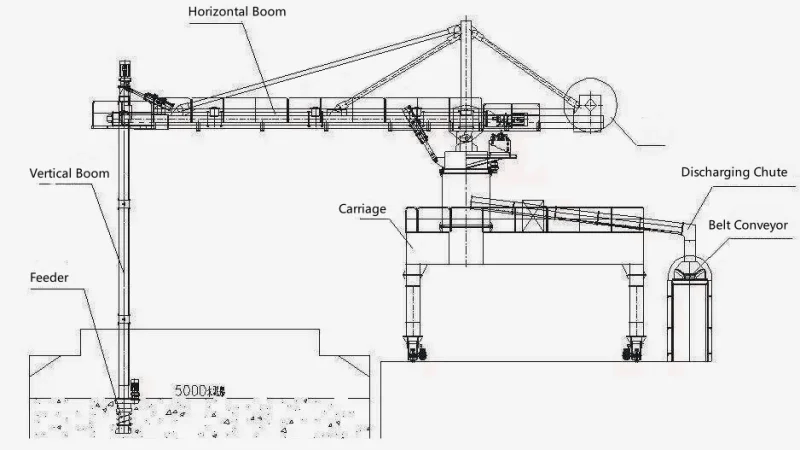
Screw ship unloaders use rotating screw conveyors to move bulk materials through an enclosed conveying arrangement. A helical screw rotates inside a housing or trough, pushing material along the conveyor toward a discharge point.
Depending on the equipment configuration, the system may include vertical, horizontal, and inclined screw conveyors to collect material from different areas of a vessel’s cargo hold.
The collected material is transported toward a discharge system, which may connect to receiving hoppers, belt conveyors, storage silos, or other terminal equipment.
Unlike conventional grab-based unloading systems, screw-based equipment can provide a more continuous material transfer process rather than relying on repeated lifting and dumping cycles.
Key Advantages of Screw Ship Unloaders
Screw-based unloading technology offers several operational advantages when properly matched to cargo characteristics and port requirements.
Continuous Material Handling
One of the main advantages is the ability to maintain a relatively steady flow of bulk material during operation. Rotating screw mechanisms continuously move cargo through the conveying system.
This can reduce interruptions associated with repeated grabbing and unloading cycles. Consistent material flow also makes it easier to coordinate unloading operations with downstream conveyors and storage facilities.
Enclosed Material Conveying
Many screw ship unloaders use enclosed conveying components that help limit direct exposure of bulk materials to surrounding air.
This design can reduce material spillage and airborne dust during transfer, particularly when handling fine powders and other dusty commodities.
However, effective dust control still depends on equipment sealing, transfer-point design, maintenance, and suitable ventilation arrangements.
Efficient Use of Port Space
Screw unloading systems can be configured to fit different berth layouts and vessel handling requirements. Their integrated conveying arrangements may reduce the need for certain additional material transfer operations.
For ports with limited installation space, equipment configuration and discharge arrangements should be planned carefully to make the best use of available infrastructure.
Reduced Material Loss
Enclosed conveying can help prevent bulk materials from escaping during transfer. This is particularly useful when handling valuable commodities or materials that can easily become airborne.
Reducing spillage also helps limit cleanup requirements and supports better housekeeping around port facilities.
Materials Commonly Handled by Screw Ship Unloaders
Screw ship unloaders are particularly suitable for certain dry bulk materials that can move efficiently through screw conveying systems.
Common applications include:
- Cement and other powdered construction materials.
- Grain and selected agricultural commodities.
- Fertilizers and granular chemicals.
- Mineral powders and processed raw materials.
- Other suitable dry bulk products.
Material selection is important because not every commodity behaves the same way during conveying.
Factors such as particle size, moisture content, abrasiveness, temperature, and flow characteristics influence equipment performance. Highly abrasive, sticky, or poorly flowing materials may require specialized screw designs or alternative unloading technologies.
Important Components of a Screw Ship Unloader
A screw ship unloader consists of several interconnected components that work together to collect and transport bulk cargo.
Feeding and Material Collection Mechanism
The feeding section collects material from the vessel’s cargo hold and directs it toward the conveying mechanism.
Its design influences how effectively the machine can access different areas of the hold and maintain a consistent material supply.
Screw Conveyor Assembly
The screw conveyor is the primary material transport component. It typically consists of a rotating shaft fitted with helical flights inside a housing.
The screw diameter, pitch, rotational speed, and configuration determine its conveying characteristics and capacity.
Drive and Power System
Electric motors, gearboxes, and associated drive components provide the mechanical power required to rotate the screw assemblies.
A properly selected drive system helps maintain suitable operating speeds while accommodating variations in material loading.
Discharge and Transfer System
After transportation through the screw conveyor, the material reaches a discharge point. It may then enter a hopper, enclosed conveyor, storage facility, or another handling system.
Proper discharge design helps prevent blockages and supports continuous downstream material movement.
Improving Dust Control and Environmental Performance
Dust emissions are a significant concern in ports that handle dry bulk materials. Fine particles released during unloading can affect air quality, reduce visibility, and create potential health risks for workers.
Screw ship unloaders can help address these challenges through enclosed material transport. By limiting the exposure of cargo during movement, they may reduce dust generation compared with more open transfer arrangements.
Additional environmental measures may include:
- Sealed connections between conveying sections.
- Enclosed discharge hoppers and transfer points.
- Suitable dust extraction and filtration equipment.
- Regular inspection of seals and conveyor housings.
- Controlled handling and disposal of collected dust.
Facilities should also assess whether the material being handled presents combustible dust, toxicity, or other specialized safety hazards.
The Role of Automation in Screw Unloading Operations
Modern industrial unloading equipment increasingly incorporates automated controls to improve operating consistency and simplify machine management.
Screw ship unloaders may use sensors, programmable controllers, and monitoring systems to regulate motor operation, monitor material flow, and identify abnormal operating conditions.
Automation can also help coordinate different conveyor sections and provide operators with information about equipment performance.
Depending on the system design, useful monitoring functions may include motor temperature, vibration, drive load, and operating speed.
These features can help maintenance teams identify developing problems and reduce unexpected operational interruptions.
Factors to Consider When Selecting Screw Ship Unloaders
Choosing the right unloading equipment requires an assessment of both cargo characteristics and port infrastructure.
1. Material Properties
The physical characteristics of the cargo directly affect conveying performance. Particle size, bulk density, moisture content, abrasiveness, and flowability should all be evaluated.
Materials that tend to compact or stick may require special screw configurations and feeding arrangements.
2. Required Unloading Capacity
Port operators should determine the expected cargo volume and the unloading rate required to meet operational schedules.
Equipment capacity should be matched with the performance of downstream conveyors and storage facilities to avoid bottlenecks.
3. Vessel and Berth Compatibility
The dimensions of vessels, cargo hold configurations, and available berth space influence equipment reach and installation requirements.
The unloader should be capable of accessing the required cargo areas while operating safely within the port’s infrastructure.
4. Energy Consumption
Screw conveyors require mechanical power to transport materials. Energy consumption depends on conveying distance, material properties, screw design, operating speed, and system loading.
Efficient drive selection and appropriate equipment sizing can help control long-term operating expenses.
5. Maintenance and Component Durability
Screw flights, bearings, gearboxes, seals, and drive components experience wear during regular operation.
Businesses should consider component accessibility, replacement part availability, maintenance requirements, and expected service life before selecting equipment.
Maintenance Practices for Reliable Performance
Regular maintenance is necessary to preserve the efficiency and reliability of screw ship unloaders. Mechanical wear, material buildup, and improper lubrication can gradually affect conveying performance.
A suitable maintenance program should include:
- Inspecting screw flights for wear, deformation, or damage.
- Checking bearings, gearboxes, and drive connections.
- Monitoring motor temperature and unusual vibration.
- Examining conveyor housings and seals for leakage.
- Removing accumulated material where required.
- Checking electrical controls and safety mechanisms.
- Following manufacturer-recommended lubrication and servicing schedules.
Preventive maintenance helps identify developing issues before they cause significant equipment downtime.
Comparing Screw Ship Unloaders With Other Unloading Technologies
Different unloading systems offer different advantages depending on the cargo and terminal requirements.
Grab-type unloaders provide flexibility for handling a broad range of bulk materials, particularly larger and heavier commodities. However, their operation involves repeated lifting and dumping cycles.
Pneumatic unloaders use air pressure and vacuum systems to transfer suitable powders and granular materials through pipelines. They offer enclosed conveying but may involve considerable energy consumption depending on the application.
Screw ship unloaders provide continuous mechanical conveying and are particularly useful for compatible dry bulk materials. Their enclosed construction can also support effective dust management.
The most suitable technology depends on cargo properties, required throughput, vessel configuration, available infrastructure, and operating costs.
Future Developments in Bulk Cargo Unloading
Port handling technology continues to evolve as operators seek greater productivity, improved safety, and reduced environmental impact.
Future developments are likely to involve smarter monitoring systems, more advanced automation, improved screw conveyor designs, and energy-efficient drive technologies.
Predictive maintenance systems may also help operators identify component wear and abnormal operating conditions before they result in equipment failures.
These improvements can make continuous unloading systems more reliable while supporting the growing demands of modern bulk cargo terminals.
Conclusion
Screw ship unloaders provide an effective solution for continuous bulk material handling when cargo characteristics and operating conditions are suitable. Their mechanical conveying systems support steady material movement, while enclosed construction can help reduce spillage and control dust emissions.
Selecting the right equipment requires careful evaluation of material properties, unloading capacity, vessel compatibility, energy consumption, and maintenance requirements. When integrated with suitable downstream conveyors and supported by regular servicing, screw unloading technology can contribute to more efficient, reliable, and environmentally responsible port operations.