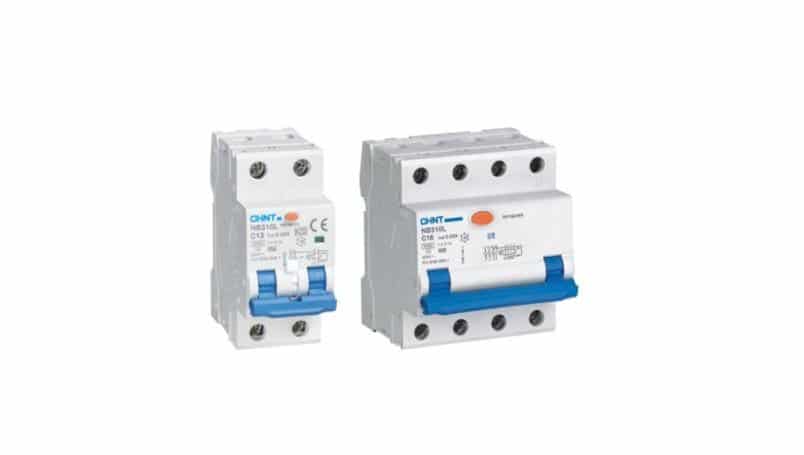
Electrical safety is essential in residential, commercial, and industrial environments. Every electrical installation needs reliable protection against faults that can damage equipment, interrupt operations, or create serious hazards for people. Two important devices used in modern electrical distribution systems are the Miniature Circuit Breaker (MCB) and the Residual Current Circuit Breaker (RCCB). Each serves a different protective purpose, and together they provide a more comprehensive approach to electrical circuit protection.
A well-designed electrical system must address both excessive current and current leakage. Choosing an appropriate Mcb With Rccb helps achieve this by combining protection against overloads and short circuits with protection against residual currents. Understanding how these devices work together makes it easier to design safer electrical installations and select suitable protective equipment.
Understanding the Function of an MCB
A Miniature Circuit Breaker is an automatic switching device designed to protect electrical circuits from overcurrent conditions. It disconnects the power supply when current exceeds the circuit’s rated capacity because of an overload or short circuit.
Protection Against Overloads
An overload occurs when electrical equipment draws more current than a circuit is designed to carry. This can happen when too many appliances operate simultaneously or when connected equipment develops a fault.
An MCB uses a thermal tripping mechanism, commonly based on a bimetallic strip, to detect sustained overcurrent. When excessive current continues flowing, the mechanism heats up and activates the trip system, disconnecting the circuit.
Protection Against Short Circuits
A short circuit occurs when conductors with different electrical potentials come into unintended contact, creating a sudden and potentially very high current flow.
MCBs generally use an electromagnetic tripping mechanism to respond rapidly to high fault currents. This quick disconnection helps reduce the risk of conductor damage, overheating, and electrical fires.
Understanding the Function of an RCCB
A Residual Current Circuit Breaker is designed to detect leakage current in an electrical installation. It compares the current flowing through the live conductor with the current returning through the neutral conductor.
Under normal operating conditions, these currents should be approximately equal. If some current escapes through an unintended path, such as damaged insulation or a person in contact with a live component, an imbalance develops.
When the residual current reaches the device’s specified operating threshold, the RCCB disconnects the circuit.
Protection Against Electric Shock
An RCCB can significantly reduce the risk of electric shock by detecting certain types of current leakage and disconnecting the supply quickly. This is particularly important in locations where electrical equipment may be exposed to moisture, such as kitchens, bathrooms, utility rooms, and outdoor installations.
However, an RCCB does not eliminate every electric shock risk. Its effectiveness depends on correct selection, installation, testing, and the nature of the fault.
Detection of Earth Leakage
Damaged cables, deteriorating insulation, faulty appliances, and moisture entering electrical equipment can create leakage-current paths. An RCCB helps identify these conditions before they develop into more serious electrical hazards.
It is important to understand that an RCCB does not normally provide overload or short-circuit protection. It must therefore be coordinated with an MCB or another suitable overcurrent protective device.
How an MCB and RCCB Work Together
MCBs and RCCBs complement each other because they monitor different electrical fault conditions. The MCB responds to excessive current, while the RCCB detects an imbalance between outgoing and returning current.
When correctly selected and installed, they provide multiple layers of protection within an electrical distribution system.
| Protective device | Main function | Fault conditions detected |
|---|---|---|
| MCB | Overcurrent protection | Overloads and short circuits |
| RCCB | Residual-current protection | Earth leakage and certain electrical shock hazards |
| MCB and RCCB together | Complementary circuit protection | Overcurrent and residual-current faults |
For example, if an appliance develops an internal short circuit, the MCB can disconnect the supply because of the excessive current. If damaged insulation causes current to leak to earth, the RCCB can trip when the residual current reaches its operating threshold.
This combination helps address different hazards that a single device may not detect.
Key Benefits of Combining MCB and RCCB Protection
Using both devices in an electrical installation offers several practical advantages.
1. Broader Electrical Fault Coverage
The main benefit is that two different fault categories can be addressed. The MCB protects against overloads and short circuits, while the RCCB responds to residual-current leakage.
Together, they provide more complete protection than either device can offer independently.
2. Improved Personal Safety
Current leakage can create dangerous conditions, especially when electrical equipment has damaged insulation or is used in damp environments. An RCCB helps reduce exposure to certain electric shock hazards by disconnecting the affected circuit.
When combined with appropriate overcurrent protection, it contributes to a safer electrical installation.
3. Reduced Risk of Equipment Damage
Overloads and short circuits can generate excessive heat and damaging fault currents. MCB protection helps limit the duration of these conditions by interrupting the supply.
RCCB protection also helps identify insulation problems and leakage faults that could otherwise remain unnoticed.
4. Better Electrical System Reliability
Separating protection functions makes it easier to identify different types of electrical faults. When devices are properly coordinated, faults can be isolated more effectively, helping reduce unnecessary disruption to other parts of an installation.
5. Flexible Protection for Different Applications
MCB and RCCB combinations can be used in many types of electrical installations, including homes, offices, retail spaces, and industrial facilities. Their ratings and characteristics can be selected according to circuit requirements and applicable electrical standards.
Common Applications of MCB and RCCB Combinations
These protective devices are widely used wherever electrical safety and reliable power distribution are important.
Residential buildings: They help protect lighting circuits, socket outlets, kitchen appliances, air-conditioning equipment, and other household electrical systems.
Commercial properties: Offices, shops, restaurants, and hotels use coordinated circuit protection to help safeguard employees, visitors, equipment, and building infrastructure.
Industrial facilities: Manufacturing environments often contain motors, machinery, control panels, and other electrical loads. Appropriate MCB and RCCB arrangements can help address overcurrent and earth leakage risks.
Outdoor electrical installations: Outdoor lighting, pumps, and other exposed equipment may face additional moisture-related hazards. Suitable residual-current protection is especially important in these applications.
The exact protection arrangement should always reflect the installation’s design, environmental conditions, and local electrical regulations.
Important Factors When Selecting MCB and RCCB Devices
Choosing compatible protective devices is essential for achieving reliable operation.
Rated Current
The MCB’s rated current should match the circuit’s design load and the current-carrying capacity of its conductors. Selecting an unsuitable rating may result in inadequate protection or unwanted tripping.
Breaking Capacity
An MCB must have an adequate breaking capacity for the prospective short-circuit current at its installation point. This helps ensure that it can safely interrupt the expected fault current.
RCCB Sensitivity
RCCBs are available with different residual operating current ratings. The appropriate sensitivity depends on the intended application, protection requirements, and relevant standards.
RCCB Type
Different RCCB types are designed to detect different residual-current waveforms. For example, Type AC, Type A, and Type F devices have different detection capabilities. Selection should consider the electrical equipment connected to the circuit and the manufacturer’s recommendations.
Device Coordination
The MCB and RCCB must be compatible with the electrical system and correctly coordinated. Designers should consider rated currents, residual-current ratings, short-circuit conditions, and the installation’s overall protection strategy.
Installation and Maintenance Best Practices
Even high-quality protective devices cannot provide their intended benefits if they are installed incorrectly or poorly maintained.
- Use qualified electricians: Installation and testing should be carried out by competent professionals who understand applicable electrical standards.
- Check wiring connections: Incorrect live and neutral connections can affect device operation. Follow the manufacturer’s wiring diagrams.
- Test RCCBs regularly: Use the test button according to the manufacturer’s instructions and the recommended inspection schedule.
- Inspect electrical equipment: Damaged cables, loose connections, moisture, and deteriorating insulation should be investigated promptly.
- Investigate repeated tripping: Frequent operation may indicate an overload, insulation fault, leakage current, or another underlying problem. Do not repeatedly reset a tripping device without identifying the cause.
- Follow applicable standards: Device selection, installation, and testing should comply with local electrical regulations and relevant product standards.
MCB and RCCB vs. RCBO: Understanding the Difference
An RCBO combines the functions of an MCB and an RCCB in a single protective device. It provides overcurrent protection against overloads and short circuits, as well as residual-current protection against earth leakage.
By comparison, an MCB and RCCB combination uses separate devices to provide these protective functions.
Both arrangements can be effective when correctly designed. Separate devices may offer flexibility in distribution board layouts, while RCBOs can provide individual circuit protection and help limit the impact of a fault to the affected circuit. The best option depends on the installation’s requirements, available space, budget, and protection strategy.
Conclusion
An MCB and RCCB combination provides complementary protection against two important categories of electrical hazards. The MCB responds to overloads and short circuits, while the RCCB detects residual-current leakage that may indicate insulation failure or a risk of electric shock.
When properly selected, coordinated, installed, and maintained, these devices contribute to safer electrical distribution in residential, commercial, and industrial environments. Understanding their individual functions and how they work together helps property owners, electricians, and electrical designers make informed decisions about reliable circuit protection.