High-volume food manufacturing requires reliable equipment capable of processing large quantities of packaged products while maintaining consistent food safety and product quality. As production demands increase, manufacturers must consider more than the size of their sterilization equipment. Processing capacity, heating efficiency, cycle duration, utility consumption, and operational reliability all influence overall production performance.
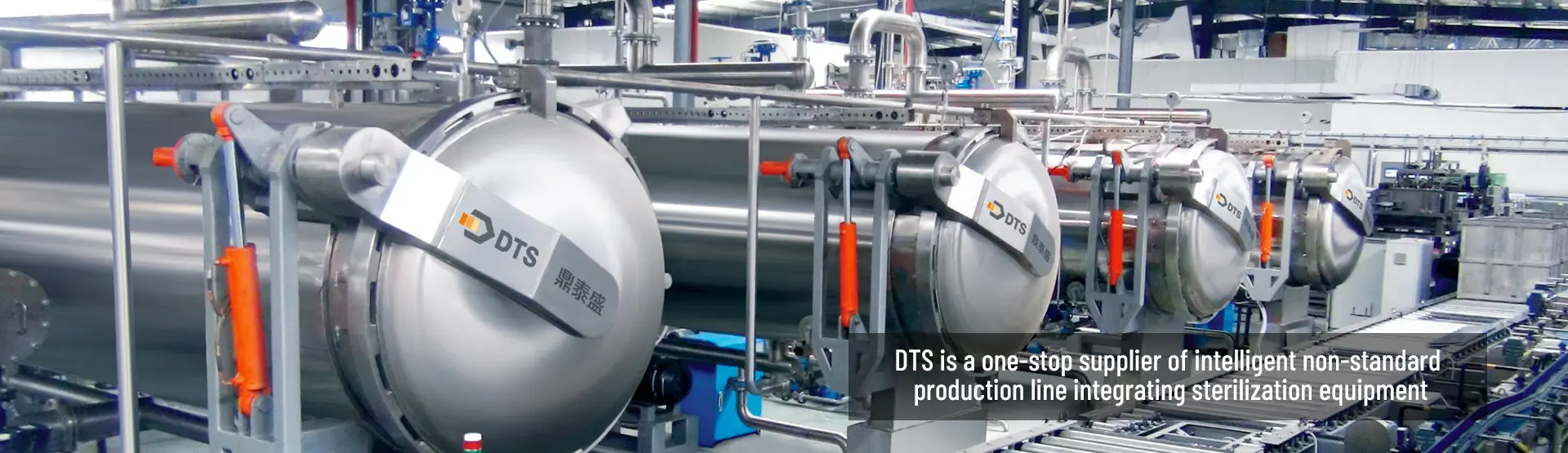
A Large Retort Autoclave Sterilizer is designed to handle substantial product loads during commercial thermal processing. These systems allow manufacturers to sterilize sealed food products under controlled temperature and pressure conditions while supporting demanding production schedules. Understanding how to plan capacity, evaluate equipment performance, and manage operating requirements can help businesses select a suitable system for large-scale manufacturing.
Understanding Large Retort Autoclave Sterilizers
A large retort autoclave sterilizer is an industrial system used to process packaged food products through controlled thermal treatment. It typically features a spacious sterilization chamber, a heating arrangement, pressure controls, temperature monitoring instruments, and a cooling system.
Depending on the equipment configuration, heating may involve:
- Saturated steam
- Hot water immersion
- Water spray circulation
- Steam-air mixtures
The appropriate method depends on the food product, packaging format, production requirements, and validated processing schedule.
Large retort systems can be designed to accommodate different packaging formats, including metal cans, glass jars, retort pouches, and compatible heat-resistant plastic containers.
Why Capacity Planning Matters in High-Volume Food Manufacturing
Capacity planning helps manufacturers determine whether a retort system can meet current and expected production requirements.
Selecting equipment based only on chamber dimensions can lead to inefficient operations. The actual number of products processed per cycle depends on container size, loading arrangement, spacing, and circulation requirements.
Effective capacity planning helps manufacturers:
- Meet daily production targets
- Reduce unnecessary processing delays
- Organize batch scheduling
- Improve equipment utilization
- Coordinate sterilization with upstream and downstream operations
- Avoid investing in unsuitable equipment capacity
A properly planned system should support production demand without compromising heat distribution or process reliability.
Key Factors That Determine Retort Processing Capacity
Several factors influence how many products a large retort can process during a typical production cycle.
1. Chamber Dimensions
The internal dimensions of the sterilization chamber determine the available loading space.
Manufacturers should evaluate chamber diameter, length, loading configuration, and the dimensions of the product baskets.
A larger chamber does not automatically guarantee higher usable capacity because products must be arranged to allow effective heat distribution.
2. Container Size and Shape
Packaging dimensions have a direct influence on the number of units that can fit inside the retort.
Small cans may allow a higher unit count per batch than large cans, while pouches and trays may require specific racks or spacing arrangements.
Capacity calculations should use actual packaging dimensions rather than generalized estimates.
3. Loading Arrangement
The loading system determines how products are positioned inside the chamber.
Depending on the equipment design, products may be arranged in baskets, racks, trays, or multiple loading levels.
The arrangement should provide adequate circulation of the heating medium around the containers.
4. Product Characteristics
Food composition can influence processing time and heat penetration.
For example, liquid products, dense meat products, thick sauces, and mixed meals may require different thermal processing conditions.
Capacity planning should account for the processing requirements of each product category.
5. Total Cycle Duration
Production capacity depends on the complete processing cycle rather than the sterilization holding period alone.
A typical cycle includes:
- Product loading
- Chamber preparation
- Heating
- Sterilization holding
- Cooling
- Pressure reduction where required
- Unloading
The total time required for these stages determines how many batches can be processed during a shift.
Calculating Practical Retort Production Capacity
Manufacturers can estimate production capacity by considering the usable product load per cycle and the number of cycles completed during a production period.
A basic calculation is:
Daily production capacity = Product units per batch × Completed batches per day
For example, if a retort processes 2,000 containers per batch and completes four validated cycles during a production day, its theoretical daily output would be 8,000 containers.
Actual production may be lower because of loading delays, cleaning, maintenance, product changeovers, and other operational interruptions.
Capacity planning should therefore distinguish between theoretical chamber capacity and achievable production output.
Matching Retort Capacity with Manufacturing Demand
The selected equipment should match the facility’s production requirements while allowing for operational flexibility.
Current Production Volume
Manufacturers should establish their average and peak daily production requirements.
This provides a starting point for determining the number of containers required per cycle and the retort capacity needed.
Future Production Growth
Businesses expecting higher demand should consider whether their selected equipment can support future production increases.
This may involve choosing a larger chamber, planning for additional retorts, or allowing space for future equipment installation.
Shift Scheduling
The number of operating hours available each day influences achievable output.
Facilities running multiple shifts may require different capacity arrangements from manufacturers operating a single shift.
Product Variety
Manufacturers processing multiple food products should consider differences in packaging dimensions and sterilization schedules.
A system that supports one high-volume product may require different loading arrangements for smaller or differently packaged products.
Important Equipment Features for Large-Scale Retort Operations
Large industrial sterilizers require coordinated mechanical, thermal, and control systems.
High-Capacity Sterilization Chamber
The chamber should accommodate the intended product load while maintaining suitable operating conditions.
Its construction must meet applicable pressure equipment and industrial safety requirements.
Efficient Heating System
The heating arrangement should supply enough thermal energy to achieve the required processing conditions within the planned cycle.
Heating capacity should be evaluated alongside temperature distribution and product heat penetration.
Water Circulation or Steam Distribution
Depending on the retort type, the system must distribute the heating medium effectively throughout the chamber.
For water spray systems, pump capacity and nozzle arrangement are important. For steam systems, proper air removal and steam distribution are essential.
Automated Control System
Programmable controls help manage heating, sterilization, pressure, and cooling stages.
Depending on the equipment, automation may also provide recipe management, alarms, cycle records, and operating data.
Pressure Management
Pressure control is important for maintaining suitable operating conditions and protecting packaging integrity.
This is particularly relevant when processing flexible pouches and heat-resistant plastic containers.
Cooling System
Large product loads require an appropriately designed cooling arrangement.
Cooling performance influences total cycle time and helps protect containers from damage caused by unsuitable temperature or pressure changes.
Energy and Utility Planning for High-Volume Retort Systems
Large retorts can require significant amounts of energy and utilities during routine operation.
Manufacturers should evaluate these requirements before installation.
Steam Consumption
Steam-heated systems require an adequate and reliable steam supply.
Boiler capacity, operating pressure, distribution piping, and condensate management should be considered.
Water Consumption
Water-based retorts require suitable water supplies for heating, circulation, and cooling.
The facility should evaluate water availability, treatment requirements, and wastewater management.
Electrical Requirements
Pumps, control panels, motors, sensors, and automated equipment require suitable electrical infrastructure.
Electrical capacity should account for the full operating requirements of the installation.
Heat Recovery and Efficiency
Depending on system design, heat recovery features and efficient insulation may help reduce energy losses.
Manufacturers should compare equipment performance using realistic production conditions rather than relying only on advertised specifications.
How Automation Improves Large-Scale Production Management
Automation can support more consistent operation when manufacturers process multiple batches throughout the day.
Repeatable Processing Cycles
Programmable recipes help operators follow established temperature, pressure, and timing requirements.
This can reduce unnecessary variations between production batches.
Better Process Monitoring
Sensors provide information about operating conditions throughout the sterilization cycle.
Monitoring functions help operators identify deviations that may require investigation.
Improved Documentation
Automated systems may record cycle temperatures, pressure readings, processing times, and alarm events.
These records support production traceability and quality assurance.
Reduced Manual Work
Automated heating, holding, and cooling sequences can reduce the need for continuous manual adjustments.
Operators can focus on supervision, inspection, and coordination with other production activities.
Integrating Retort Capacity with the Production Line
A large retort should be evaluated as part of the entire manufacturing process rather than as an isolated machine.
Its capacity must align with upstream and downstream operations.
Filling and Sealing
The filling and sealing section should supply enough correctly packaged products to maintain the planned retort loading schedule.
Insufficient upstream output can leave the sterilizer waiting for product.
Loading and Unloading
Basket preparation, container handling, and unloading arrangements influence the time between processing cycles.
Suitable material handling equipment can help organize these activities.
Post-Sterilization Inspection
After processing, products may require cooling verification, packaging inspection, labeling, and storage.
These operations should have sufficient capacity to handle the output of the retort.
Production Scheduling
Manufacturers should coordinate product batches, processing recipes, cleaning requirements, and changeovers.
Effective scheduling helps reduce idle time and unnecessary production interruptions.
Maintenance Planning for Large Retort Autoclaves
Preventive maintenance is essential for preserving equipment performance and avoiding unexpected production delays.
Important maintenance activities include:
- Inspecting the chamber: Check structural condition, internal surfaces, and pressure-related components.
- Checking seals and valves: Identify leakage, wear, or damage.
- Maintaining pumps and motors: Verify circulation performance and mechanical condition.
- Inspecting heating components: Check steam connections, heat exchangers, and associated controls.
- Calibrating instruments: Verify temperature and pressure measurement accuracy.
- Cleaning circulation systems: Remove deposits that may restrict water flow.
- Testing safety devices: Follow the manufacturer’s procedures and applicable pressure equipment requirements.
- Reviewing control records: Identify recurring alarms or unusual operating variations.
A planned maintenance schedule helps protect equipment reliability and production continuity.
Thermal Process Validation for High-Volume Production
Large chamber capacity does not automatically guarantee effective sterilization.
Manufacturers must confirm that the selected equipment can provide appropriate temperature distribution throughout the loaded chamber and sufficient heat penetration within the food.
Temperature distribution studies help identify potential differences between chamber locations. Product-specific heat penetration studies determine how quickly the food reaches the required thermal conditions.
Validation should account for:
- Product formulation
- Packaging material and dimensions
- Initial product temperature
- Loading configuration
- Heating method
- Operating parameters
- Cooling conditions
For low-acid packaged foods, qualified thermal processing specialists should establish suitable processing schedules in accordance with applicable regulations.
Any significant change to the product, packaging, loading pattern, or operating conditions may require reassessment of the validated process.
Common Capacity Planning Mistakes to Avoid
Manufacturers can improve equipment selection by avoiding several common planning errors.
- Focusing only on chamber size: Usable product capacity depends on loading and circulation requirements.
- Ignoring total cycle time: Heating, cooling, loading, and unloading all affect daily output.
- Overlooking product variety: Different foods and packages may require different processing schedules.
- Underestimating utility demand: Steam, water, electricity, and cooling requirements should be assessed before installation.
- Ignoring future growth: Equipment should be considered in relation to realistic long-term production plans.
- Neglecting maintenance downtime: Planned servicing and unexpected repairs affect actual production availability.
- Skipping validation: High production volume must never take priority over scientifically established food safety requirements.
Conclusion
Large retort autoclave sterilizers play an important role in high-volume food manufacturing by providing the chamber capacity and controlled thermal processing needed for substantial production batches. Selecting the right system requires careful evaluation of container dimensions, loading arrangements, cycle duration, heating performance, utility requirements, and production targets.
Manufacturers should also consider automation, maintenance access, production-line integration, and future capacity needs. Most importantly, larger batch sizes must remain compatible with validated temperature distribution and heat penetration requirements.
With appropriate capacity planning, equipment selection, and process validation, large retort systems can support efficient production scheduling, reliable sterilization, and consistent packaged food quality.