Temperature monitoring is an important part of modern electronic systems. Many devices generate heat during operation, and excessive temperature can affect their performance, efficiency, and service life. To maintain safe operating conditions, electronic equipment often uses temperature sensors that detect thermal changes and provide feedback to monitoring or control circuits. Diode-based temperature sensors are one practical solution because they use predictable semiconductor properties to measure temperature.
A Diode Sensor is a temperature-sensing device that uses the electrical characteristics of a semiconductor diode to determine temperature changes. Its operation is based on the relationship between the diode’s forward voltage and its junction temperature. As temperature changes, the forward voltage also changes under a controlled current, allowing electronic circuits to estimate the surrounding or component temperature. This makes diode sensors useful in computers, industrial controllers, power electronics, and other temperature-sensitive applications.
What Is a Diode Temperature Sensor?
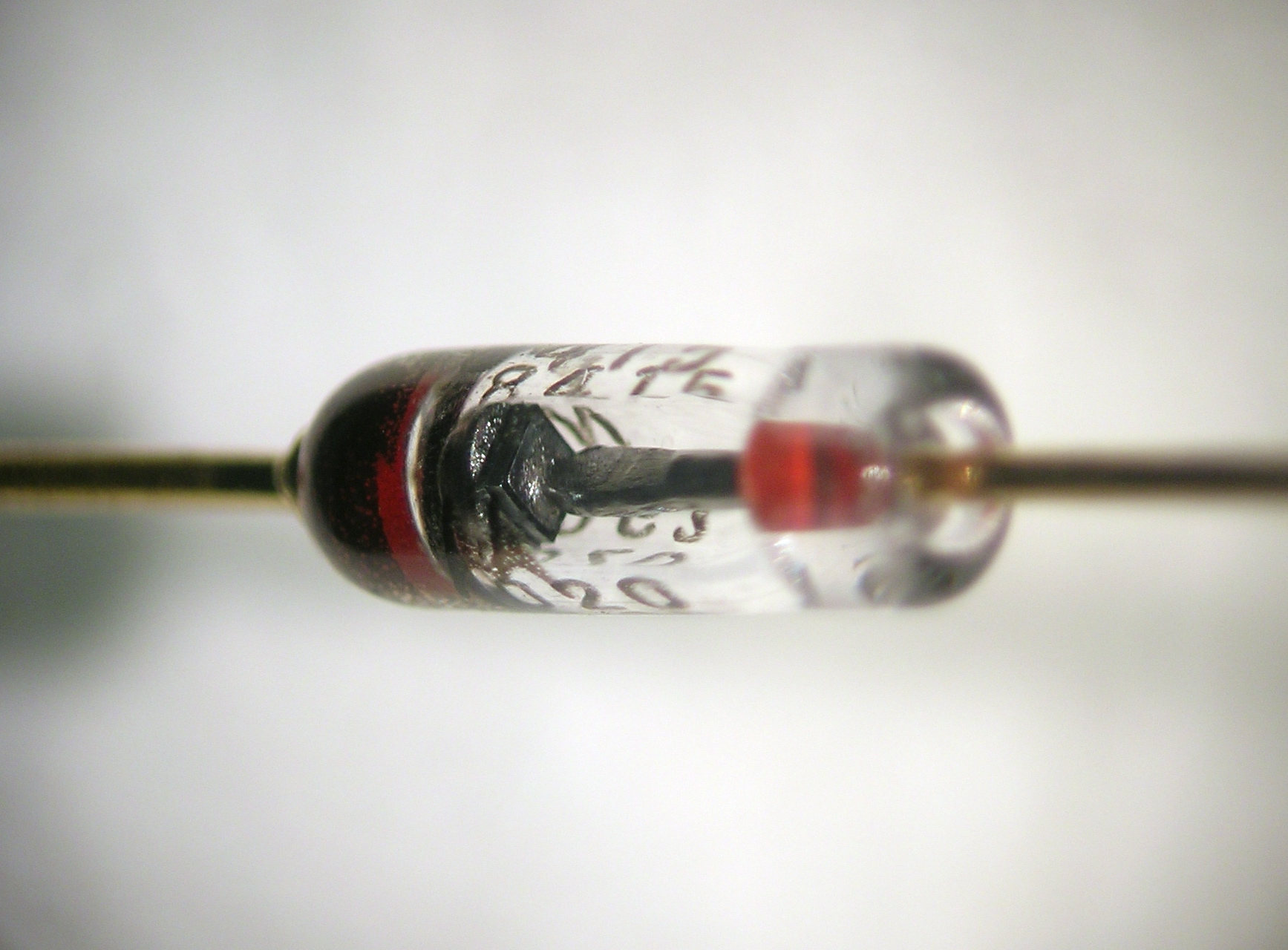
A diode temperature sensor is an electronic sensing device that uses a semiconductor junction to detect temperature. It may use a standard diode or a transistor configured to operate as a diode. The sensing element produces an electrical response that varies predictably with temperature.
Unlike mechanical temperature sensors, diode sensors can be integrated directly into electronic circuits and semiconductor devices. This makes them especially useful for monitoring the temperature of components such as processors, power transistors, and integrated circuits.
Their compact size and compatibility with semiconductor manufacturing processes also make them suitable for applications where space and integration are important.
How Does a Diode Sensor Measure Temperature?
The operating principle of a diode temperature sensor relies on the temperature dependence of the semiconductor junction’s forward voltage.
When a diode is forward-biased, current flows through its P-N junction. If the forward current is kept relatively constant, the voltage across the junction generally decreases as its temperature increases.
This predictable relationship allows a monitoring circuit to measure the forward voltage and convert it into a temperature reading.
Step-by-Step Working Principle
- Applying a controlled current: A small, regulated current is passed through the diode junction.
- Measuring forward voltage: The circuit measures the voltage across the diode while the current remains controlled.
- Detecting temperature changes: As the junction temperature changes, its forward voltage changes accordingly.
- Converting the measurement: An electronic circuit or temperature-monitoring IC processes the voltage measurement and calculates the corresponding temperature.
- Taking corrective action: If the temperature exceeds a programmed limit, the system may activate a cooling fan, reduce power, generate an alert, or shut down equipment.
The accuracy of this process depends on the sensing element, calibration, current stability, and measurement circuitry.
Key Characteristics of Diode Sensors
Diode sensors offer several characteristics that make them useful in electronic temperature monitoring.
1. Temperature-Dependent Forward Voltage
The forward voltage of a silicon diode generally decreases as junction temperature rises when measured at a constant current. This behavior provides the basic measurement principle.
The exact voltage-temperature relationship depends on the diode’s construction and operating conditions.
2. Compact Semiconductor Structure
Diode sensors can be manufactured in very small sizes and integrated into semiconductor packages. This allows temperature monitoring close to heat-generating components.
3. Fast Thermal Response
Small semiconductor junctions can respond relatively quickly to temperature changes, although the overall response time also depends on packaging, mounting, and thermal contact.
4. Compatibility with Electronic Circuits
Diode-based sensing can be connected to analog measurement circuits, microcontrollers, and dedicated temperature-monitoring ICs. This supports automated temperature measurement and control.
5. Low Component Complexity
A basic diode sensing arrangement can use a relatively simple circuit. More advanced designs may include calibration, signal conditioning, and digital conversion to improve accuracy.
Applications of Diode Sensors in Electronic Monitoring Systems
Diode temperature sensors are used in several industries where monitoring component temperature is essential.
1. Computer Processors and Microelectronics
Processors and other semiconductor devices generate heat during operation. Excessive temperature can cause reduced performance, instability, or permanent damage.
Integrated diode sensors can monitor chip temperature and provide feedback to thermal management systems. Computers may use this information to adjust fan speeds, control processor performance, or prevent overheating.
2. Power Electronics
Power transistors, voltage regulators, and switching devices can generate significant heat under heavy electrical loads.
Diode-based sensors can help monitor the temperature of these components. The control system can use the readings to adjust operating conditions or activate protective measures.
3. Industrial Automation
Industrial controllers, motor drives, and electronic control units often operate in environments where temperature conditions vary.
Temperature sensors help monitor equipment and identify abnormal heating. This supports preventive maintenance and helps protect sensitive electronic assemblies.
4. Battery Monitoring Systems
Battery packs require temperature monitoring during charging, discharging, and storage. Semiconductor temperature sensors may be incorporated into battery management electronics to monitor nearby components or specific thermal points.
The resulting measurements can help control charging conditions and activate protective responses when necessary.
5. Communication Equipment
Networking devices, telecommunications hardware, and signal-processing systems contain electronic components that generate heat during continuous operation.
Diode sensors can support thermal monitoring and help maintain operating temperatures within specified limits.
6. Automotive Electronics
Modern vehicles use electronic control modules, power converters, and semiconductor switching devices. These components may experience significant temperature variations.
Diode-based sensors can help monitor semiconductor junction temperatures and support protective control functions in suitable automotive applications.
Advantages of Using Diode Sensors
Diode temperature sensors provide several benefits in electronic monitoring applications.
- Small size: Their semiconductor construction allows integration into compact electronic assemblies.
- Fast response: Small sensing junctions can detect temperature changes relatively quickly.
- Easy integration: They can be incorporated into integrated circuits and electronic measurement systems.
- Cost-effective design: Semiconductor manufacturing processes support economical production.
- Electrical output: Their voltage response can be measured and processed by electronic control circuits.
- Direct component monitoring: Integrated sensors can measure temperatures close to heat-generating semiconductor junctions.
These advantages make diode sensors suitable for applications that require compact, electrically integrated temperature monitoring.
Diode Sensors Compared with Thermistors
Diode sensors and thermistors both detect temperature through changes in electrical properties, but their operating principles are different.
| Characteristic | Diode Sensor | Thermistor |
|---|---|---|
| Operating principle | Temperature-dependent semiconductor junction voltage | Temperature-dependent resistance |
| Electrical output | Forward voltage or junction-related voltage | Resistance |
| Common types | Silicon diode or diode-connected transistor | NTC and PTC |
| Integration | Often integrated into semiconductor devices | Commonly available as separate components |
| Typical applications | Processor and semiconductor temperature monitoring | Temperature measurement and circuit protection |
| Measurement circuit | Requires voltage measurement and controlled bias | Often uses a resistance measurement circuit |
The choice depends on the application. Diode sensors are particularly useful for monitoring semiconductor junction temperatures, while thermistors are widely used for general-purpose temperature sensing and protection.
Factors to Consider When Selecting a Diode Sensor
Selecting an appropriate diode sensor requires evaluating the operating conditions and measurement requirements of the system.
Temperature range: Check that the sensor can operate accurately across the expected minimum and maximum temperatures.
Measurement accuracy: Review the sensor’s accuracy specifications and determine whether calibration is necessary.
Forward current: Ensure the measurement circuit supplies a stable and suitable current to the sensing junction.
Response time: Consider how quickly the sensor must detect temperature changes, especially in systems with rapid thermal fluctuations.
Package and mounting: Select a package that provides suitable thermal contact with the component or surface being monitored.
Signal conditioning: Determine whether amplification, filtering, or analog-to-digital conversion is required to obtain reliable measurements.
Electrical compatibility: Confirm that the sensor output is compatible with the monitoring IC, microcontroller, or control circuit.
Common Challenges in Diode Temperature Measurement
Although diode sensors are useful, their performance can be affected by several factors.
One challenge is measurement accuracy. Variations in semiconductor manufacturing can cause differences in the voltage-temperature relationship, so calibration may be necessary for precise applications.
Another concern is current stability. Since forward voltage depends on both current and temperature, changes in the bias current can introduce measurement errors.
Thermal placement is also important. A sensor may report a temperature that differs from the actual temperature of the component being monitored if there is insufficient thermal contact or a significant temperature gradient.
Electrical noise can further affect voltage measurements, particularly when sensing small voltage changes. Suitable filtering, grounding, and measurement techniques help improve reliability.
Conclusion
Diode sensors provide a practical way to measure temperature in electronic monitoring systems by using the relationship between semiconductor junction voltage and temperature. Their compact structure, fast response, and compatibility with integrated circuits make them valuable for monitoring processors, power electronics, industrial controllers, communication equipment, and automotive systems.
Reliable temperature measurement depends on controlled bias current, suitable calibration, proper thermal placement, and accurate signal processing. When these factors are considered during circuit design, diode sensors can help prevent overheating, improve equipment protection, and support dependable electronic system performance.