Metal manufacturing plays a vital role in producing the components used in automotive systems, industrial machinery, electronics, construction equipment, and consumer products. As industries demand increasingly complex designs, precise dimensions, and consistent production quality, manufacturers rely on advanced metal-forming technologies to meet these requirements. Die casting is one such technology, offering an efficient way to produce detailed metal components in repeated production runs.
Metal Die Casting is a manufacturing process in which molten metal is forced into a precision-engineered mold under pressure. The metal fills the mold cavity, solidifies, and takes the shape of the required component. This method supports the production of complex geometries, relatively thin walls, and repeatable dimensions. Depending on the selected alloy and casting technique, manufacturers can produce components with useful strength, low weight, corrosion resistance, and good surface finishes.
What Is Metal Die Casting?
Metal die casting is a manufacturing technique that uses reusable metal molds, known as dies, to produce components from molten alloys. Unlike processes that rely on expendable molds, die casting generally uses durable steel tooling designed for repeated production cycles.
The process is commonly used with non-ferrous metals, including:
- Aluminum: Valued for its low density, corrosion resistance, and thermal conductivity.
- Zinc: Known for excellent castability, dimensional accuracy, and surface finishing characteristics.
- Magnesium: Selected for applications where very low weight is important.
- Copper-based alloys: Used in selected applications requiring specific electrical, thermal, or mechanical properties.
The choice of metal depends on the component’s intended function, operating environment, mechanical requirements, and production volume.
How the Metal Die Casting Process Works
Die casting involves several stages, each of which contributes to the quality and consistency of the finished component.
1. Die Design and Preparation
The process begins with designing a mold according to the required component geometry.
The die typically consists of two main sections that come together to form the cavity. It may also include runners, gates, vents, cooling channels, and ejector mechanisms.
Before production, the die is cleaned, inspected, and prepared for operation. Proper tooling design is essential for controlling metal flow and achieving consistent dimensions.
2. Melting the Metal
The selected alloy is heated in a suitable furnace until it reaches the required molten condition.
Temperature and material composition must be controlled to ensure predictable flow and solidification behavior. Depending on the alloy and application, melt treatment may also be used to reduce impurities and dissolved gases.
3. Injecting Molten Metal
In high-pressure die casting, molten metal is injected into the mold cavity at high speed and pressure.
This allows the metal to fill detailed sections of the die before solidification begins. The injection parameters must be adjusted according to the alloy, component geometry, and tooling design.
4. Cooling and Solidification
After the cavity has been filled, the metal cools and solidifies into the required shape.
Die temperature and cooling channel arrangements influence the rate and consistency of solidification. Controlled cooling helps reduce dimensional variation and certain casting defects.
5. Ejection and Trimming
Once the casting has solidified sufficiently, the die opens and ejector pins release the component.
Excess material from the gating and runner system is removed through trimming. The casting may then undergo cleaning and deburring.
6. Finishing and Inspection
Depending on its application, the component may require CNC machining, polishing, painting, plating, or another surface treatment.
Quality inspection verifies whether the casting meets its dimensional, mechanical, and appearance requirements. Inspection methods may include visual checks, dimensional measurement, hardness testing, leak testing, and non-destructive examination.
Main Types of Metal Die Casting Processes
Different die casting methods are designed for specific alloys, component geometries, and production requirements.
1. Hot Chamber Die Casting
Hot chamber die casting is commonly used for metals with relatively low melting temperatures, particularly zinc alloys.
In this process, the injection mechanism is connected to or immersed in the molten metal supply. A piston forces the metal through a nozzle and into the die cavity.
Key characteristics:
- Suitable for zinc and certain other low-melting-point alloys
- Supports relatively fast production cycles
- Can produce detailed components with good dimensional consistency
- Commonly used for smaller precision parts
This process is not generally suitable for aluminum alloys because their higher processing temperatures can damage components of the hot chamber injection system.
2. Cold Chamber Die Casting
Cold chamber die casting is commonly used for aluminum and magnesium alloys.
Molten metal is transferred from a separate furnace into the injection chamber. A hydraulic piston then forces it into the closed die under high pressure.
Key characteristics:
- Suitable for aluminum and magnesium alloys
- Supports the production of complex components
- Offers good dimensional consistency
- Commonly used for automotive and industrial parts
Because the molten metal is transferred between the furnace and injection chamber, controlling temperature and transfer conditions is important.
3. Low-Pressure Die Casting
Low-pressure die casting uses controlled gas pressure to move molten metal from a sealed furnace into a mold positioned above it.
The metal rises gradually through a delivery tube and fills the cavity. This controlled filling process can help reduce turbulence and support sound castings.
It is commonly used for selected aluminum components, including automotive wheels and other parts requiring particular structural properties.
4. Gravity Die Casting
Gravity die casting uses gravity rather than high-pressure injection to fill a reusable metal mold.
Molten metal is poured into the cavity and allowed to solidify. This process can be suitable for components requiring controlled filling and useful mechanical properties.
It is commonly used with non-ferrous alloys, particularly aluminum alloys, in selected automotive and industrial applications.
5. Vacuum-Assisted Die Casting
Vacuum-assisted die casting uses a vacuum system to remove air and gases from the die cavity before or during metal injection.
Reducing trapped air can help lower gas porosity and improve casting quality. This technique is useful for components with demanding structural or pressure-related requirements, although results depend on the complete process design and control.
Major Advantages of Metal Die Casting
Metal die casting offers several benefits that make it an important manufacturing method across multiple industries.
1. High Dimensional Accuracy
Precision-engineered dies allow manufacturers to produce components with repeatable shapes and dimensions.
This is especially important for parts that must fit accurately into assemblies or interact with other mechanical components.
2. Complex Component Geometry
Die casting can produce detailed features such as ribs, recesses, bosses, mounting points, and thin sections.
These design possibilities may allow several features to be integrated into one component, reducing the need for separate parts and assembly operations.
3. Efficient High-Volume Production
Reusable dies support repeated manufacturing cycles.
Once tooling and process settings have been established, manufacturers can produce large quantities of similar components with consistent geometry. This makes die casting suitable for many medium- and high-volume applications.
4. Good Surface Finish
Metal die casting can produce relatively smooth surfaces directly from the mold.
This may reduce finishing requirements and support applications where appearance matters. Additional treatments can be applied when specific surface properties are needed.
5. Material Flexibility
Different non-ferrous alloys provide different combinations of strength, weight, corrosion resistance, and thermal conductivity.
This allows manufacturers to select materials according to the intended application rather than relying on a single metal for every component.
6. Reduced Material Waste
Die casting produces near-net-shape components, which can reduce the amount of material removed during machining.
Efficient gating design and appropriate handling of recyclable scrap can further support material utilization.
7. Design and Assembly Efficiency
Integrating multiple features into a single casting can simplify product construction.
Reducing separate components and fasteners may help lower assembly time and simplify inventory management.
Industrial Applications of Metal Die Casting
Die casting is used across industries that require reliable metal components with consistent dimensions and suitable mechanical properties.
Automotive Industry
Automotive manufacturers use die-cast components in engines, transmissions, electrical systems, and vehicle structures.
Common examples include:
- Engine covers and housings
- Transmission cases
- Brackets and mounting supports
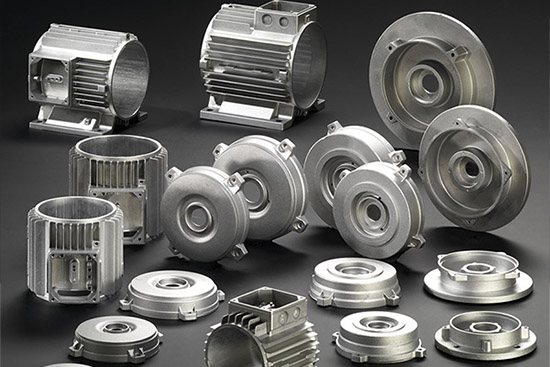
- Motor housings
- Electronic control unit enclosures
- Selected structural components
Aluminum die casting is particularly useful where weight reduction and thermal performance are important.
Electric Vehicle Manufacturing
Electric vehicles contain motors, inverters, battery systems, and electronic control equipment.
Die-cast aluminum components can be used for motor housings, electronic enclosures, and selected battery-related structures. These parts must meet relevant requirements for mechanical strength, thermal management, sealing, and electrical safety.
Electronics and Electrical Equipment
Electronic devices often require protective metal enclosures and components with accurate dimensions.
Die casting is used for:
- Electrical housings
- Heat sinks
- Connectors
- Control unit enclosures
- Mounting brackets
- Shielding components
Aluminum and zinc alloys are selected according to thermal, electrical, mechanical, and appearance requirements.
Telecommunications Industry
Telecommunications equipment relies on durable enclosures to protect sensitive electronic systems.
Die-cast components can provide rigid housings, mounting features, and heat-management surfaces for suitable applications.
Industrial Machinery
Industrial machines require housings, brackets, covers, and fittings that can withstand regular operation.
Die casting can produce these parts with integrated features and repeatable dimensions, supporting efficient equipment manufacturing.
Aerospace Applications
Certain aerospace equipment uses precision-cast non-ferrous components for housings, brackets, and other suitable applications.
Material selection and manufacturing approval are particularly important in this sector because components may be subject to strict mechanical, safety, and traceability requirements.
Consumer Products
Household appliances, lighting fixtures, power tools, furniture hardware, and other consumer products may contain die-cast metal parts.
The process supports detailed designs, consistent appearance, and efficient production of repeated components.
Common Materials Used in Metal Die Casting
Material selection has a direct impact on component performance and manufacturing efficiency.
Aluminum Alloys
Aluminum alloys are widely used because they combine relatively low density with useful strength, corrosion resistance, and thermal conductivity.
They are suitable for automotive housings, electronic enclosures, brackets, and many industrial components.
Zinc Alloys
Zinc alloys are known for excellent castability and the ability to reproduce fine details.
They are commonly used for hardware, connectors, locking mechanisms, appliance components, and other smaller precision parts.
Magnesium Alloys
Magnesium alloys offer very low density and can be useful where reducing component weight is a major priority.
They are used in selected automotive, electronics, and equipment applications. Their corrosion behavior and manufacturing requirements must be carefully evaluated.
Copper-Based Alloys
Copper-based alloys are used in selected casting applications where particular thermal, electrical, or mechanical characteristics are required.
Their suitability depends on alloy composition, component geometry, and the casting method.
Factors That Influence Metal Die Casting Quality
Producing reliable die-cast components requires consistent control of materials, tooling, and process parameters.
1. Alloy Composition
The chemical composition of the metal influences strength, fluidity, corrosion resistance, and solidification behavior.
Manufacturers must select an alloy that meets the component’s functional requirements and maintain consistent material quality.
2. Die Design
The shape of the mold cavity and the arrangement of runners, gates, and vents influence metal flow.
Well-designed tooling supports complete filling, appropriate cooling, and accurate component geometry.
3. Injection Pressure and Speed
Injection parameters affect how molten metal enters and fills the mold.
Incorrect settings may cause turbulence, air entrapment, or incomplete filling. Optimizing these parameters helps improve consistency.
4. Temperature Control
Both molten metal and die temperatures influence the casting process.
Suitable temperature management supports reliable filling and controlled solidification while helping reduce defects.
5. Tooling Condition
Repeated thermal and mechanical stress can cause wear or damage to the die.
Regular inspection, cleaning, and maintenance help preserve tooling accuracy and extend its service life.
6. Quality Inspection
Inspection procedures should match the component’s intended use.
Dimensional measurement, visual examination, mechanical testing, leak testing, and non-destructive testing may be used to verify casting quality.
Common Defects in Metal Die Casting
Even with modern equipment, casting defects can occur if materials, tooling, or process settings are not properly controlled.
Porosity: Small cavities may form because of trapped gas or shrinkage during solidification. Appropriate venting, melt treatment, and injection control can help reduce this problem.
Cold shuts: These occur when separate streams of molten metal meet but do not fuse correctly. Suitable metal temperatures and filling conditions help minimize their occurrence.
Misruns: A misrun occurs when molten metal fails to fill the entire mold cavity. Proper injection speed, temperature control, and gate design help improve filling.
Flash: Excess metal may escape through gaps between die sections. Accurate die alignment, suitable clamping pressure, and tooling maintenance help control flash.
Shrinkage defects: Uneven solidification can create internal voids or dimensional problems. Appropriate mold design and cooling arrangements help manage these risks.
Surface imperfections: Flow marks, blisters, and other irregularities can affect component appearance. Clean molten metal, stable process conditions, and proper mold maintenance contribute to better surface quality.
Metal Die Casting Compared With Other Manufacturing Processes
Different manufacturing methods offer distinct advantages depending on component geometry, production volume, and engineering requirements.
Die Casting vs. Sand Casting
Sand casting uses expendable sand molds, while die casting typically uses reusable metal tooling.
Die casting is generally more suitable for repeated production of relatively detailed components with consistent dimensions. Sand casting offers flexibility for larger parts and lower-volume projects.
Die Casting vs. CNC Machining
CNC machining removes material from a solid workpiece to produce the required geometry.
It is useful for prototypes, low-volume orders, and precision features. Die casting can be more efficient for producing complex near-net-shape components at higher volumes, although critical areas may still require machining.
Die Casting vs. Forging
Forging shapes metal through compressive forces and can provide favorable mechanical properties for parts exposed to demanding loads.
Die casting is often preferred for complex shapes and integrated features, while forging may be better suited to certain high-strength applications.
How to Choose a Reliable Metal Die Casting Manufacturer
Choosing the right manufacturing partner is important for achieving consistent product quality, efficient production, and dependable delivery.
Consider these factors when evaluating a supplier:
- Industry experience: Review the manufacturer’s experience with the relevant alloys, casting processes, and component types.
- Engineering capabilities: Look for expertise in product design, mold development, and manufacturability assessment.
- Production equipment: Confirm that available machines can accommodate the required component dimensions and production volumes.
- Material control: Ask about alloy sourcing, melt treatment, and material verification procedures.
- Quality management: Review inspection processes, traceability practices, and relevant certifications.
- Secondary operations: Check whether machining, trimming, surface finishing, and assembly support are available.
- Technical support: A capable supplier should be able to discuss design improvements and manufacturing limitations before production begins.
Working with an experienced manufacturer can help reduce development risks and support reliable long-term production.
Conclusion
Metal die casting is an important manufacturing process for producing complex, precise, and repeatable metal components. By injecting molten alloy into reusable precision dies, manufacturers can create parts with detailed geometries, good surface finishes, and consistent dimensions.
Its applications across automotive, electric vehicles, electronics, telecommunications, aerospace equipment, and industrial machinery demonstrate the versatility of the process. Selecting suitable alloys, designing effective tooling, controlling injection and cooling conditions, and maintaining rigorous inspection procedures are essential for achieving reliable results.
As industrial products continue to demand greater efficiency, compact designs, and dependable performance, metal die casting remains a valuable solution for modern component manufacturing.