Outdoor HVAC ductwork is regularly exposed to changing weather conditions, temperature fluctuations, sunlight, moisture, and airborne contaminants. Without suitable protection, these environmental factors can affect system efficiency, increase energy consumption, and shorten the service life of duct components. Proper insulation and weatherproofing are therefore essential for maintaining reliable HVAC performance.
Installing External Duct Lagging is an effective way to protect outdoor air distribution systems from unwanted heat transfer and environmental exposure. A properly designed lagging system helps maintain the required air temperature, reduces the risk of condensation, and protects insulation against physical damage. Its effectiveness, however, depends on selecting compatible materials and ensuring that every joint, connection, and exposed section is correctly installed.
What Is External Duct Lagging?
External duct lagging refers to the insulation and protective covering applied to the outside of HVAC ductwork. It typically consists of a thermal insulation layer combined with an external weather-resistant finish.
The insulation reduces heat transfer between the air inside the duct and the surrounding environment. The outer covering protects the insulation from rain, humidity, ultraviolet radiation, wind, and mechanical damage.
Unlike internal duct lining, which is installed inside the duct to influence airflow or acoustic performance, external lagging is fitted around the duct’s exterior.
It is commonly used on ventilation and air conditioning systems installed on rooftops, external walls, plant areas, and other exposed locations.
Why Outdoor HVAC Ductwork Needs Protection
Outdoor ductwork faces conditions that indoor systems generally do not experience to the same extent. These conditions can gradually affect insulation performance and the physical condition of the duct system.
1. Reducing Unwanted Heat Transfer
Ducts carrying cooled air can absorb heat from the surrounding outdoor environment, particularly during warmer weather.
Similarly, heated air travelling through external ductwork can lose energy to colder surroundings.
Thermal insulation helps reduce these losses and gains, allowing the HVAC system to maintain more consistent supply-air temperatures.
This can also reduce unnecessary demand on heating and cooling equipment.
2. Preventing Condensation
Condensation is a common concern when cold air passes through ductwork exposed to warm, humid outdoor conditions.
If the duct surface or insulation system falls below the surrounding air’s dew point, moisture can form on or within the system.
Appropriate insulation, combined with effective vapour control and sealed joints, helps reduce this risk.
Preventing condensation is important because persistent moisture can damage insulation, corrode metal surfaces, and contribute to mould growth in surrounding areas.
3. Protecting Against Weather Exposure
Rain, humidity, wind, and direct sunlight can gradually deteriorate exposed insulation materials.
Water penetration may reduce thermal performance, while ultraviolet radiation can damage unsuitable external surfaces.
A durable protective jacket helps shield the insulation from these conditions and maintain its intended function.
4. Improving HVAC Energy Efficiency
When outdoor ducts are poorly insulated, heating and cooling systems must compensate for additional heat transfer.
This can increase energy demand and operating costs.
A correctly specified insulation system helps reduce unnecessary thermal losses, supporting more efficient air distribution throughout the building.
Common Materials Used for External Duct Lagging
Selecting the right insulation depends on the duct’s operating temperature, location, moisture exposure, fire requirements, and mechanical conditions.
Several material types are used in external HVAC insulation systems.
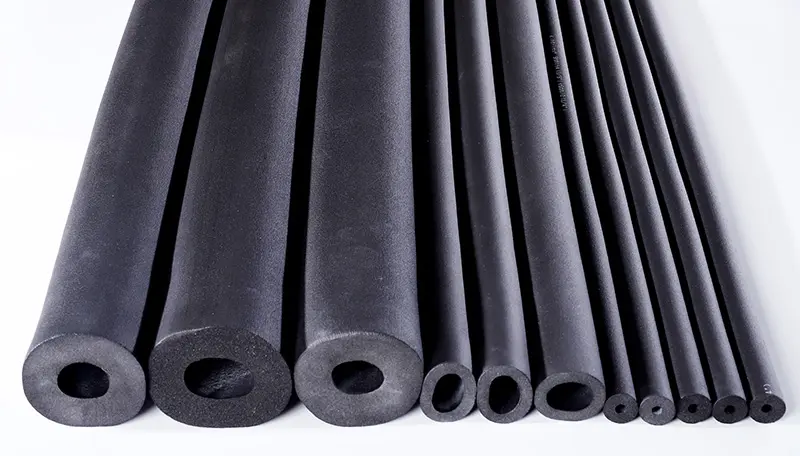
Flexible Elastomeric Foam
Flexible elastomeric foam is widely used in HVAC and refrigeration applications.
Its closed-cell structure helps limit heat transfer and water vapour movement. When installed with properly sealed joints and suitable external protection, it can help manage condensation risks in relevant applications.
Its flexibility also makes it useful around duct connections, fittings, and irregular surfaces.
However, the product’s temperature range, fire classification, ultraviolet resistance, and suitability for outdoor exposure must be checked before installation.
Mineral Wool
Mineral wool is available in rigid and semi-rigid forms and is used for thermal and acoustic insulation.
It can provide useful fire performance and is suitable for a range of building services applications.
Because fibrous insulation can be affected by moisture, outdoor installations require an appropriate weather-resistant vapour control and protective covering system.
Glass Wool
Glass wool is commonly supplied in blankets, rolls, and boards.
It provides thermal insulation and can also contribute to sound absorption in suitable applications.
For external ductwork, it must be protected against water penetration, physical damage, and environmental deterioration through a suitable outer jacket.
Rigid Insulation Boards
Rigid insulation boards may be used where a stable external insulation layer is required.
Depending on their composition, they can offer useful thermal resistance and mechanical characteristics.
The selected product should be compatible with the duct geometry, external covering, fire requirements, and expected environmental exposure.
Important Features of a Reliable External Lagging System
A successful installation involves more than choosing an insulation product. The complete system must provide consistent thermal protection and withstand outdoor conditions.
Weather Resistance
The external covering should prevent rainwater and moisture from reaching the insulation layer.
Protective finishes may include suitable metal cladding, weather-resistant membranes, or specialised jacketing systems.
The correct option depends on the installation environment and the insulation manufacturer’s recommendations.
UV Protection
Direct sunlight can degrade materials that are not designed for prolonged outdoor exposure.
External insulation systems should therefore include suitable UV-resistant finishes where required.
This is especially important for rooftop installations and ductwork exposed to sunlight throughout the day.
Vapour Control
In cooling applications, water vapour can move towards colder duct surfaces and create condensation within the insulation system.
A continuous vapour control layer helps limit this movement.
Joints, seams, penetrations, and connections require particular attention because small openings can compromise the performance of the entire system.
Mechanical Durability
Outdoor ductwork may be exposed to maintenance activities, wind-driven debris, accidental impacts, and vibration.
A protective outer layer should provide sufficient mechanical strength for the expected conditions.
In areas with frequent access or potential physical contact, additional protection may be necessary.
Fire Performance
Insulation and protective coverings must meet the applicable fire safety requirements for the building and installation.
Relevant characteristics may include reaction to fire, flame spread, smoke production, and the performance of the complete assembly.
Product documentation should be reviewed before materials are specified.
Where Is External Duct Lagging Commonly Used?
External insulation is suitable for several HVAC applications where ductwork is exposed to outdoor conditions.
Rooftop HVAC Systems
Commercial buildings often place air handling equipment and ductwork on rooftops to save internal space.
These installations are exposed to sunlight, rainfall, temperature changes, and wind.
External lagging helps protect duct surfaces and maintain the temperature of the conditioned air travelling through the system.
Industrial Ventilation Networks
Factories and industrial facilities may use external ducts to transport heated, cooled, or general ventilation air between different areas.
Insulation can help control temperature changes and protect the system from environmental exposure.
Material selection should reflect the presence of chemicals, dust, vibration, and other site-specific conditions.
Commercial Buildings
Shopping centres, office complexes, hospitals, and hotels often contain extensive HVAC distribution networks.
Where ducts pass through external areas or are installed outside the building envelope, suitable insulation helps maintain system performance.
Air Conditioning Installations
Outdoor duct sections connected to air conditioning systems can experience substantial temperature differences between the supply air and surrounding conditions.
Proper insulation helps reduce heat gain and can support more stable indoor cooling performance.
External Duct Lagging vs Internal Duct Insulation
Although both approaches contribute to HVAC performance, external and internal duct insulation serve different purposes.
External duct insulation is installed around the outside of the duct. It primarily reduces heat transfer and can protect against condensation when combined with appropriate vapour control and weatherproofing.
Internal duct insulation is installed inside the duct and may provide thermal insulation as well as sound absorption. Its surface must be suitable for the airflow, cleaning requirements, and operating conditions.
External insulation is often preferred where maintaining a smooth internal airflow surface is important or where additional external protection is required.
The most appropriate solution depends on the system design, available space, acoustic requirements, and maintenance considerations.
Installation Practices for Long-Term Performance
Even high-quality insulation can fail prematurely if installation is incomplete or poorly executed.
A systematic installation process helps maintain the effectiveness of the entire duct insulation system.
- Inspect the ductwork: Check the external surface for corrosion, dirt, moisture, and physical damage before installation.
- Measure accurately: Determine the duct dimensions and calculate the required insulation thickness and material quantities.
- Prepare the surface: Ensure that the duct is clean and dry and that any necessary repairs have been completed.
- Fit the insulation carefully: Apply the material consistently, avoiding unnecessary gaps, compression, or uneven coverage.
- Seal all joints: Use compatible adhesives, tapes, and vapour control methods according to the manufacturer’s instructions.
- Install protective cladding: Apply a suitable external finish to protect the insulation from rain, sunlight, and mechanical damage.
- Inspect the completed system: Check seams, corners, supports, access points, and penetrations for weak areas.
Particular attention should be given to duct supports and connection points, where gaps or damaged coverings can allow moisture to enter.
Maintenance and Inspection of Outdoor Duct Insulation
Regular inspection helps identify deterioration before it affects HVAC performance.
Maintenance teams should look for damaged cladding, loose joints, cracks, water penetration, and exposed insulation.
Signs of condensation or corrosion should also be investigated because they may indicate problems with vapour control or weatherproofing.
Where insulation has become wet or damaged, the affected section should be assessed and repaired or replaced using compatible materials.
Inspection frequency should reflect the installation environment, exposure conditions, and manufacturer’s recommendations.
How Proper Lagging Supports Long-Term Cost Efficiency
The initial cost of an external insulation system should be considered alongside its expected service life and operational benefits.
By reducing unwanted heat transfer, suitable lagging can help lower energy consumption and reduce the workload on HVAC equipment.
It can also limit moisture-related deterioration and reduce the likelihood of premature insulation replacement.
The actual savings depend on duct dimensions, operating temperatures, insulation thickness, climate, system efficiency, and installation quality.
A properly designed system therefore offers benefits that extend beyond the initial installation by supporting more reliable operation and reducing avoidable maintenance.
Conclusion
Outdoor HVAC ductwork requires effective protection against heat transfer, moisture, sunlight, and physical damage. Without suitable insulation and weatherproofing, exposed ducts can lose energy, experience condensation problems, and deteriorate more quickly.
A well-designed external lagging system combines appropriate thermal insulation, continuous vapour control where needed, and a durable weather-resistant outer covering. Selecting materials according to operating conditions and following correct installation practices are essential for achieving reliable results.
By giving external duct insulation proper attention during HVAC design and maintenance, building owners and facility managers can support better energy efficiency, protect mechanical systems, and improve long-term building performance.